Wine tasting

Metrovino Aperitivo: Fresh Look at Lambrusco

Last Tuesday, Divine Offering, Québécoise, and I attended Aperitivo at Metrovino ($15), a casual tasting featuring Alessio Altariva of Fattoria Moretto. The event sold out quickly, which came as no surprise. Let’s listen to “Come On-a My House” for this post.

The tasting offered a very different picture of Lambrusco from the sweet, fizzy, mass-produced wine many people know. Alessio’s family makes small-batch Lambrusco from organically farmed grapes grown on just under 11 hectares, with a focus on Grasparossa, a variety native to Castelvetro in Emilia-Romagna.
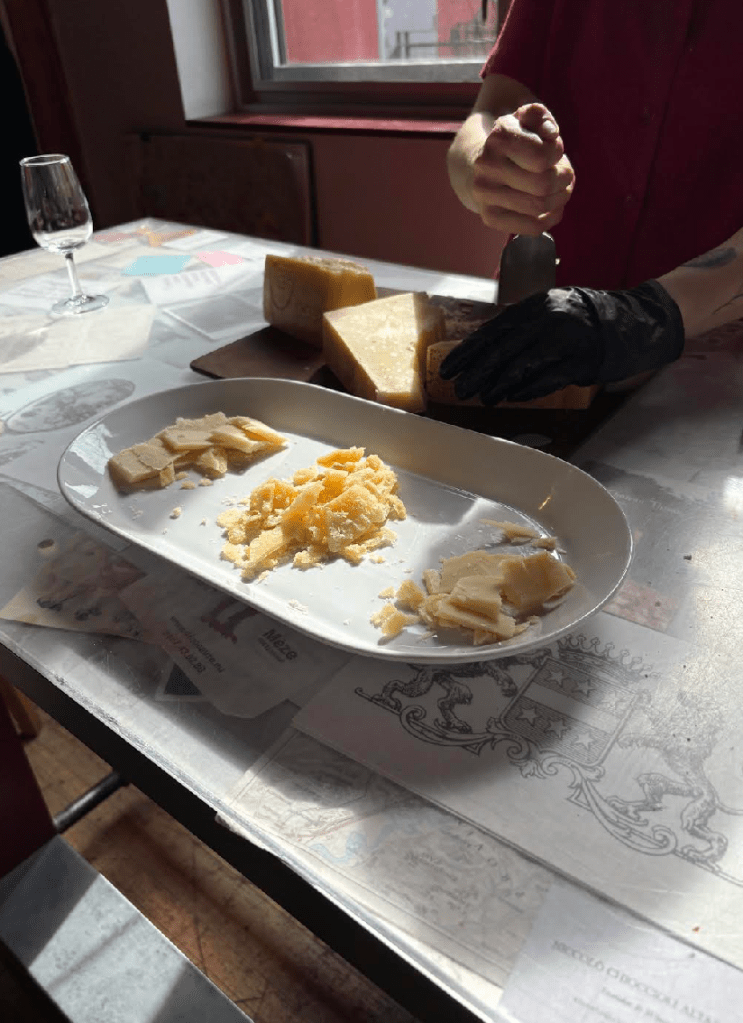
Photo credit: Anjali Mahendra (2026)

Divine Offering and I arrived five minutes early and spotted Richard Harvey, one of Metrovino’s founders. He recognized us, too, and warmly welcomed us in. After lurking in the aisles trying to spot wines from the previous tasting we attended, we moseyed over to Eva Hudson’s station, where she was carving three different ages of Parmigiano-Reggiano and serving them with fresh, crusty bread. Nearby, plates of cheese and charcuterie were laid out.
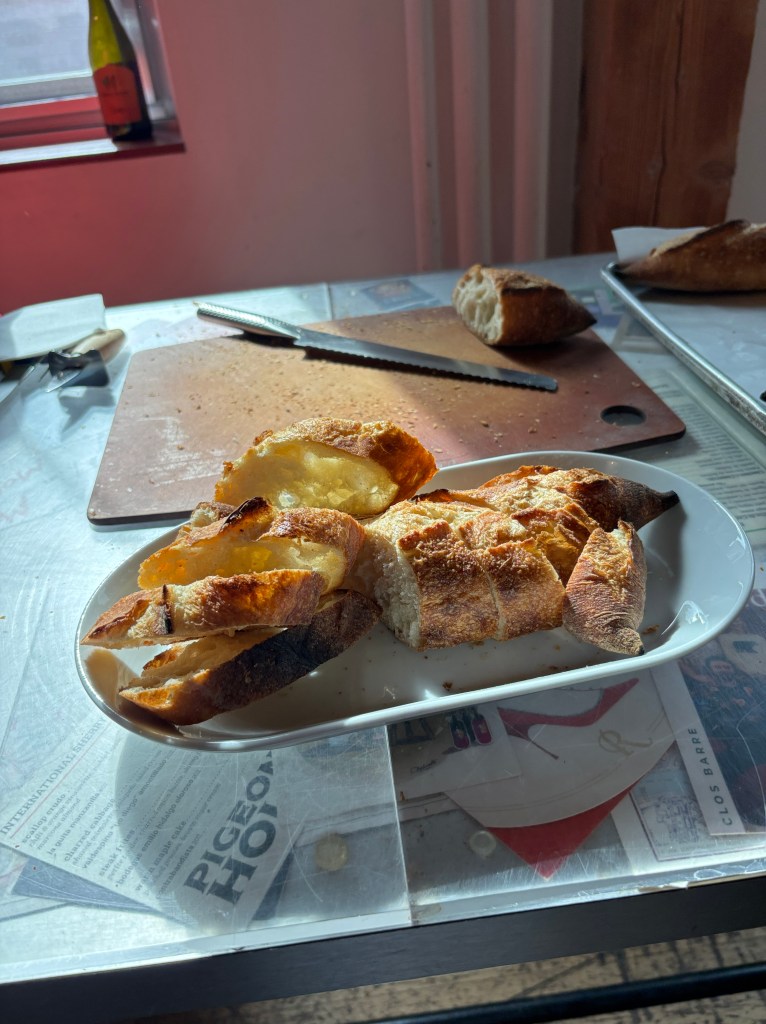
Photo credit: Anjali Mahendra (2026)

Over the course of the tasting, we moved between Eva and Richard to sample and repeatedly revisit the winery’s flagship Lambruscos, Tasso ($35) and Semprebon ($35).
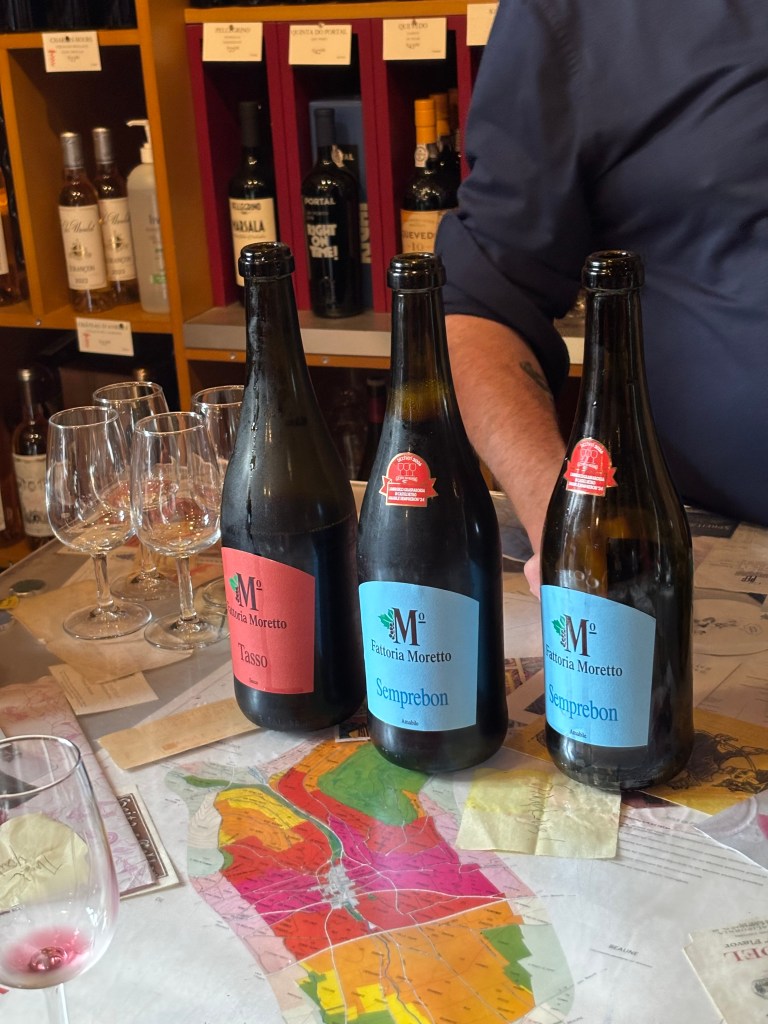
Photo credit: Anjali Mahendra (2026)

As Richard poured, he called Lambrusco “the most Italian wine”, soulful, friendly and distinctive, with countless regional foods to pair with it. The wine’s soft bubbles refresh the palate between rich, salty bites. The region where Lambrusco is made, Emilia-Romagna, also gives us Parmigiano-Reggiano and Prosciutto di Parma as natural companions for the wine.
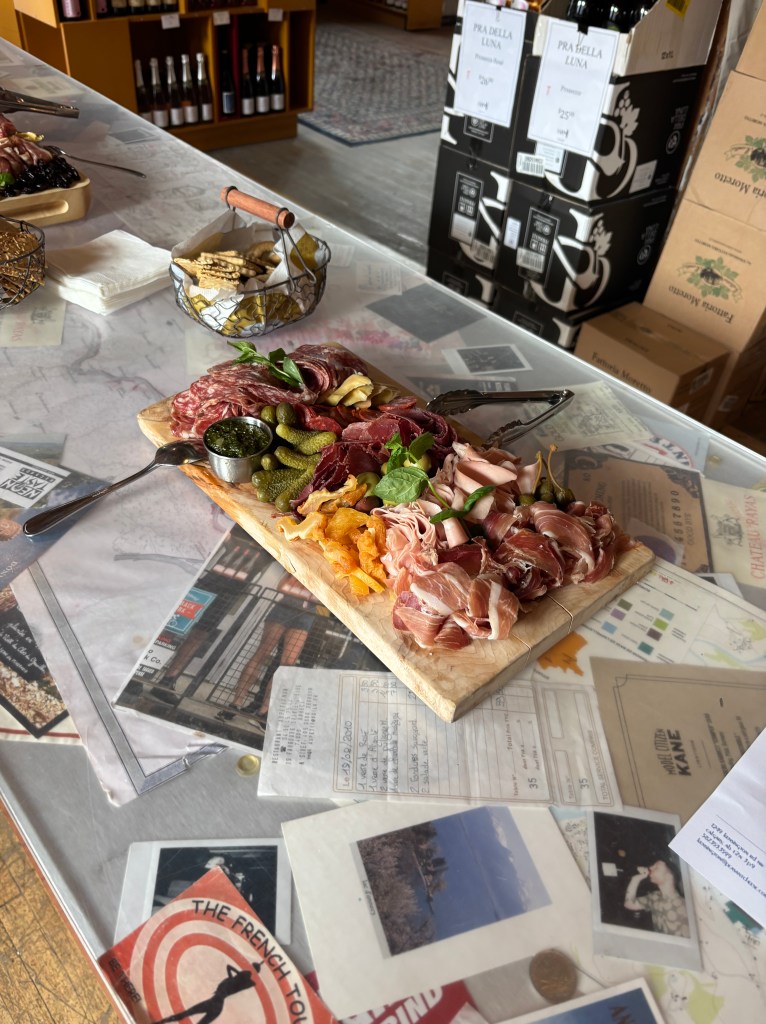
Photo credit: Anjali Mahendra (2026)

The Lambruscos I had tried before this tasting reminded me more of sangria. Fattoria Moretto’s versions were different. They had the character of red wine but with a bright, juicy freshness. The gentle bubbles made each sip refreshing without stealing the show.

Tasso was the drier of the two, with a little more structure, while Semprebon was softer, fruitier, and a bit sweeter. Eva told us customers are almost evenly divided between them.
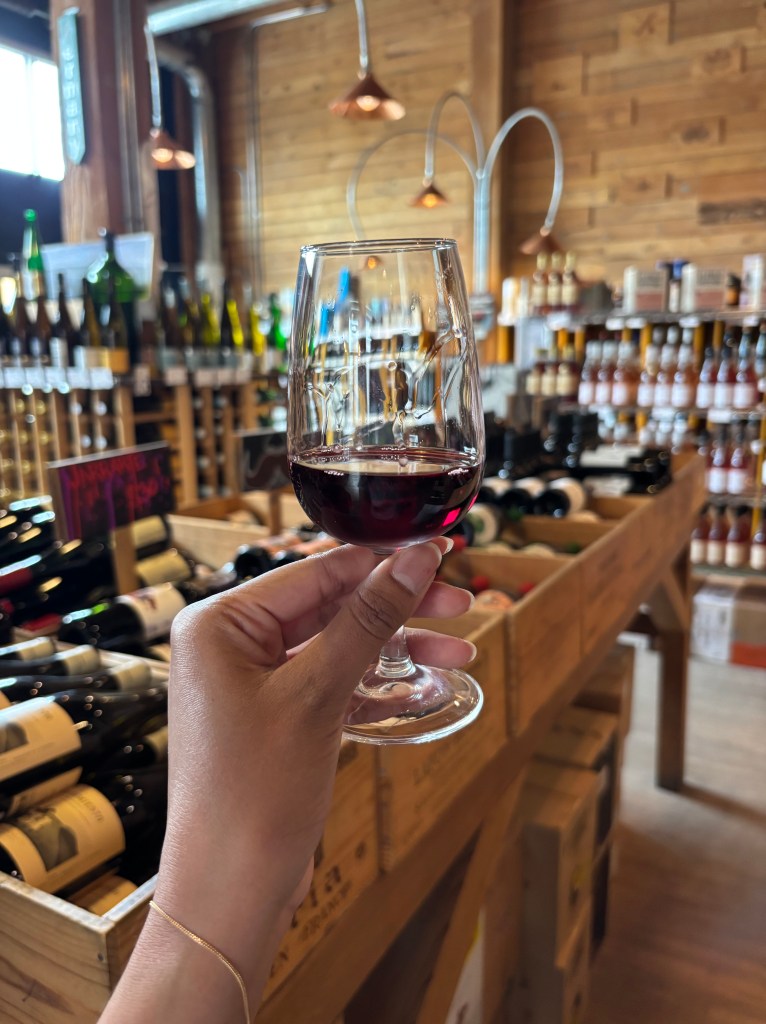
Photo credit: Anjali Mahendra (2026)

I was particularly interested in Québécoise’s verdict. Earlier this month, she had taken a sip of Cirelli’s “Orange,” pointed to the grapes we were eating and declared, matter-of-factly, “It tastes just like these.”

She preferred Tasso, while Divine Offering leaned toward Semprebon. I changed my mind with nearly every taste before eventually settling on four bottles of Tasso and two of Semprebon. Whether that was my own decision or Québécoise’s influence is still up for debate.

Throughout the evening, I noticed people stopping to chat with Alessio. Meanwhile, the three of us stood off to the side asking one another, ‘Do you think that’s the winemaker?’ then quickly looking in the opposite direction. We were fairly certain it was. However, agreeing that it must be Alessio seemed much easier than walking over and saying hello. It was like high school all over again.

I’m leading a member-led wine tasting at Eau Claire Athletic Club this month, and these Lambruscos will be among the bottles I bring. They’re an excellent conversation wine, easy to share and pair with cheese and charcuterie, yet different enough to challenge what guests think they know about Lambrusco. If their reactions are anything like mine, I suspect a few will be bringing a bottle from Fattoria Moretto to their next party. Hitting the Sauce gives Metrovino’s Aperitivo tasting two phat thumbs up. 

For a regularly updated list of  tastings and special events, visit my Calgary Wine Tastings & Events Guide.
Chinese · Dim Sum

Golden Sands Calgary: A New Dim Sum Favourite

Boss Lady’s birthday is coming up, so I took her for dim sum at what I consider the best spot in the city: Golden Sands. Let’s listen to Mama Said for this post.

I called the day before to make a reservation, and we arrived promptly at 11:00 a.m. We were shown to a small table by the window. Right away, I noticed how friendly the staff were, extending the same warm, polite hospitality to non-regulars like us. 

We were asked what tea we wanted. My mother was silent for a couple of moments and then requested bo-lay, a tea, according to her, that pairs well with dim sum. Over in the corner, I saw a chef eating his lunch. I always find it reassuring to see staff eating at their own restaurant. After all, they know what goes on in the kitchen better than anyone.

I encouraged Boss Lady to order whatever she wanted, but she hesitated because I was picking up the tab and she didn’t want to order too much. I sighed, picked up the menu checklist and went through every item with her.

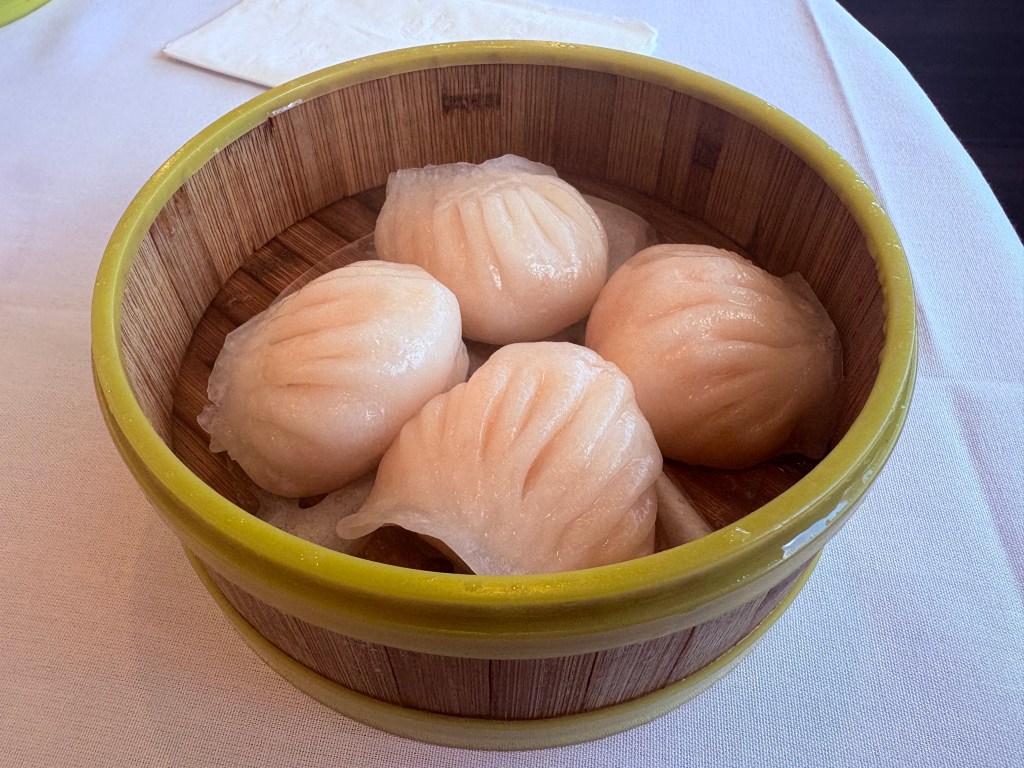
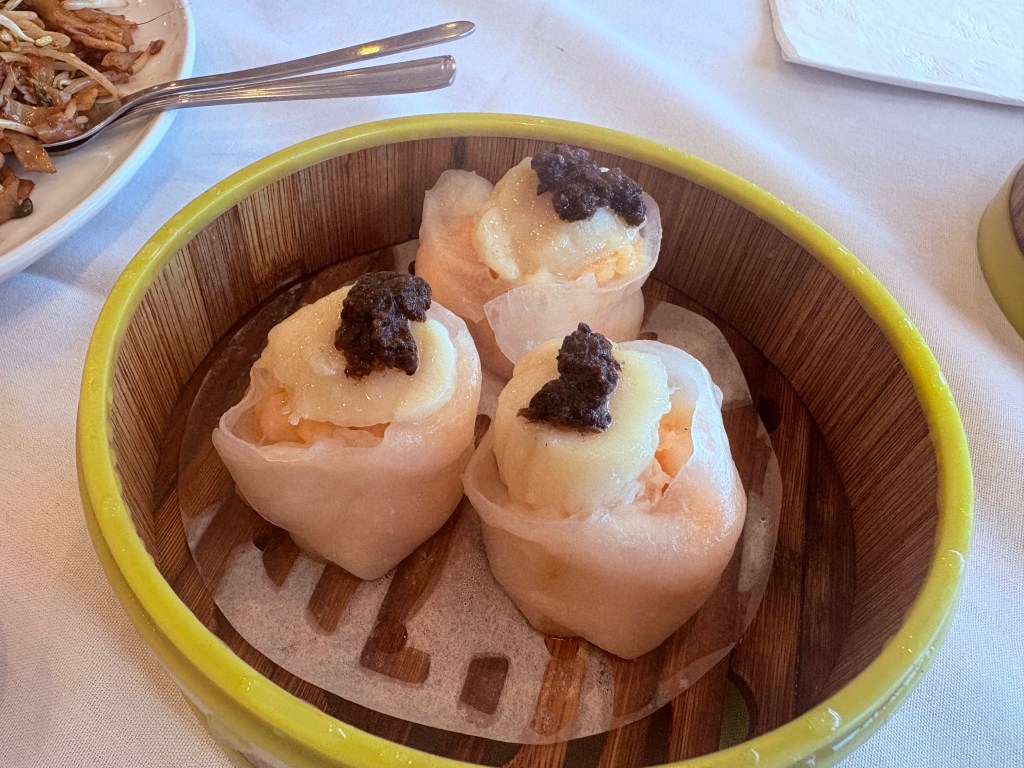
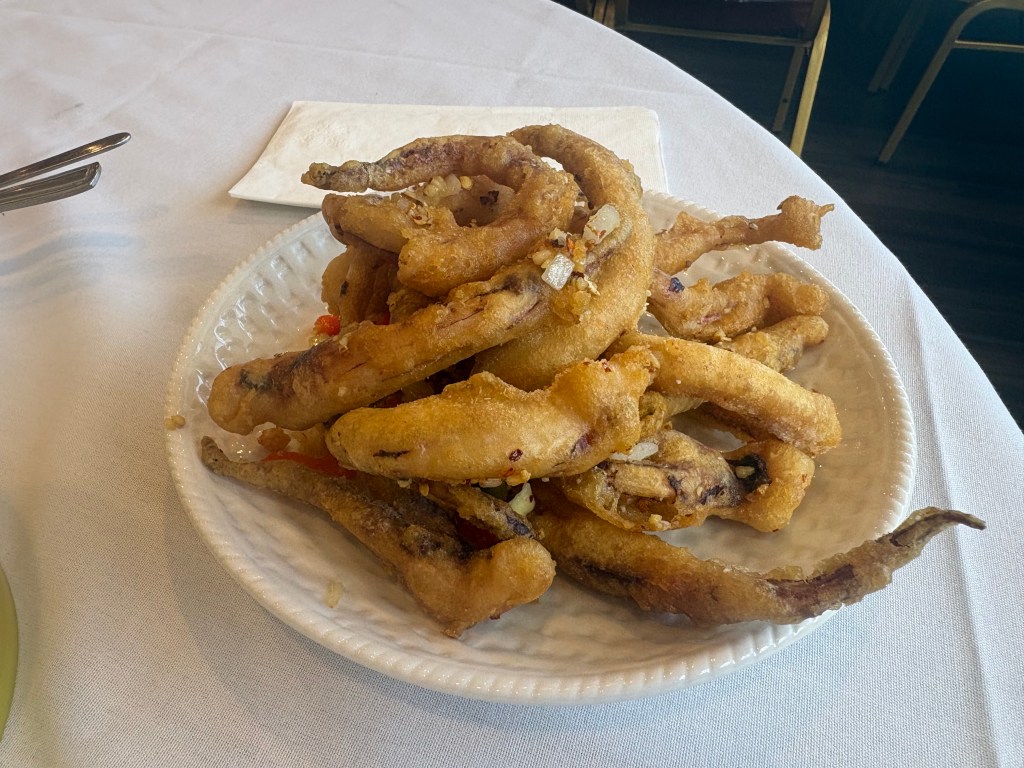
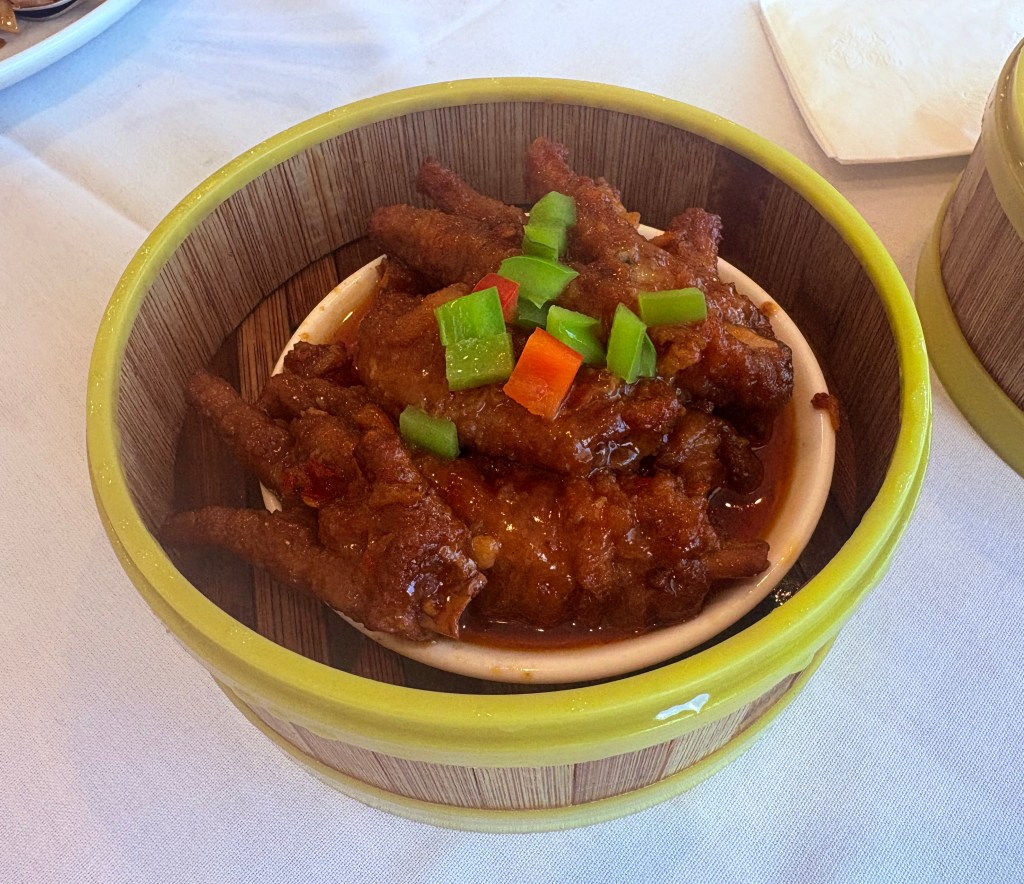
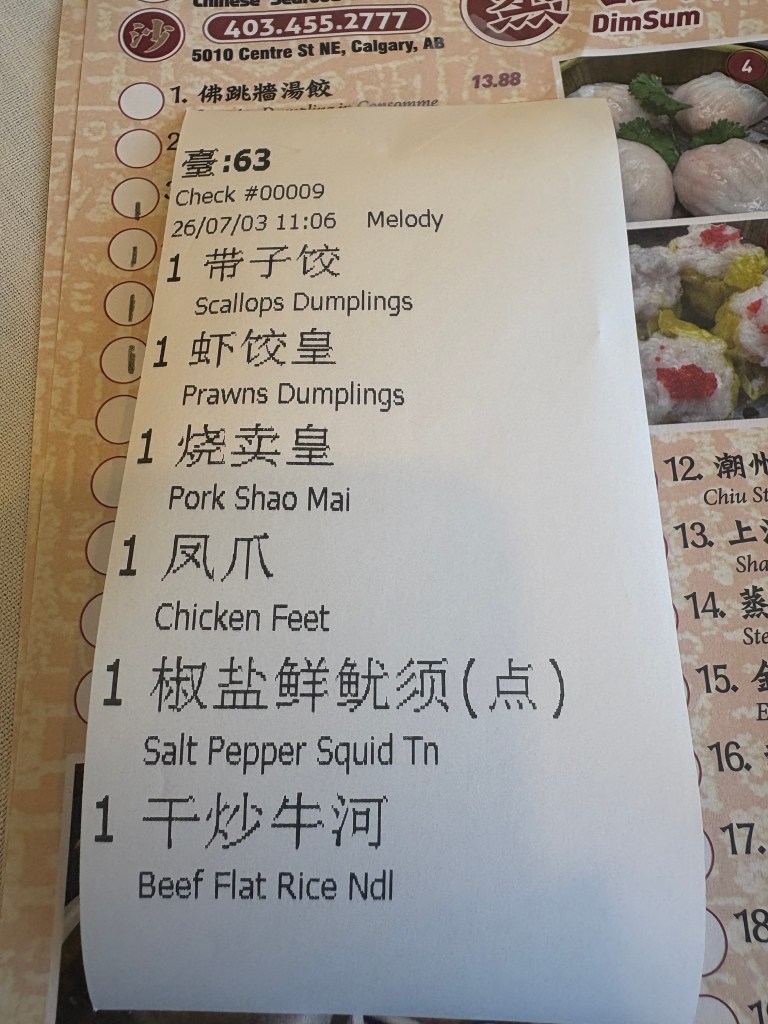
Together, we chose: Steamed Scallop & Shrimp with Black Truffle ($9.88), Prawn Dumplings ($8.25), Steamed Pork Shao Mai with Fish Roe ($8.25), Chicken Feet ($7.50), Salt & Chilli Pepper Squid Tentacle ($14.88), and Beef Flat Rice Noodles ($18.88). She declined my suggestion to add lobster or quail to our lunch.

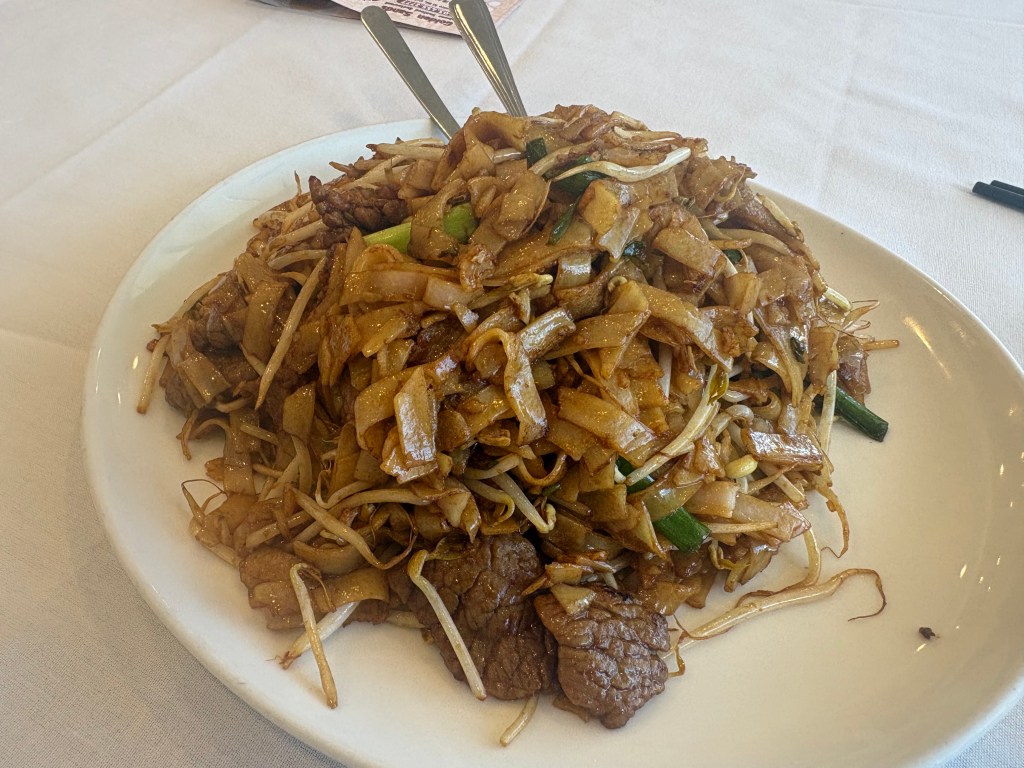
The beef rice noodles arrived first. I could see the dark brown sear of the wok on the noodles and the charred, bright green onions. The beef itself was ultra velvety, with a tenderized softness. I was struck by how generous the mound of noodles and beef was, even larger than the one at Emerald Garden.

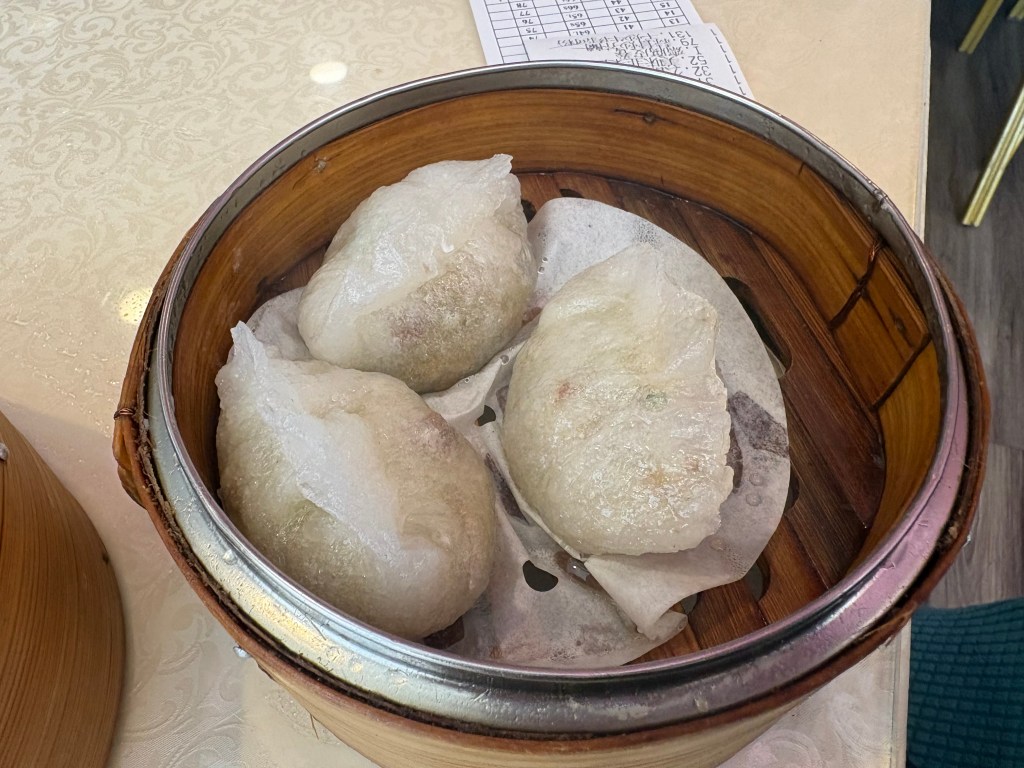
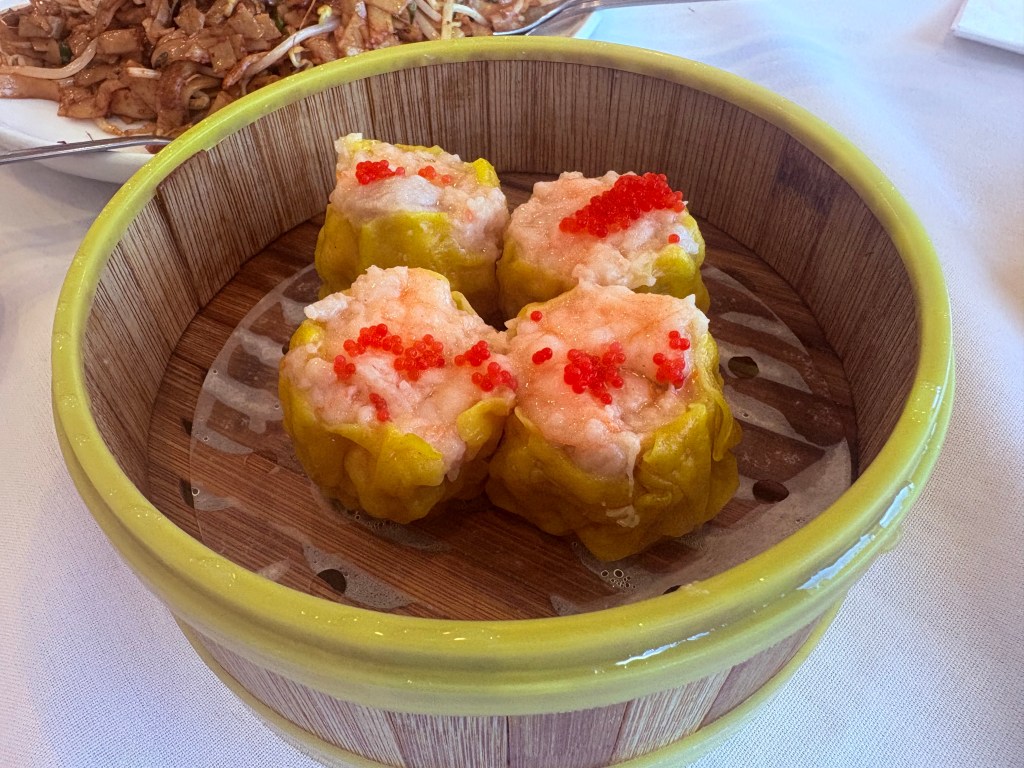
The meat in the shao mai was so juicy. As I bit into the dumpling, the meat fell apart into tender chunks. The texture here is springier and loosely packed. I found this surprising because at other restaurants, sui mai is more like a finely ground pork ball with a tougher, mealier grind. 

Our server came by to check on us and spotted a strand of hair in my mother’s dish. She asked Boss Lady if it was hers. My mother pulled it out, laughed and confirmed it was hers, adding that she wouldn’t complain to the kitchen. They both had a good chuckle.

The har gow was the size of a baby’s fist. The translucent white wrapper was silky, slightly sweet and sticky. When I took a bite, the soft wrapper gave way to a jumble of whole, crunchy pink shrimp. I liked alternating between the Chinese mustard and spicy red sauce, dabbing each onto my dumplings for a blunt hit of heat, much like horseradish with prime rib.

The truffle, scallop, and shrimp dumpling was tricky to eat. The slippery pieces of seafood shifted around inside the wrapper like an overstuffed inari pocket before tumbling onto my plate. The dollop of black truffle was assertive and earthy. Despite the logistics of eating this dumpling, it’s worth ordering.

The fried squid is the best I’ve had for dim sum in Calgary, even edging out Ho Won. The white squid at Golden Sands tasted as if it had never been frozen, each piece toothsome and bouncy. The batter was thin and light, fragile like tempura and not at all oily, with just the right amount of salt. It also arrived piping hot from the fryer. The squid at Ho Won is more uniform, each piece tubular and noticeably chewier, with a gloriously thick, brittle batter. I like both versions, but the natural sweetness of the squid at Golden Sands inches it ahead.

My mother noted that the quality of the food reminded her of Vancouver and Richmond, but at a lower price. If a restaurant can impress Boss Lady, you know it’s a winner. I can’t wait to return and try more of the dinner menu. Hitting the Sauce gives Golden Sands two phat thumbs up.

Looking for more best eats in Calgary? View my 2026 Guide of Best Restaurants in Calgary.

Wine tasting

Metrovino Burg & Beaujo Wine Tasting with Baptiste Burrier

Last week, I attended my very first Metrovino event. Their events sell out so fast that by the time I learn about the tasting, it’s usually sold out. My luck seems to be changing because I finally managed to snag tickets to their 30th-anniversary celebration, Burg & Beaujo with Baptiste Burrier ($65). Let’s listen to Love You Madly for this post.

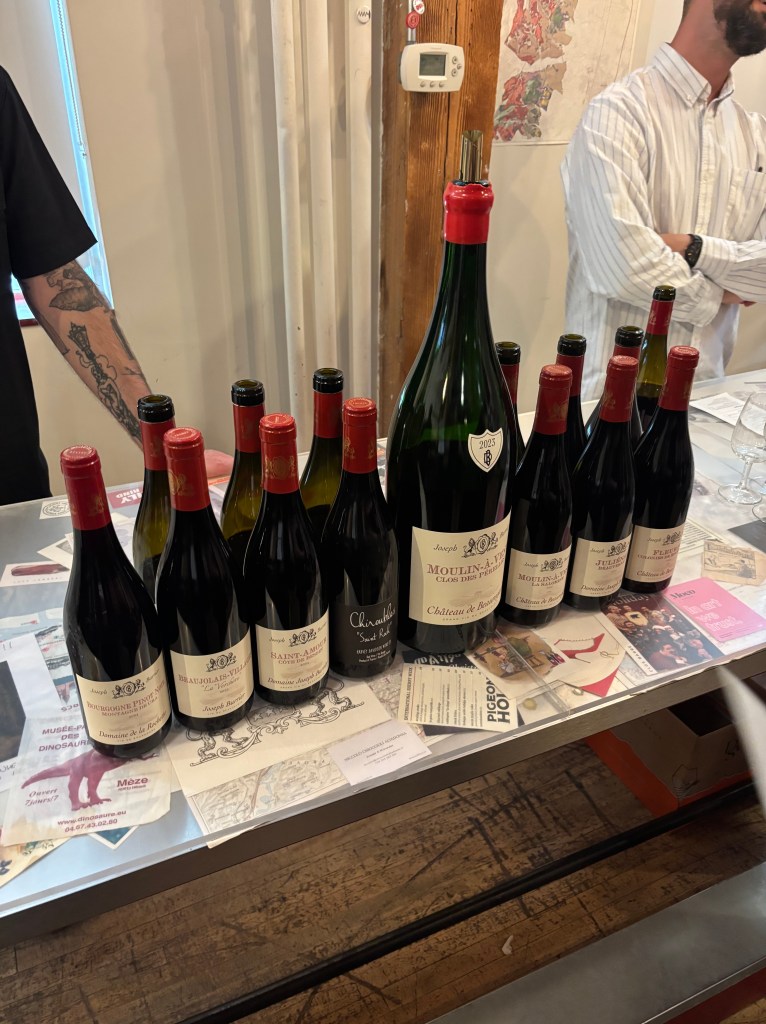
Metrovino marked its 30th anniversary alongside its longstanding relationship with the family behind Château de Beauregard. For decades, its wines occupied a significant place on Metrovino’s shelves. Helping celebrate the occasion was Baptiste Burrier of Château de Beauregard, whose family has cultivated vineyards in southern Burgundy for 17 generations. I wanted to speak with Baptiste, but I didn’t know what to say to a 17th-generation winemaker.

Photo credit: Anjali Mahendra (2026)

Divine Offering and I were greeted by Isaiah, who explained the structure of the standup event, pointing to three stations and a bodaciously loaded cheese station. He mentioned that Richard would be at the back station showcasing all the wines. 

Curiously, I noticed that throughout the evening, whenever someone mentioned Richard’s name, their intonation gave special emphasis. And throughout the evening, everyone seemed to defer to him. Richard, as I later discovered, is one of the founders of Metrovino.

Photo credit: Anjali Mahendra (2026)

This was also my first time in the store. It’s larger than it appears from the outside, with high ceilings. There are so many aisles, it felt like a corn maze, but with wine. Throughout the evening, Divine Offering and I had fun playing peek-a-boo. 

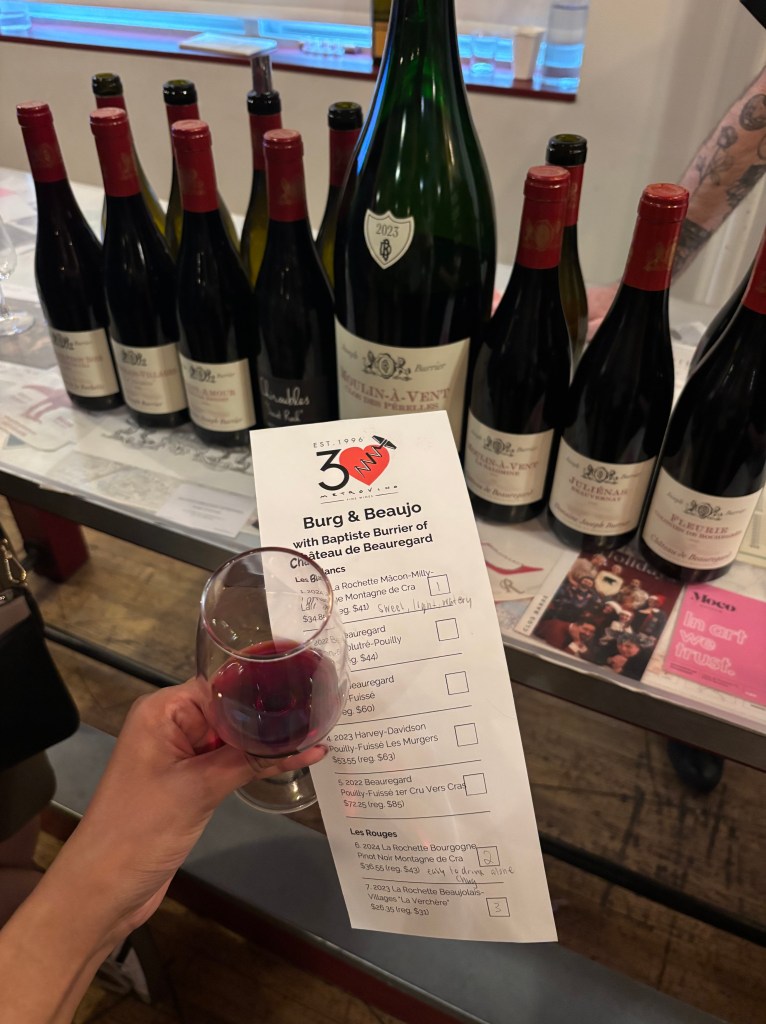
There were 13 wines to try throughout the evening. We moseyed over to the white wine station. I spoke to Sarah, and she explained that Beauregard Mâcon-Solutré-Pouilly was aged in previously used oak barrels, which adds texture and softness without the pronounced oak flavours of new barrels. The result is a wine that feels richer and fresher.

Photo credit: Anjali Mahendra (2026)

When I tried wine #4, Harvey Davidson Pouilly-Fuissé Les Murgers, a new wine term entered my vocabulary: appellation. An appellation is a legally defined wine-growing area with rules on how the wine is made. The Burrier family owns vineyards in several appellations. 

At the next table, I recognized Al Drinkle, the aptly named partner at Metrovino. I’ve been a big fan of his essays ever since I stumbled on his article, The Price of Chinese Food. 

In his section, I tried #6, the 2024 La Rochette Bourgogne Pinot Noir Montagne de Cra. Al called this wine a good chugger. I enjoyed how the wine danced on my tongue. I bought a bottle.

Photo credit: Anjali Mahendra (2026)

Al described #7, the La Rochette Beaujolais-Villages “La Verchère” as a mindblowing sipping wine. He likened the wine’s simplicity and drinkability to a good pizza, contrasting it to the layered complexity of a Michelin-starred dish. 

I finally met Richard when I sampled #9, the Harvey Davidson Chiroubles Saint-Roch. This was one of Richard’s favourite wines, as was mine. I found it a touch sweet and really fun to drink. I couldn’t leave without two bottles.

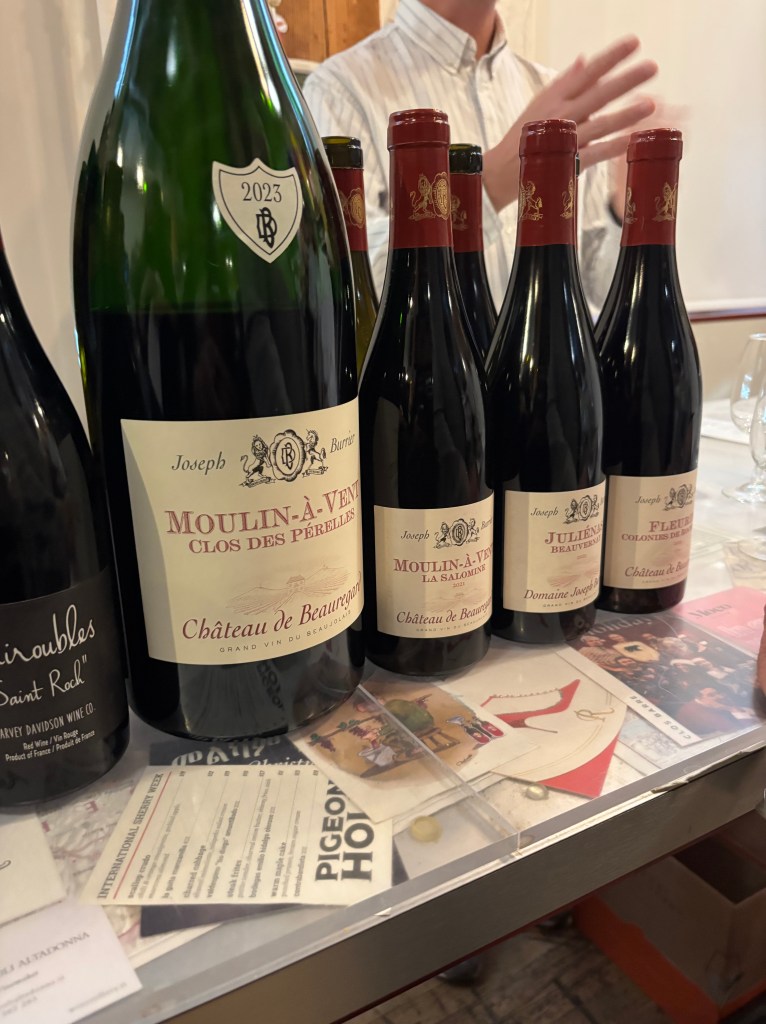
Eva poured me a taste from what appeared to be a double magnum of #10, the Beauregard Moulin-à-Vent Clos des Perelles. This wine was juicy and pleasurable to sip. I would have bought a bottle if they had any in stock. 

After this tasting, Richard stepped away to make a speech. The room was so packed that I couldn’t see him from the back. All I could make out was that he was perched high above the crowd, possibly standing on a ladder or table.

Photo credit: Anjali Mahendra (2026)

Richard spoke about the honour of having Baptiste Burrier attend, Metrovino’s longstanding relationship with the Burrier family, and his admiration for Château de Beauregard. I noticed the way the audience looked up at him. There was a genuine sense of respect and affection. It reminded me, at least in my imagination, of students looking toward Professor Dumbledore in the book series, Harry Potter.

A staff member then encouraged everyone to grab something to eat, stay hydrated between wines, and, if needed, let them arrange a safe ride home.

Photo credit: Anjali Mahendra (2026)

When Richard returned to his station, I tried #12 Joseph Burrier Juliénas Beauvernay. It was so gulpable, I brought home two bottles. He shared an interesting perspective on this wine and Beaujolais in general. 

Beaujolais is often enjoyed young for its fresh, fun and juicy qualities. However, he pointed out that Beaujolais from recognized, high-quality wine-growing areas, such as this Juliénas, can also benefit from aging.

Juliénas is an appellation known for producing wines with greater depth and aging potential. He noted that as the wine ages, those fruity notes give way to more savoury flavours. By drinking Beaujolais only when it’s young, you’re missing out on another side of what it has to offer.

If this was my introduction to Metrovino tastings, I can already tell it won’t be my last. I’ll be back.

For a regularly updated list of  tastings and special events, visit my Calgary Wine Tastings & Events Guide.
Burg & Beaujo with Baptiste Burrier Tasting

Here is the complete line-up and the prices offered, and the 15% discount offered that evening. An asterisk (*) denotes the wines I purchased.

1) 2024 La Rochette Macon-Milly Lamartine Montagne de Cra ($41 →  $34.85)

2) 2022 Beauregard Mâcon-Solutré-Pouilly ($44 → $37)

3) 2023 Beauregard Pouilly-Fuissé ($60 → $51)

4) 2023 Harvey Davidson Pouilly-Fuissé Les Murgers ($63 →  $53.55)

5) 2022 Beauregard Pouilly-Fuissé 1er Cru Vers Cras ($85 → $72.25)

*6) 2024 La Rochette Bourgogne Pinot Noir Montagne de Cra ($43 → $36.55)

7) 2023 La Rochette Beaujolais-Villages “La Verchère” ($31 →  $26.35)

8) 2024 Joseph Burrier Saint-Amour Côte de Besset ($45 → $38.25)

**9) 2023 Harvey Davidson Chiroubles Saint-Roch ($41 → $34.85)

10) 2023 Beauregard Moulin-à-Vent Clos des Perelles (N/A)

11) 2021 Beauregard Moulin-à-Vent La Salomine ($63 → $53.55) 

**12) 2022 Joseph Burrier Juliénas Beauvernay ($42 → $35.70) 

*13) 2019 Beauregard Fleurie Colonie de Rochegres ($46 → $39.10) 

Restaurants · Wine tasting

Tenuta I Collazzi Wine Tasting at Eau Claire Athletic Club

It doesn’t take much to convince me to attend a wine tasting. So when food-and-beverage manager Robert Jewell emailed members about a new wine club at the Eau Claire Athletic Club, I clicked yes. For this post, let’s listen to Via con me.

For our first official tasting ($25), Luigi Perri and Bernard Pearson, co-owners of First Choice Cellars, introduced us to the wines of Tenuta I Collazzi, a historic Tuscan estate near Florence, owned by the Marchi family since 1933. At the heart of the property stands Villa I Collazzi, a Renaissance villa said to have hosted notable guests over the years, including King Charles III and Diana, Princess of Wales.

Art lovers may recognize another connection. The villa’s design is attributed to Michelangelo Buonarroti, the Renaissance master behind David and the Sistine Chapel ceiling. The estate produces a range of Tuscan wines under the Collazzi label, which was the focus of the evening’s tasting.

Wine 1: Otto Muri (2023) IGT Toscana

The first wine we tried was Otto Muri (2023) IGT Toscana.  Luigi described “pineapple, minerality, and soft acidity,” stating it was a “very pleasant, crisp and clean white wine.” Members can purchase this wine through Robert for $28.

‘Toscana’ means the wine was produced in Tuscany. IGT stands for Indicazione Geografica Tipica, a classification that identifies where a wine comes from and offers winemakers more flexibility than some of Italy’s stricter wine rules, including Tuscany’s. Many of Tuscany’s famous Super Tuscans are wines that broke with tradition and are labelled IGT because they blend Sangiovese with grapes such as Cabernet Sauvignon, Merlot, and Cabernet Franc.

Wine 2: Bastioni (2022) Chianti Classico D.O.C.G.

The second wine we tried was the Bastioni (2022) Chianti Classico D.O.C.G. The Bastioni was fuller in flavour, due to the addition of Merlot. Luigi detected plum, blackberry, and vanilla, with some soft acidity. Chew Steel tasted sour cherries. This wine retails for around $30. The wine is available to members through Robert for $27.

D.O.C.G. stands for Denominazione di Origine Controllata e Garantita, which is Italy’s highest traditional wine designation. It indicates that a wine comes from a specific region and has met strict regulations governing production, origin, and quality before being released for sale.

Wine 3:  Liberta (2022)

I enjoyed the third wine, the Liberta (2022), which Luigi called a baby Super Tuscan. The wine is aged in brand-new oak barrels.  He described dark, intense berry notes, vanilla, soft tannins and acidity. This wine was Chew Steel’s favourite of the evening. Of the first three wines, this is the one I’d pick.

Luigi explained that acidity in wine is good when eating because it makes you salivate, which opens your taste buds so you taste more. I found Liberta smooth and easy to sip. No surprise, this wine is a hot seller by the glass at restaurants. Expect to pay between $30 and $37 retail. Robert is offering Liberta to members for $27. Bernard noted that in the United States, the retail cost is $50 US. For the ballers out there, you can buy this baby in a double magnum, which is a four-litre bottle ($250), for your next dinner party, through Robert.

Wine 4: Super Tuscan, Collazzi Toscana (2021)

Ding, ding, ding! The last wine was my favourite, the Super Tuscan, Collazzi Toscana (2021). Collazzi Toscana is made entirely from Bordeaux grapes: Cabernet Sauvignon, Cabernet Franc, Merlot, and Petit Verdot. There is no Sangiovese. Silky and beautifully balanced, this is the wine I’d buy by the case.

Luigi described this wine as having a massive body and a little bitterness, like biting into a grape seed. Bernard mentioned that most of the Collazzi Toscana ends up in Switzerland due to the demand for the wine. Expect to pay $80 or more per bottle. Through the wine club, members can purchase Collazzi Toscana for $60.

For anyone looking to stock their cellar, Luigi and Bernie have extended a special offer to members. Purchase five cases of Bastioni, Liberta, or Collazzi through Robert, and they’ll include a complimentary 3L bottle of Liberta, which is the equivalent of four standard bottles of wine.

I certainly don’t need five cases myself, but I’d happily go in on a group order with a few friends. Then we’d have the perfect excuse to crack open a double magnum and celebrate.

Upcoming event: 1996 First Growth Bordeaux

I learned a lot during the tasting. The most practical takeaway was Luigi’s advice to open the wines about 45 minutes before serving to allow them to breathe and fully express themselves. The most expensive lesson is that Eau Claire Athletic Club is co-hosting a tasting of 1996 First Growth Bordeaux.

For those of us who are new to the wine world, ‘First Growth’ doesn’t refer to how grapes grow. The term comes from the 1855 Bordeaux Classification, which ranks Bordeaux’s top estates into different tiers. First Growth is the highest rank, reserved for a handful of wineries that have maintained their prestige for more than 170 years.

1996 First Growth Bordeaux Tasting

The lineup includes all five First Growth estates: Château Haut-Brion ($1,300), Château Lafite Rothschild ($2,000), Château Latour ($1,600), Château Margaux ($1,700), and Château Mouton Rothschild ($1,500). These wines are being offered at prices well below what you would typically pay on today’s market, assuming you can find them.

Luigi and Bernard explained that opportunities like this are uncommon. Beyond their rarity, these wines are among the most celebrated bottles in the world from one of Bordeaux’s great vintages. Few people ever get the opportunity to taste all five First Growths side by side, let alone from the same celebrated vintage.

Contact

The event is open to both members and guests. If you’re interested in attending or learning more, feel free to reach out through my blog, and I’d be happy to point you in the right direction.

For a regularly updated list of  tastings and special events, visit my Calgary Wine Tastings & Events Guide.
Cheap Eats · Chinatown · Chinese · Dim Sum · Restaurants

U & Me Calgary Review: Cantonese Dim Sum in Chinatown

Boss Lady and Ludwig invited me out for dim sum at  U & Me, their go-to spot in Chinatown. Inviting someone there for the first time always leads to confusion.

“Want to go to U & Me?”

“You and me? What do you mean? Go where?”

“No, U & Me is the restaurant.”

“Oh.”

As I walked up the stairs, I noticed soothing spa music playing in the background. Let’s listen to some similar music for this post. 

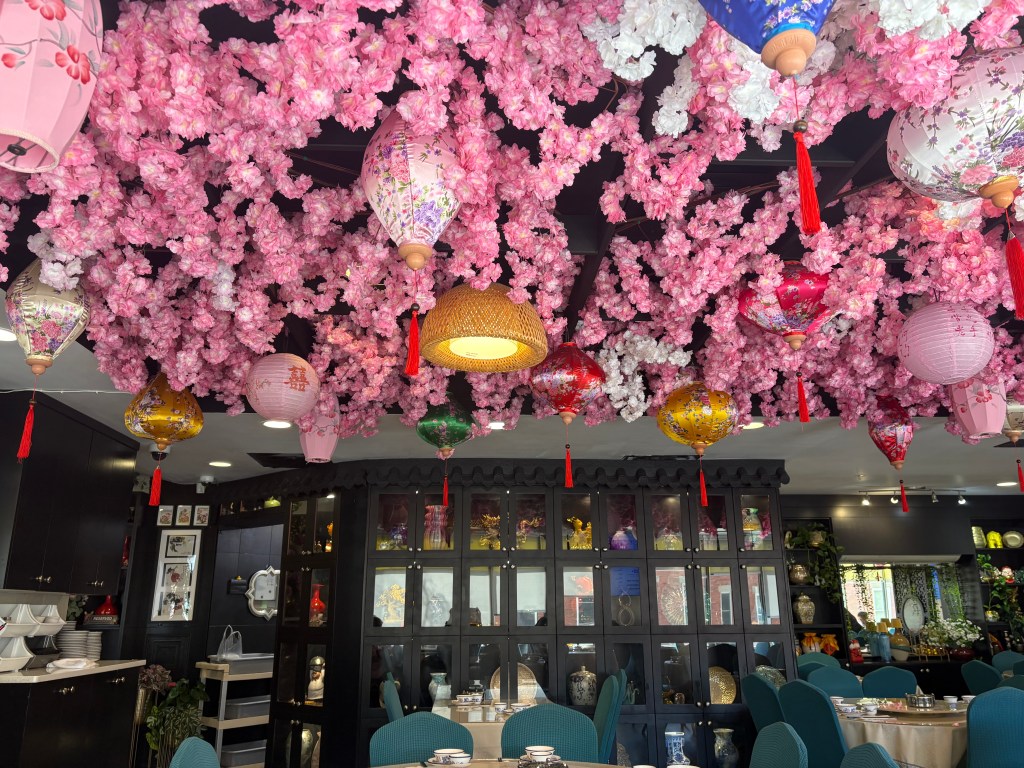
It had been years since my last visit to U & Me, and I was surprised to see the restaurant redecorated. Pink blossoms and lanterns hung from the ceiling.

Lo and behold, when I was shown to my table, I ran into my old colleague, Office Dad. It felt oddly appropriate introducing Office Dad to my actual dad, Ludwig. After a studied glance, Office Dad declared that I looked exactly like my mother, Boss Lady. My mother and I warily observed each other.

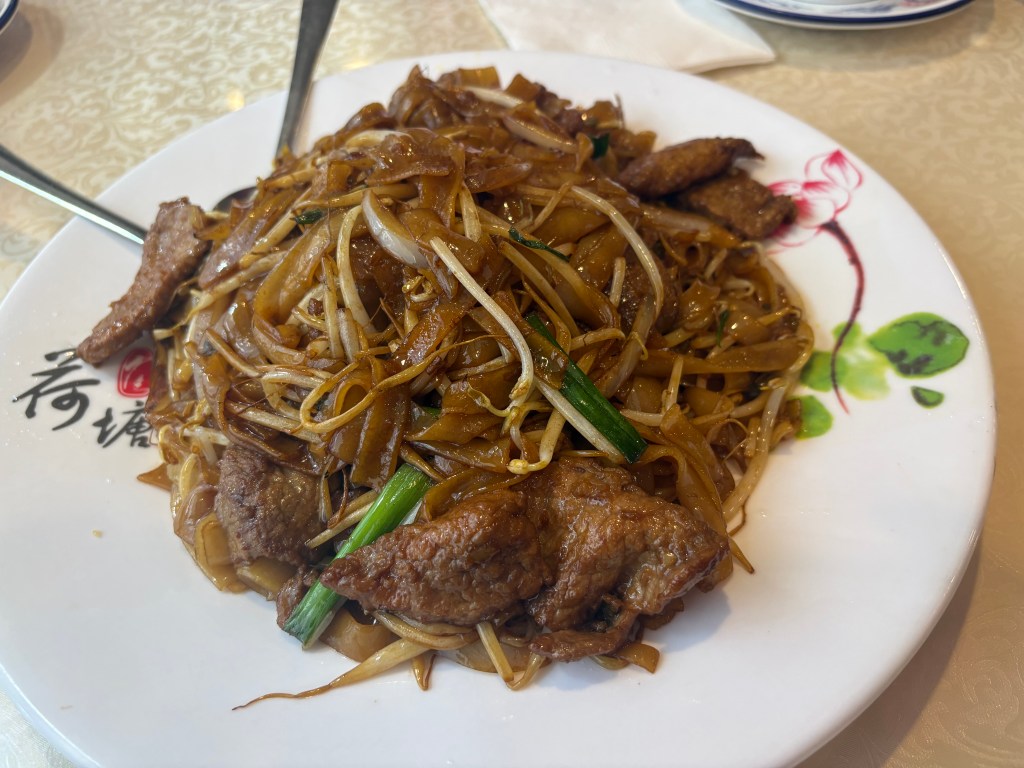
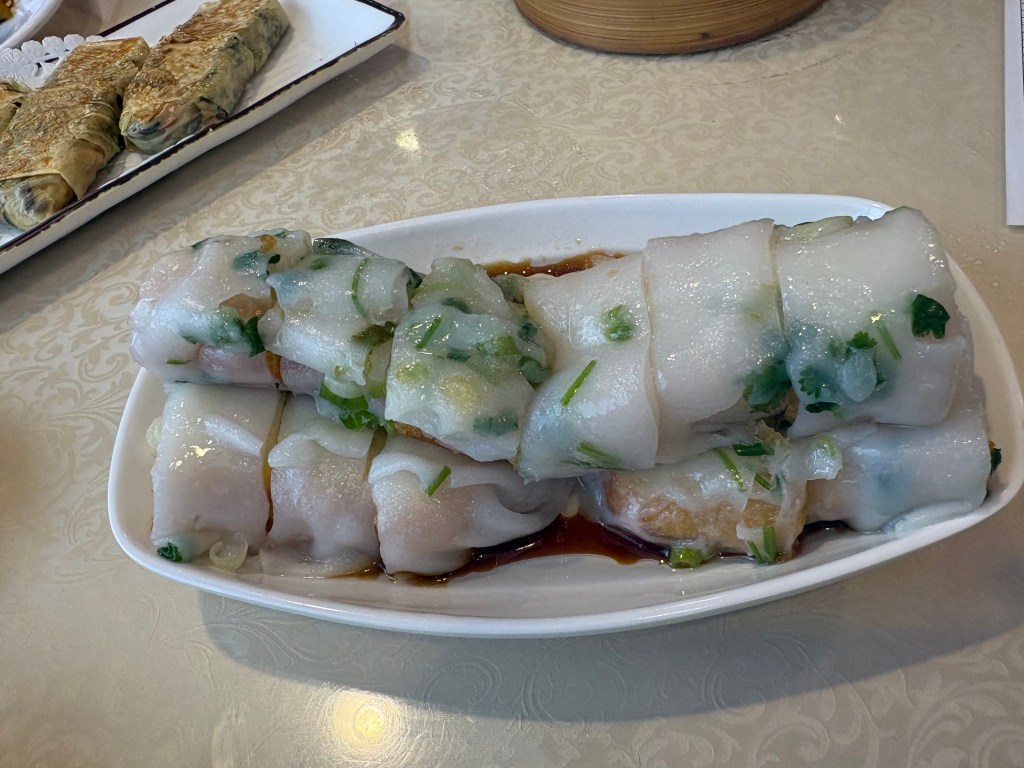
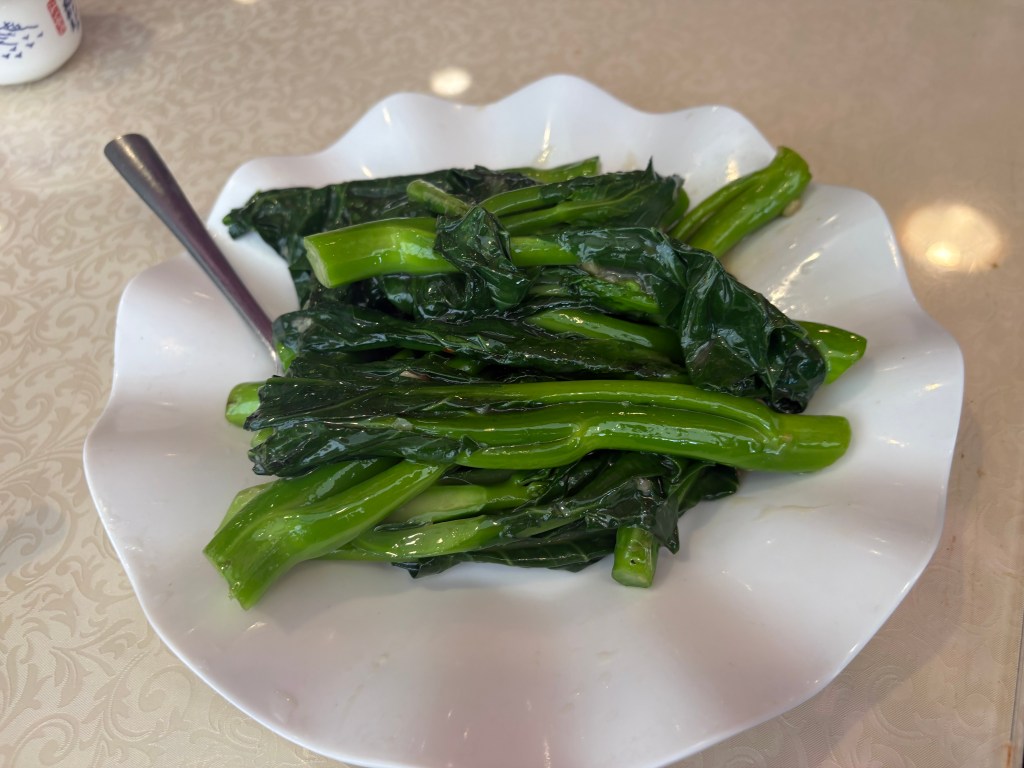
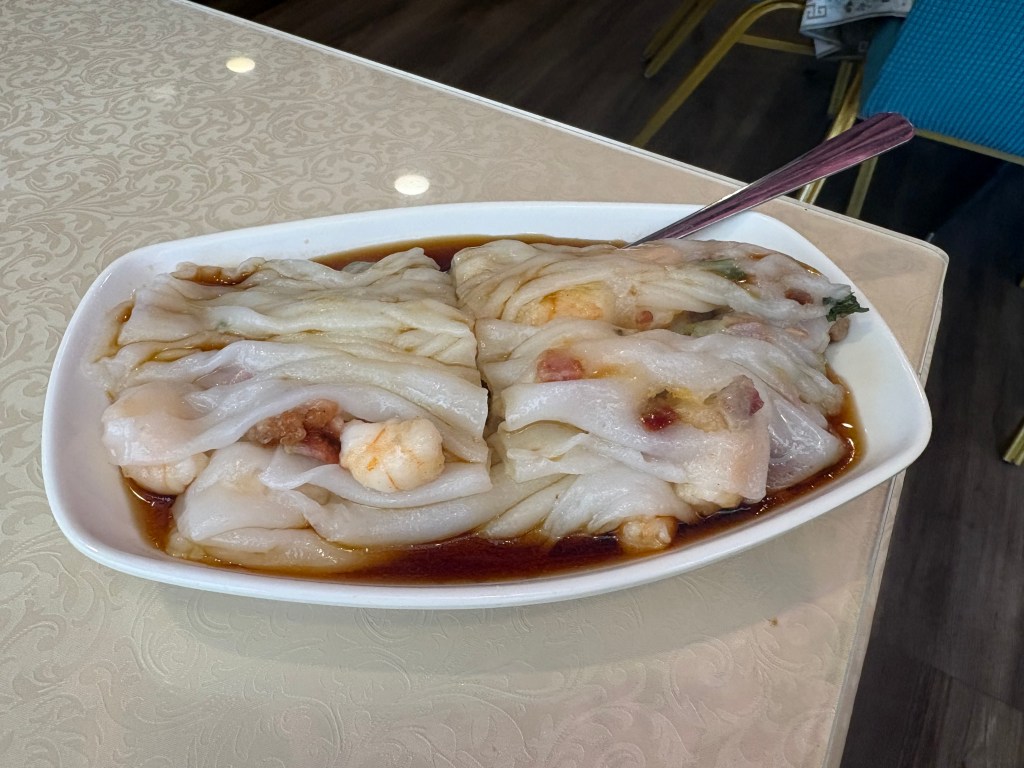
Boss Lady always orders too much. We picked six dishes: Meat & Peanut Dumpling ($6.55), Shrimp BBQ Pork Rice Roll ($6.95), Shrimp Leek Dumpling ($6.55), Chinese Donut Rice Roll ($7.55) Vegetarian Bean Curd Roll ($6.95), Gai lan / Chinese broccoli with garlic sauce ($10.95), and Beef Soy Sauce Flat Noodles / Chow Fun ($14.25). A nice perk, U & Me serves tea free of charge.

The first dish to arrive was the beef chow fun. Ludwig noted there was a generous amount of beef, and he was right. I was surprised by the number of large slices scattered across the noodles. The noodles were slick and glossy, generously coated in soy sauce. The beef was both chewy and tender. I would order this again.

As a vegetarian, Ludwig was assured by Boss Lady that she would only serve him the vegetables and noodles. At my mother’s encouragement, I spooned some into his bowl. He immediately scowled and accused me of slipping in an offensive piece of beef.

Unmoved by my cries of being falsely accused, he waited for a second opinion. My mother came to my defence and poked through the noodles in his bowl, confirming there was no meat. Ludwig nodded, satisfied by her verdict. I decided from then on that he could get his own damn noodles.

I liked the Chinese doughnut dish, particularly the contrast between the crunchy doughnut, the soft, chewy centre, and the silky rice noodle sheets. The real pop of flavour comes from the sauces, a peanut-based sauce and hoisin, which add sweet or nutty notes to every mouthful. This dish is a winner.

The gai lan arrived next, the leaves and stems cooked through, soft and saturated from the garlic sauce. I would have preferred the greens with more of a bite, like Central Grand’s version.

The white rice wrapper in the shrimp and pork rolls was wrinkly thin. I enjoyed the meaty cubes of char sui, though I found the shrimp extra salty. Surprisingly, the shrimp and pork roll tasted even better the next day.

The peanut and pork dumplings are usually one of my favourite dishes, but this time I found one part of the filling mushy. That said, the wrapper remained pleasantly firm, and the peanuts added a satisfying crunch.

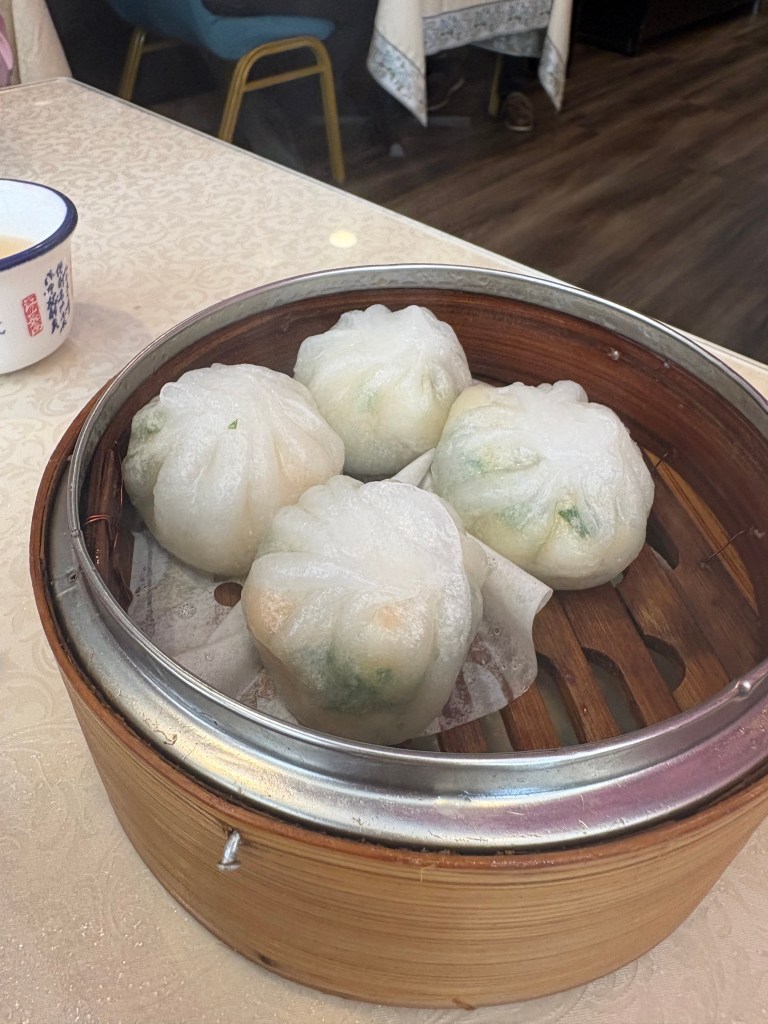
The shrimp and chive dumplings contained crunchy shrimp with a satisfying snap. The chives added a pleasant herby savouriness to the filling, a nice change from the plain old shrimp haw gow.

I couldn’t help but marvel at my dad’s appetite. For such a skinny man, he can really pack the food away. When he reached for another Chinese doughnut, I lifted the plate toward him, as it was across the table.

Boss Lady complained that I was causing more trouble than I was helping, and to let him get it himself. I glanced over at Ludwig, expecting some reaction, but his expression never changed. Completely unfazed, he happily speared another piece of gai lan and carried on eating.

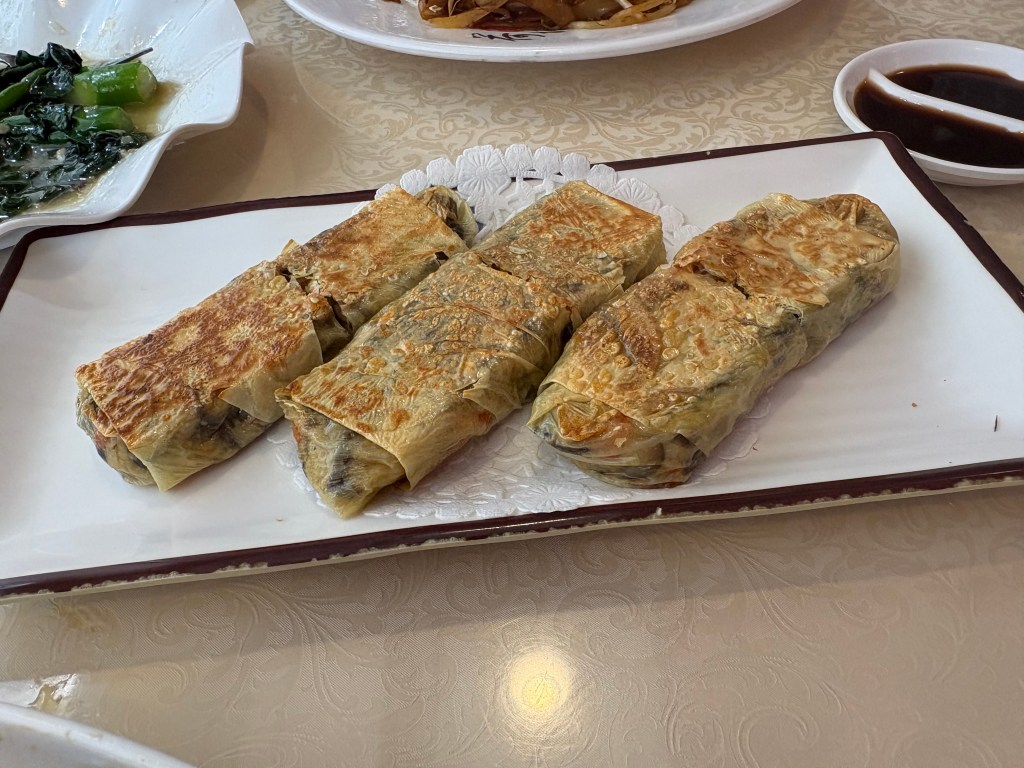
Ludwig’s favourite dish was the vegetarian bean curd. The exterior was crisp and crunchy, while the inside was packed with wood ear mushrooms and carrots, giving it plenty of texture. I enjoyed the process of dipping the bean curd into its accompanying soy sauce, the mustard, and the red sauce. I would order this dish again.

The service at U & Me was efficient. Our tea was regularly refilled, and extras like red and yellow mustard, takeout boxes (25 cents each), and a bag arrived promptly when asked. The food was hot, fresh, and well-priced. It’s easy to see why U & Me remains popular with my parents and the downtown office crowd.

Looking for more restaurants and longtime Calgary favourites? I keep a running list of spots worth revisiting.