Curry · Indian

Saffron Street

Olympian and I have been DM’ing each other since COVID. She found my blog on Pure Vietnamese, and ever since, we have traded tips on our favourite restaurants, Foreign Concept and Pure Vietnamese. When we discovered that Foreign Concept was closing and the owner, Duncan Ly, was opening Bar Chouette, we decided to meet. For this post, let’s listen to “Hey Baby” by Bruce Channel.

We met at First Street Market. We typically eat at Pure Vietnamese but agreed to check out a new venue if Chef Lam were away from his food stall. Olympian didn’t spot him, so we checked out Saffron Street.

She ordered the Butter Chicken Thali ($18) based on the chef’s recommendation. Despite the chef’s advice that I should also get the butter chicken, I resisted and ordered what I wanted, Chloe Batture ($15) and two Dahi Puri ($2). Olympian ate first, as my dish took longer to prepare. She offered to let me sample her food, but I thought it was too soon.

Photo credit: 4jki

Olympian confided she’s been ordering from Inspired Go, a salad delivery service. As a result, her stomach’s been shrinking, and she couldn’t finish her lunch. I perked up at this revelation and promptly ordered a week’s supply. She was worried that she hyped up Inspired Go and hoped I would like it. I told her not to worry. I wasn’t expecting a miracle from a 500-calorie salad.
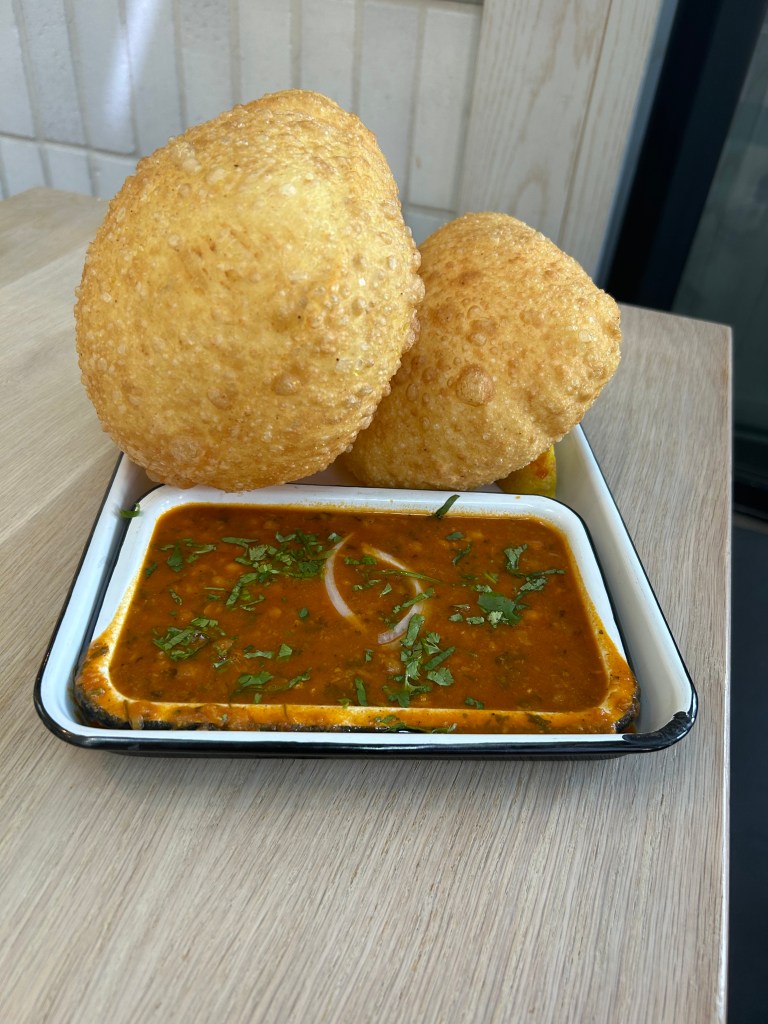
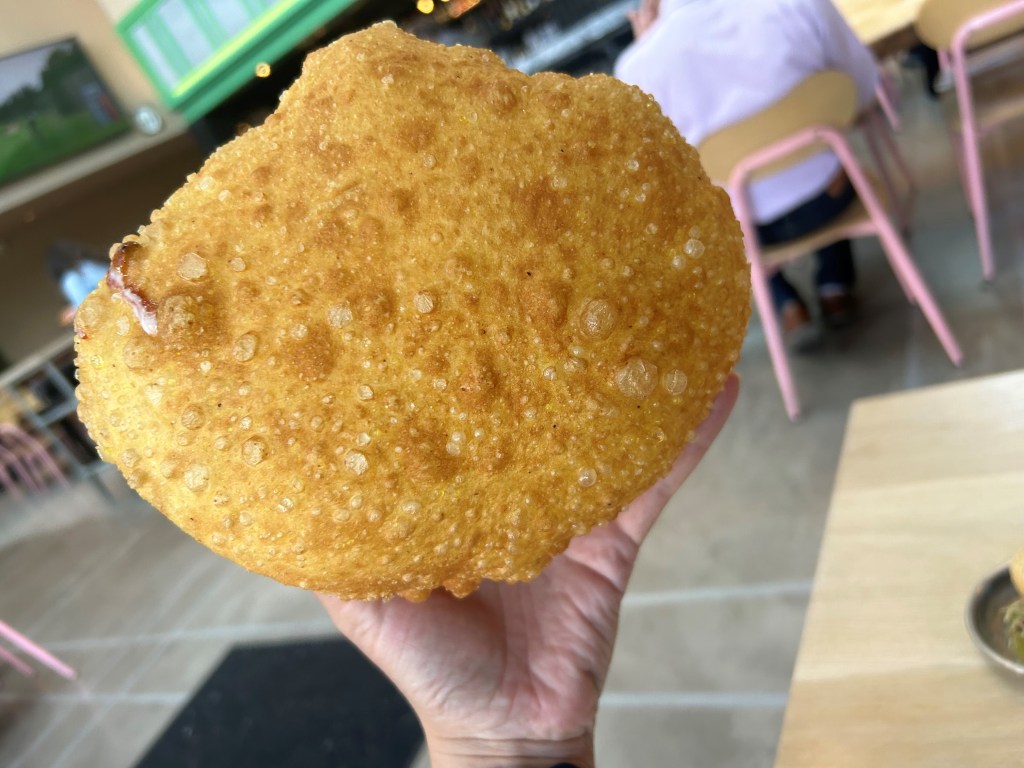
My food was ready in about five minutes, and let me tell you, it was worth the wait. My order contained two massive, puffed bread balls. I marvelled at the crisp, bubbly exterior and ecstatically tore a crackling piece off, releasing the hot air. I scooped up the chickpea curry with the paper-like tissue. Each bite was delicate and delicious, spicy and filling. I would get this again.
Halfway through my meal, I discovered some spicy, tart vegetables tucked away in the corner of the tray. I wasn’t sure how to eat it, so I mixed it up in the rest of the chickpea curry.

Photo credit: 4jki

I mistakenly ate the dahi puri in two bites, and the wet filling spilled down on my hand. I found the ingredients sweet and tangy. I tasted mostly the tamarind, yogurt and the fruity pop from the pomegranate seeds. I gave a dahi puri to the Olympian to try and advised her to eat the whole thing in one bite to avoid my messy mistake. She enjoyed it even more than the butter chicken.

On our way out, we saw Chef Lam. I didn’t want to go up and say hello without buying anything, so I slunk away, happily stuffed but longing for some of the best Vietnamese food in town. I’ll have to bring L to First Street Market for our next date night so that I can get my Vietnamese fix.
Japanese · Seafood · Special Occasion · Sushi

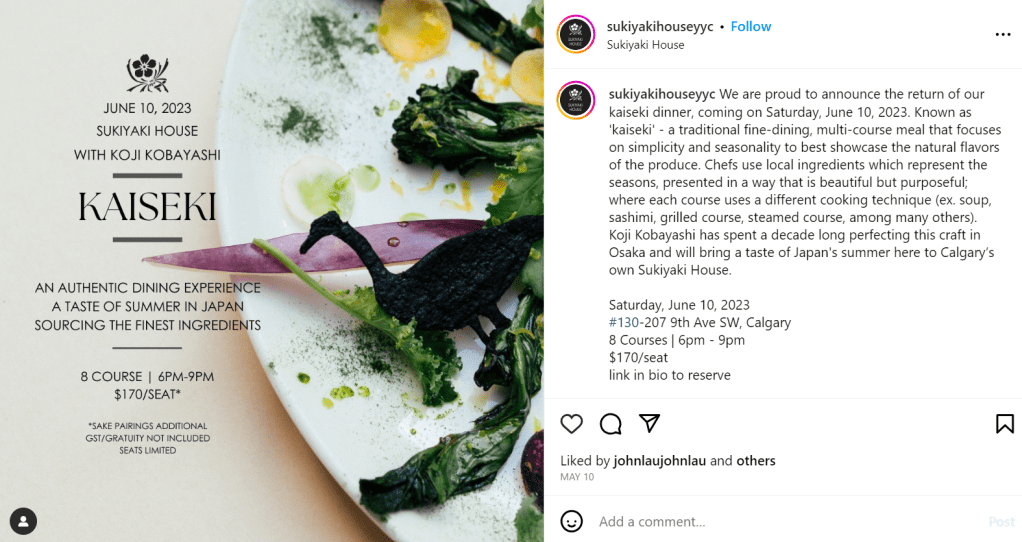
Sukiyaki House – Kaiseki

L and I finally made it to one of Chef Koji Kobayashi’s kaiseki dinners. Koji spent weeks working on the menu, as this was the first big event since COVID. We counted roughly 30 customers in attendance, a mix of couples on dates and regulars who you see throughout the evening, genuinely appreciating Koji’s creations.

Every guest sat at their table, as the restaurant was closed to the general public. When we were seated, I could sense the excitement in the air, similar to the tension you feel moments before the conductor waves his baton before his orchestra. I was downright giddy from anticipation. Let’s listen to some appropriately Zen-like music.

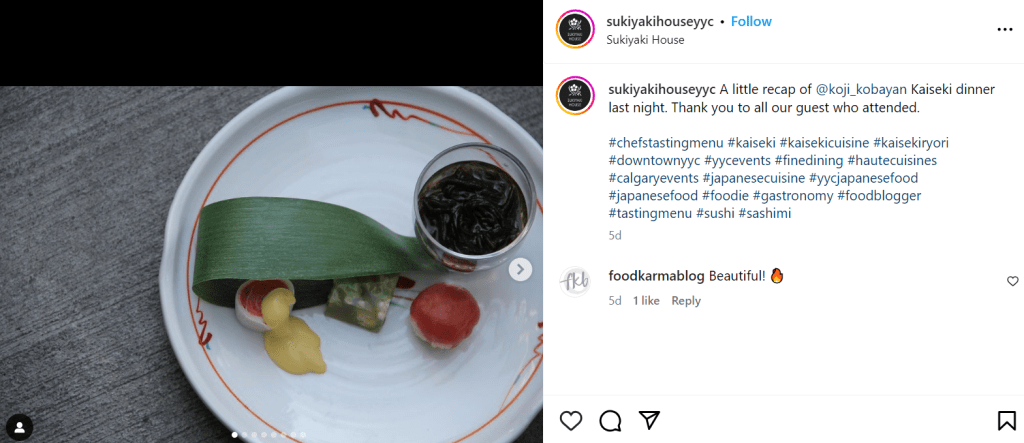
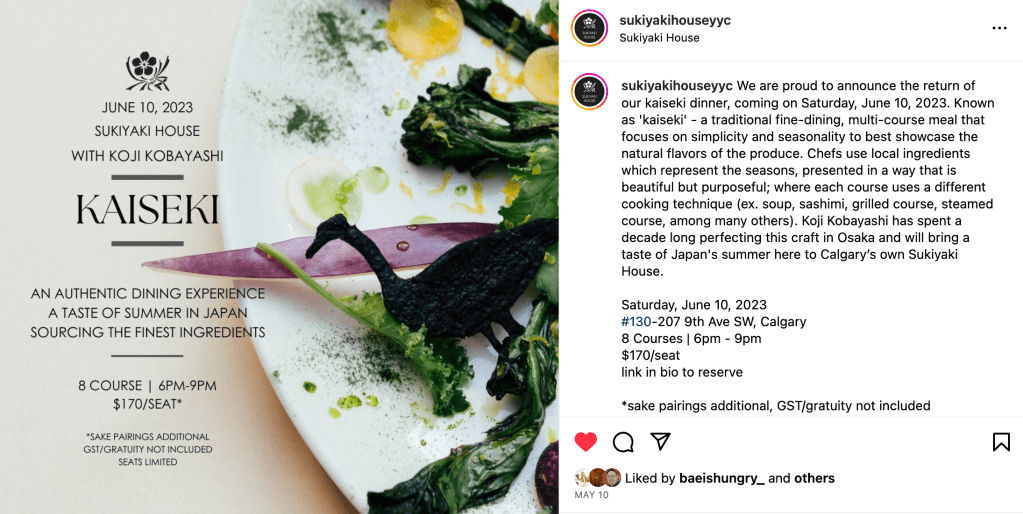
L and I added the sake sommelier pairings ($60), comprising 15 ounces of alcohol to match with Koji’s seasonally influenced eight-course meal. Our photos do not do the food justice. Check out Sukiyaki House’s Instagram photos to get a sense of the caliber of the presentation of the dishes. 

The sakizuke comprised four elements: daikon smoked salmon, mozuku seaweed, okra and edamame pure, and temari sushi. Judith paired the appetizer with Tenbi, Tokubetsu Janmai Genshu. The smoked salmon was bright with lemon and crunchy from the daikon. The cup of seaweed was phenomenal, cool, slippery and delicate. The flavour reminded me of walking into a tranquil forest. I had never tasted anything like it and worked to get every last strand of seaweed.  

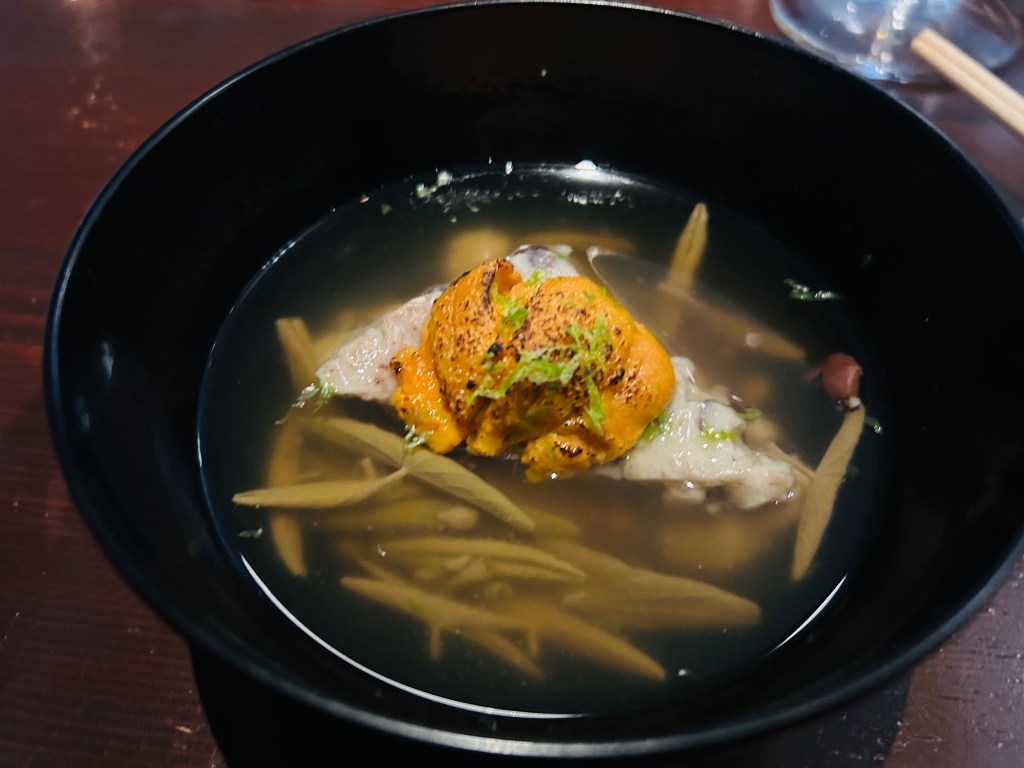
The ossuimono consisted of minazuki tofu, seared uni, jyunsai (water shield) and lime. The soup was full of distinctly Japanese flavours. Light and lovely, I would pick out the juicy little sea treasures and then sip on the beautiful broth. The soup was my favourite dish; it was so sensual in flavour and texture. 

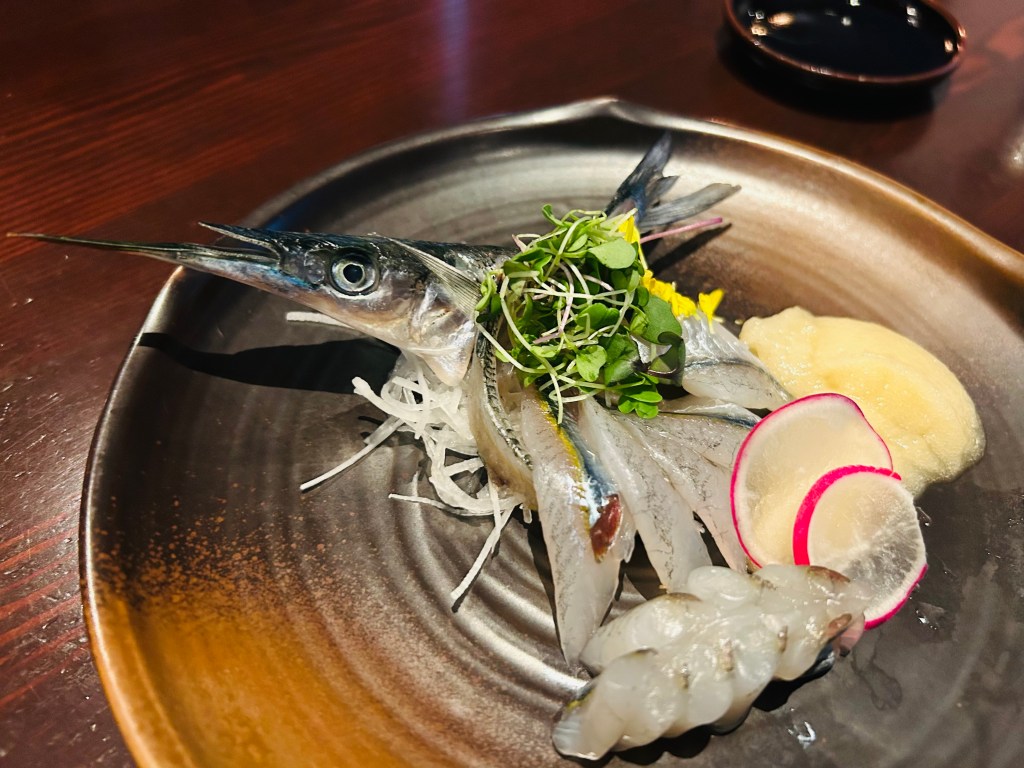
The munkozuke was a showstopper, Japanese halfbeak with yuzo and shiso. Twisted in circle, the spine of the whole fish encircled the sashimi. L loved the showmanship of knife skills and the freshness of the sashimi. The yuzu foam was dreamy, a fresh and gentle complement to the delicate, clean white fish. The soy pairing was familiar, and the contrast made the flavour pop. Judith paired the sashimi with Senki Muku, Junmai Daiginjo.

The takiawase was outstanding. My meat-loving, eggplant and tomato-hating husband was so impressed he declared the cold-style dish his favourite of the night. The eggplant was silky and smoky, gorgeously rich and luxurious. The tomato was plump and so refined in flavour that I couldn’t believe what I was tasting. Between sips of Hououbiden Kanbashi, I would slowly nibbled on the generous scattering of black truffles.

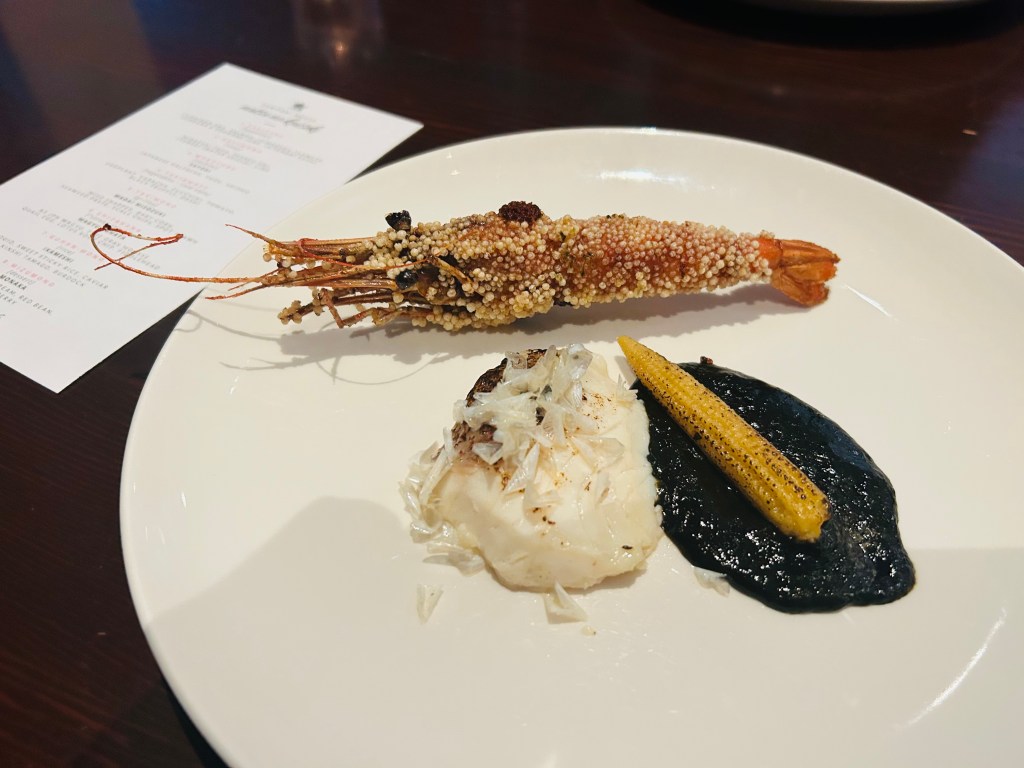
The yakimono course reminded me of the fall season. The grilled miso snapper was adorned with crispy fish scale chips and seaweed paste, reminding me of a cold October night. I loved the char on the baby corn and the giant crunchy spot prawn.

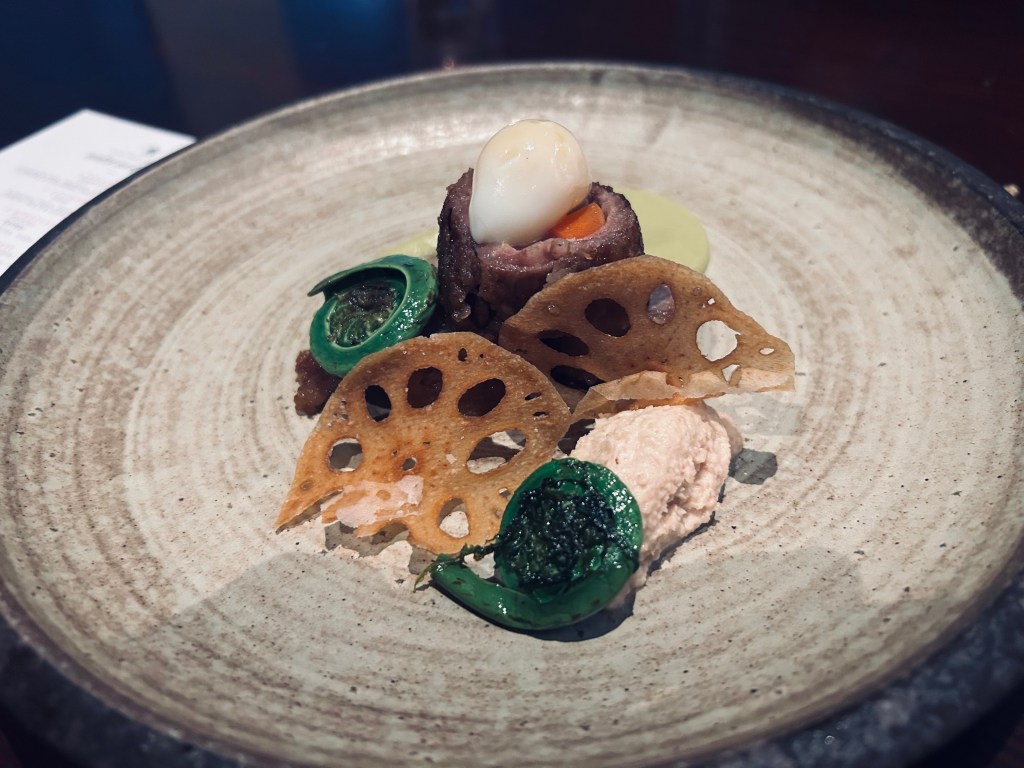
Before our shizakana course, we could smell the grounding fragrance of burning wood. I noticed the classical Japanese music was curated to each course at a volume low enough that my Shazam app couldn’t detect. Our plate of A5 Japanese Wagyu was decorated with a quail egg, foie gras mousse, lotus root chips and emerald-green fiddleheads. The foie gras melted in my mouth like whipped cream, salty and full of umami. Judith paired this dish and the next one with Terada Honke, Junmai.

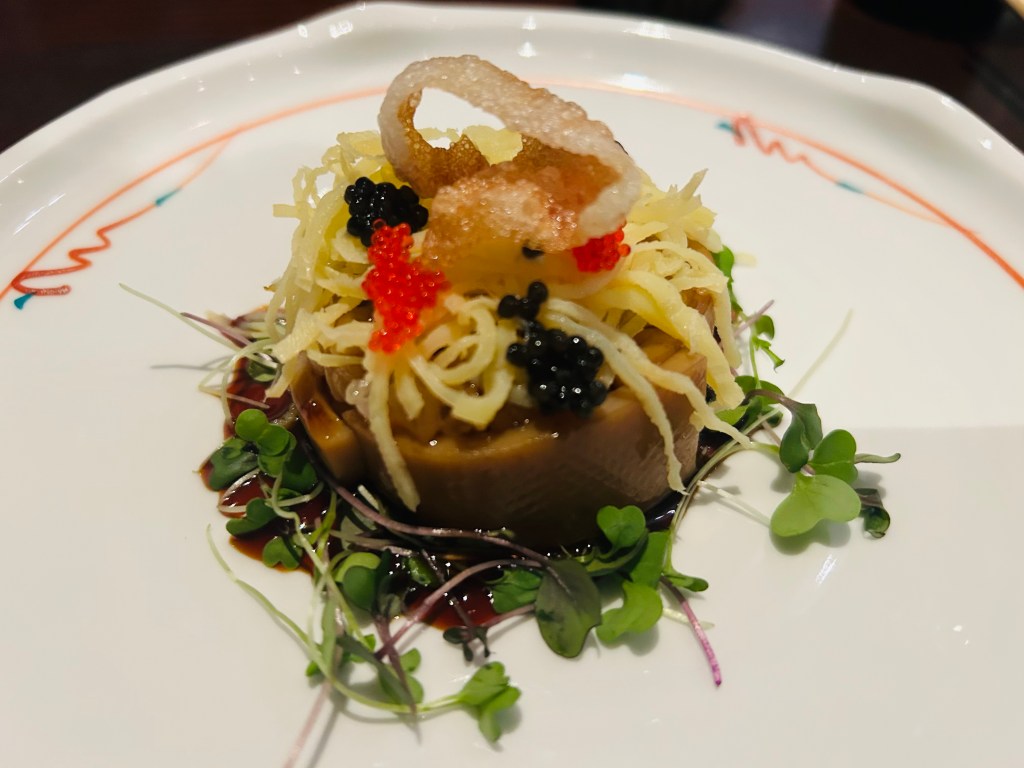
The gohan mono was a rice dish of marinated squid, caviar, tamago and burock. The dark sauce was heavy and sweet. I enjoyed the combination of the sticky rice and salty crunch from the tobiko. We drank warm cups of sake, which heated me up like a good cup of tea.

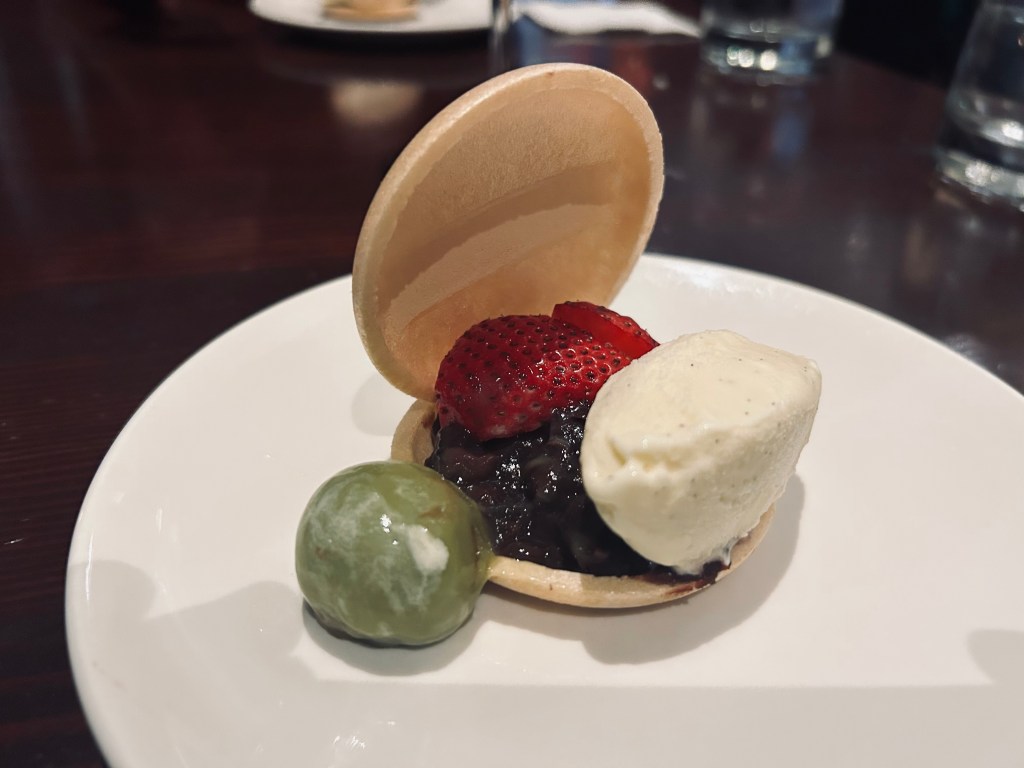
The final course, mizumono, was a fun way to end the series. The vanilla ice cream was sandwiched with red beans and strawberries. Koji said the red beans would ward off evil spirits. When I saw how much L enjoyed his dessert, I gave him mine to eat as well. I loved the pairing drink, hojicha infused sochu, a concoction of tea, cold brew coffee and Kahlua. 

L and I were impressed with all the skill, imagination and beauty that went into each dish. The dinner took a tremendous amount of effort and coordination from all the staff, and we appreciated the performance. We look forward to the next kaiseki. Thank you, Koji and L, for a glorious experience.

Japanese · Seafood · Special Occasion · Sushi

Sukiyaki House – GOAT (Greatest of All Time)

L won an award, and I received good news, so when we came home, we decided to go out and celebrate at Sukiyaki House. When I sat down at our table, I noticed almost every diner coming in was a regular. That’s pretty telling of a restaurant if all your customers are repeat offenders. Let’s listen to “My Cherie Amour” by Stevie Wonder for this post.

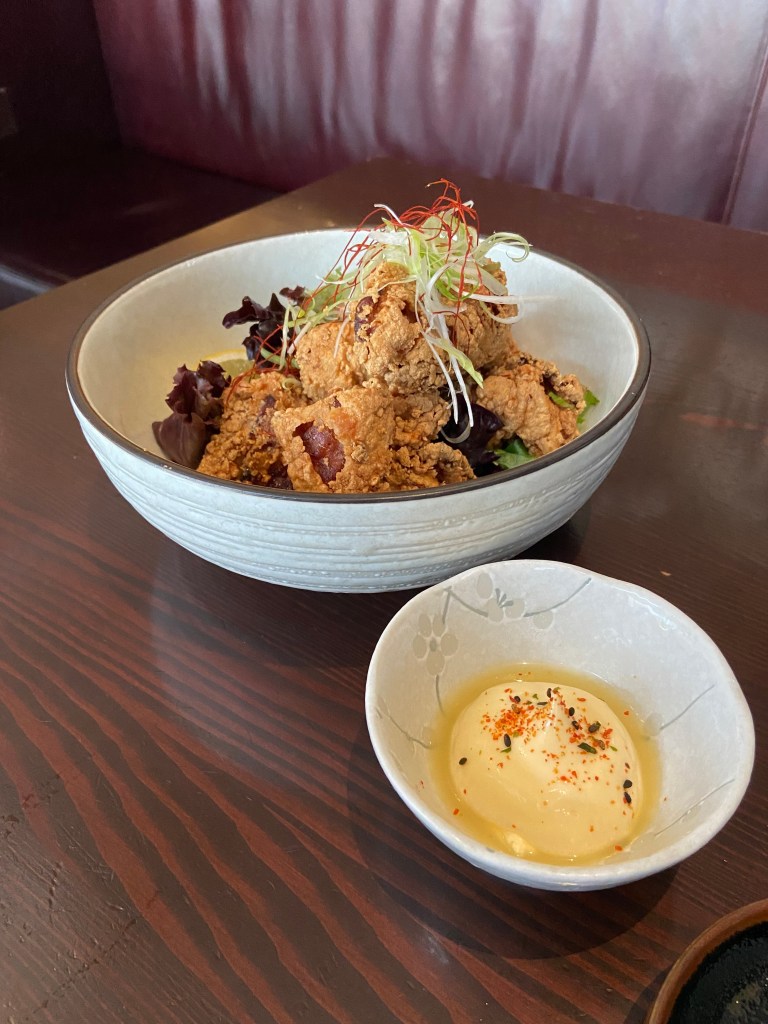
We started with an ice-cold Asahi beer (16 oz, $9) and munched on piping-hot pieces of chicken karaage ($14). When I took my first bite, I hollered, “La, la, la, la, la, la. How do they make these fatty, crunchy morsels so freaking delicious?” L grinned and looked around because I was being pretty loud. What can I say? I get excited easily. L commented that the marinated chicken was so juicy, brightened by the yuzu kewie sauce like a summer day.

That night, when I posted that Sukiyaki House is the GOAT (Greatest Of All Time) of fried chicken, a follower on Instagram DMed me to say it’s the best because it’s KFC (Koji Fried Chicken). I know Koji doesn’t prepare the kaarage because he creates specialty dishes at the front of the restaurant, but I get the gist: the standard in the kitchen is very high.

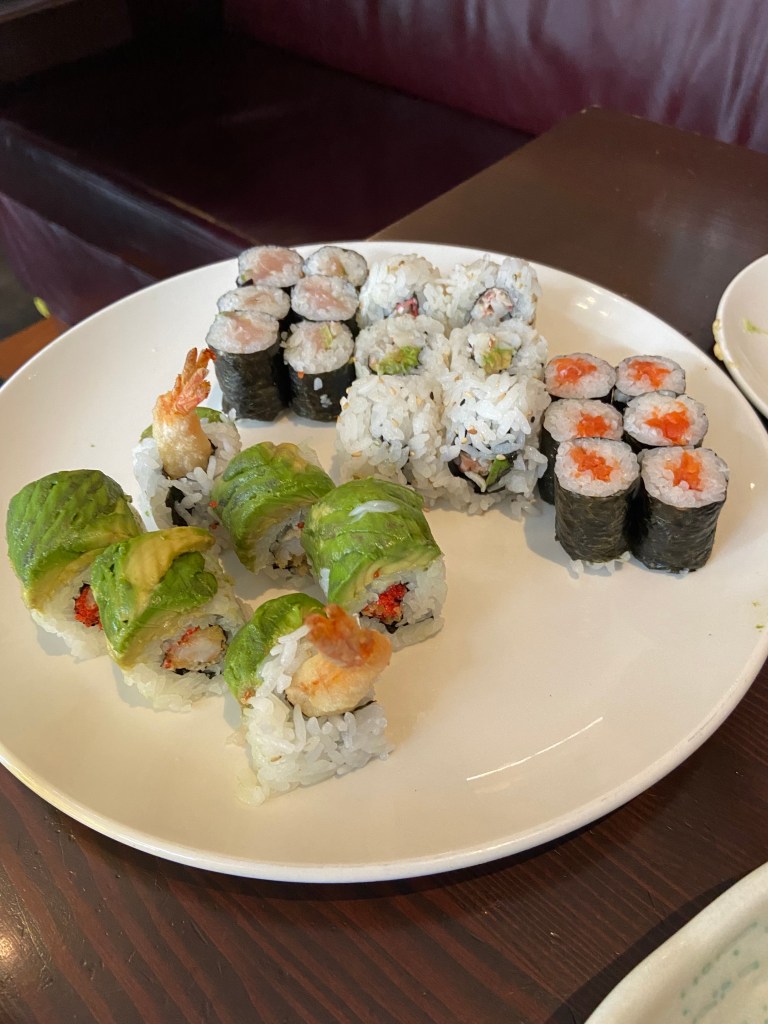
We selected some rolls and nigiri to round out our meal: Amabei (Raw Shrimp / Fried Shrimp Head, $5.50), Ebi (Cooked Shrimp, $3.60), Hamachi (Japanese Amberjack, $5), Maguro (Tuna, $3.5), Shake (Salmon, $3.50), Tako (Octopus, $4.20), Hotategai (Raw Scallop, $4.80), Negitoro (Toro / Green Onion, $7.50) Shake Maki (Salmon, $5.50) California roll ($15), and Kelly Tempura ($14).

Generally, I’m not too fond of sushi rolls, but Sukiyaki House has the only rolls my heart beats for. The rice was perfectly seasoned with vinegar and sugar. The tempura in the Kelly roll was still warm, and Sukiyaki House’s trademark airy batter with that mouthwatering flavour you only get from clean oil. So effin’ good.

I always get the California roll when I come here. The flavours hit right. I love the layers and textures of the buttery avocado, crisp nori, roasted sesame seeds and fluffy crab meat. The selection of nigiri was fresh as always, with the scallop being the highlight, plump and creamy as the Milky Way.

Next week, L and I are attending Sukiyaki House’s ‘kaiseki,’ a traditional fine-dining, multi-course meal. Koji spent a decade perfecting his craft in Osaka. So if the restaurant can make fried chicken and California rolls the highlight of my year, I can only imagine what to expect at the kaiseki.