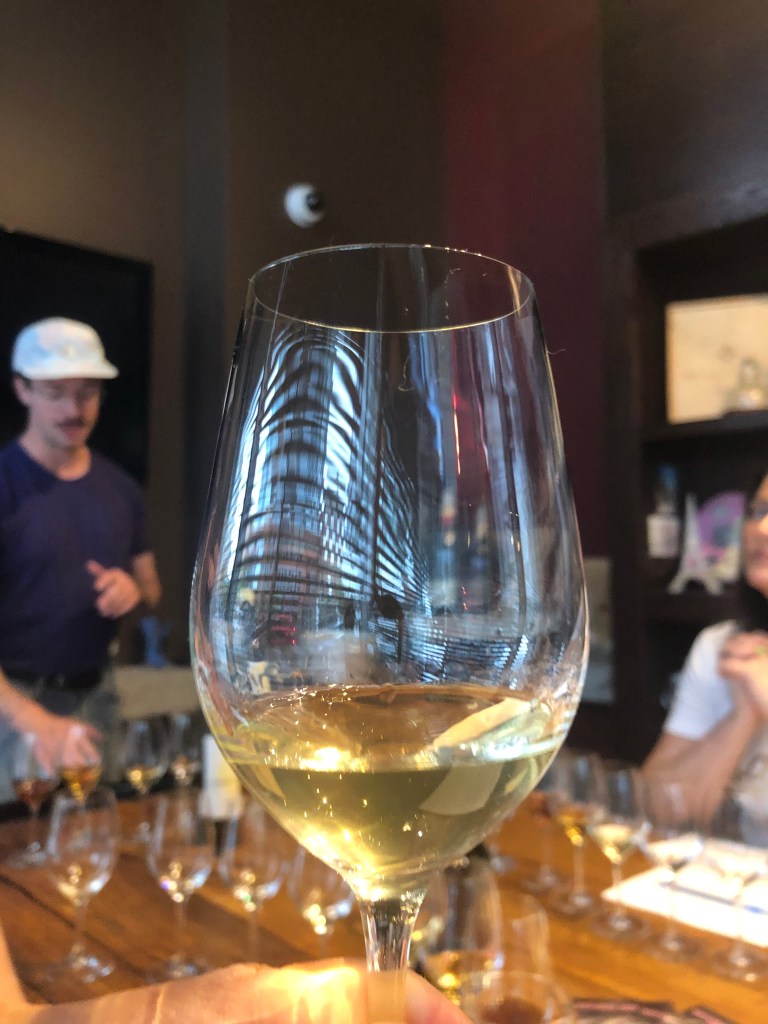
Restaurants · Wine tasting

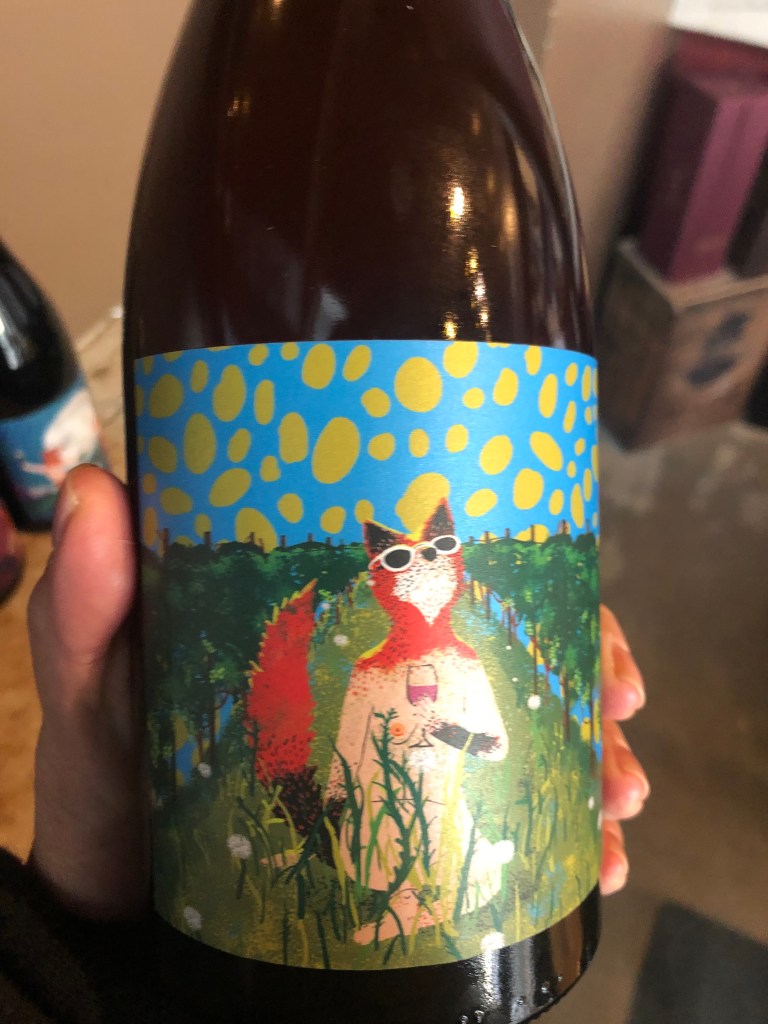
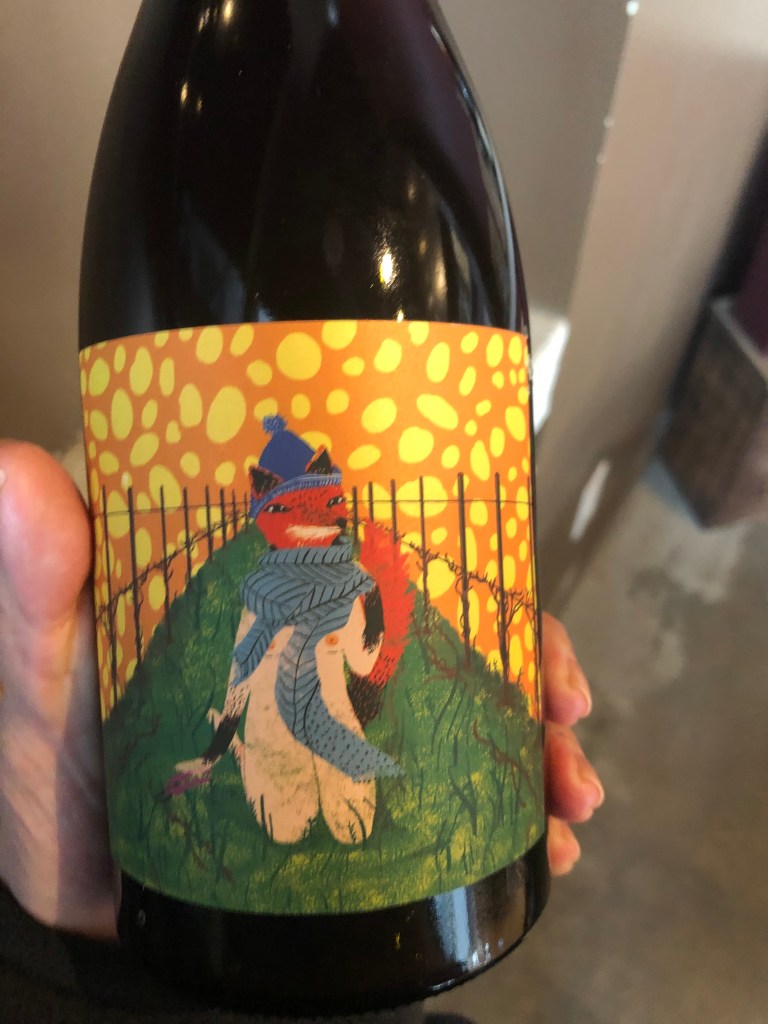
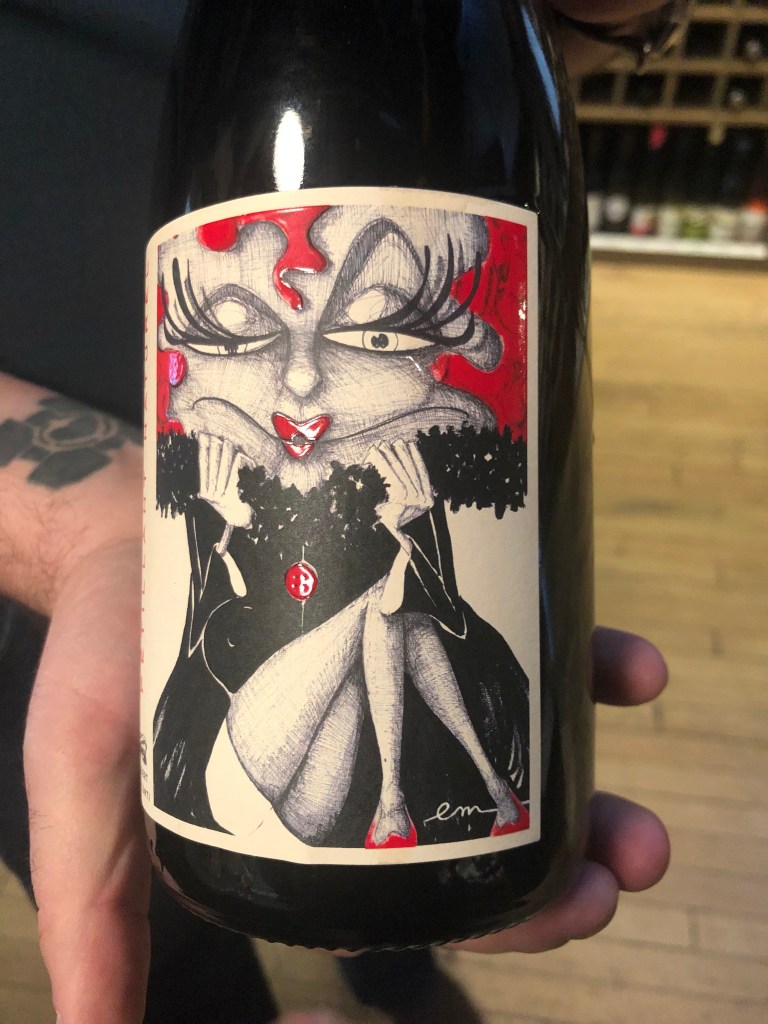
Laurent Saillard Wine Tasting Event Calgary by Juice Imports

So, it’s official – I’m a groupie. I should start wearing a Juice Import tee shirt to show my support for natural wine importers Erik Mercier and Mark Couillard. On Sunday, I took my sister-in-law Turned to Juice Import’s Laurent Saillard wine tasting ($20) at Bricks Wine Co. For this post, let’s listen to “Foux du Fafa” by Flight of the Conchords.

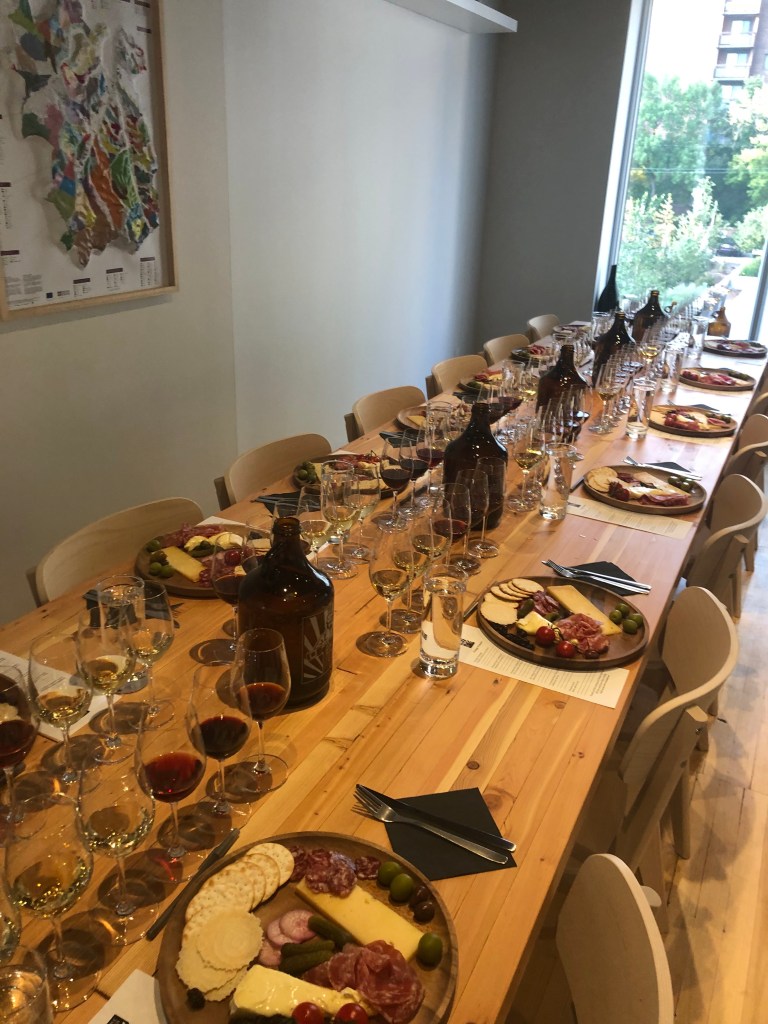
Bricks Wine Co. has one of the city’s most pleasant tasting rooms. The sunlight emitted through the windows adds warmth, while the roominess makes it comfortable to tuck into a session. Sequestered in a quiet nook in the back of the shop, guests remain mostly hidden from customers shopping in the store.

Erik began our session by delineating Laurent Saillard, a small winery in the tiny town of Pouille in Loire Valley. The owner, Laurent, and his team produce only 2,000 cases yearly. I took the information to mean I had to act quickly to pick up some of Brick’s stock, as these wines won’t hang around for much longer.
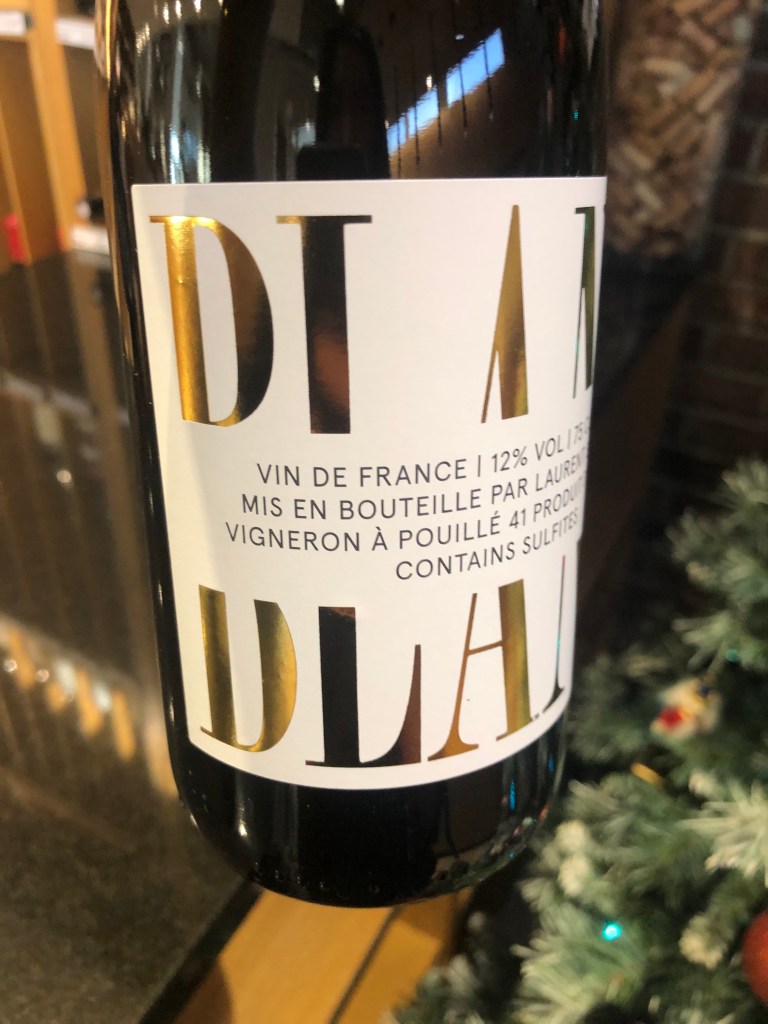
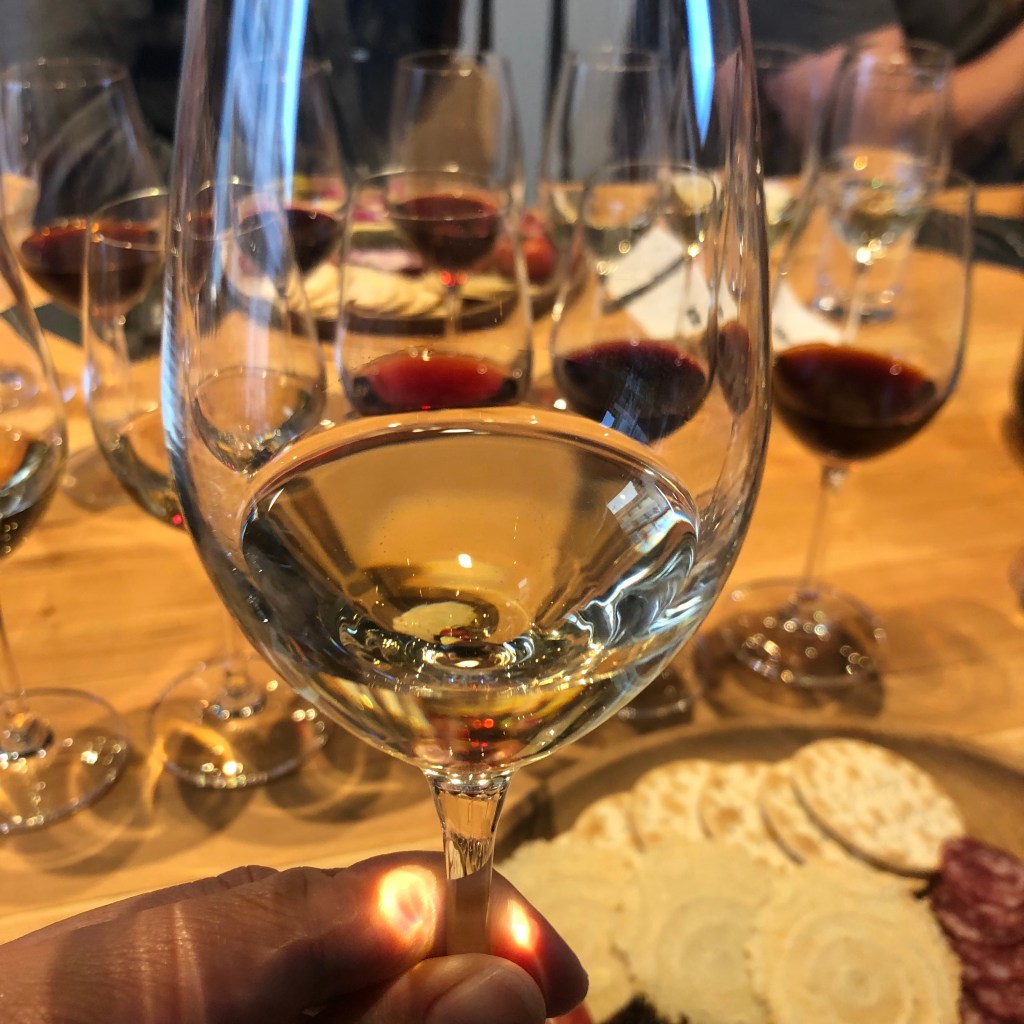
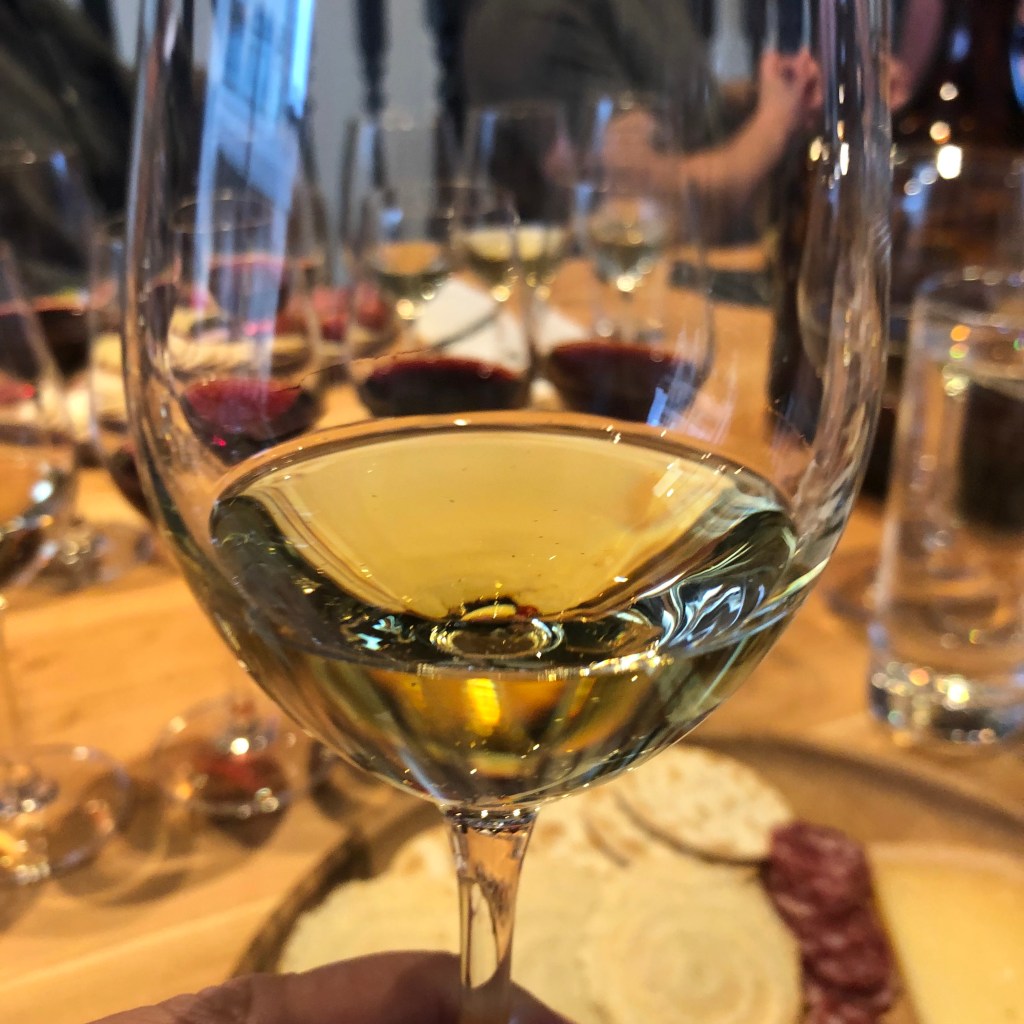
The first bottle we tried was Blank (Sauvignon Blanc, $41.95). Made from one hundred percent Sauvignon Blanc grapes, Erik described this as the antithesis of Sauvignon Blancs, so if you typically hate Sauvignon Blanc, you’ll relish this one.

Oh my goodness – what a pretty fragrance! Erik said this was the most sought-after bottle in the line-up. I loved it. Since I was buying a bottle, I asked Erik what food to pair with Blank. Considering the grassy and gooseberry notes and high acidity, he suggested something bitter, like radicchio leaves and/or goat cheese.

The second tasting was White ($37.95), a delicately sweet wine made from fifty percent Ugni Blanc and fifty percent Sauvignon Blanc. This wine is a rarity, as the wine production resulted from Laurent losing most of his crop. The White vintage is a collaboration with his neighbour and a winery in the south of France.
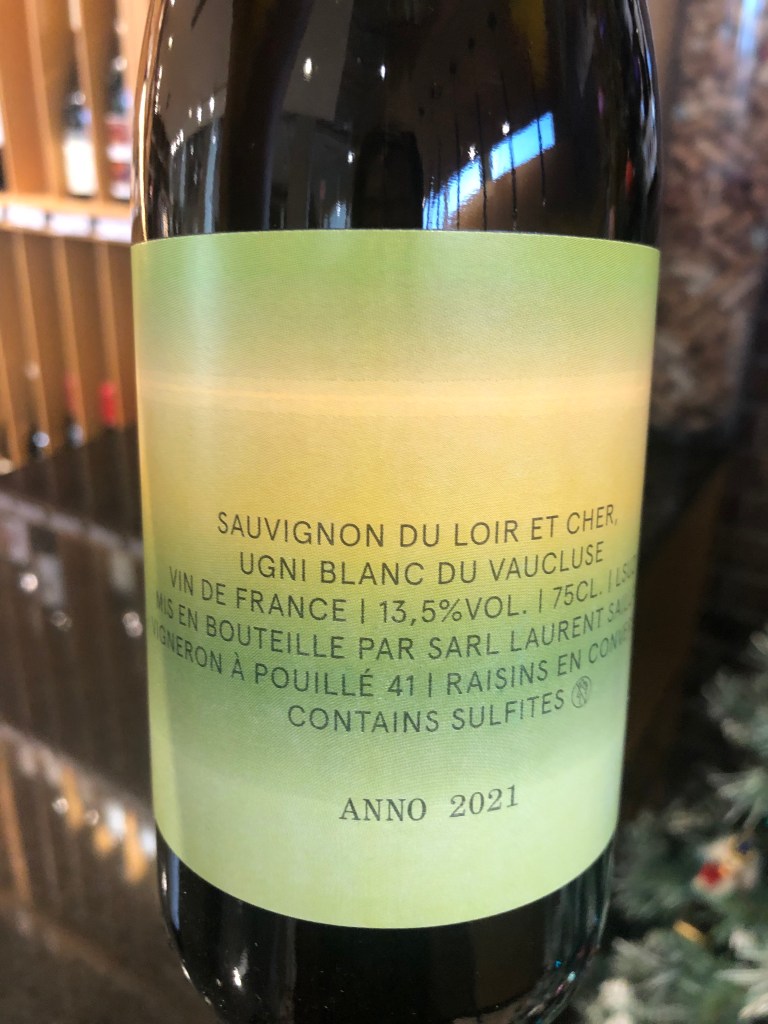
Erik described this wine as “lush, with body, weight and a ripeness to it.” I asked Mark what he would pair with White. He suggested cooked vegetables that are mild tasting in a creamy sauce. I bought a bottle to share with my vegetarian friends.

The third bottle was Un Ete Partage Grolleau ($37.95). The fragrance was floral, and the texture was silky. Erik described the wine as light, fresh and herbaceous, with a nuttiness similar to sunflower seeds.
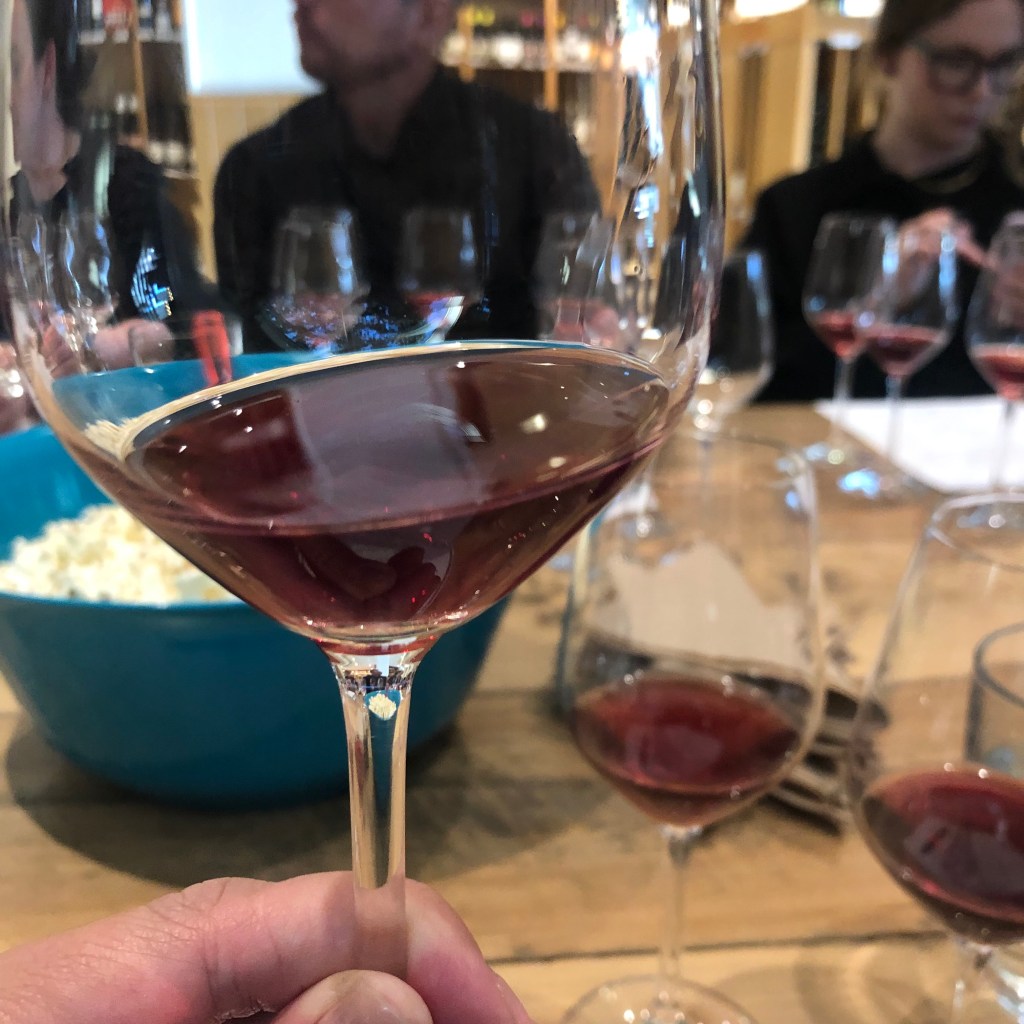
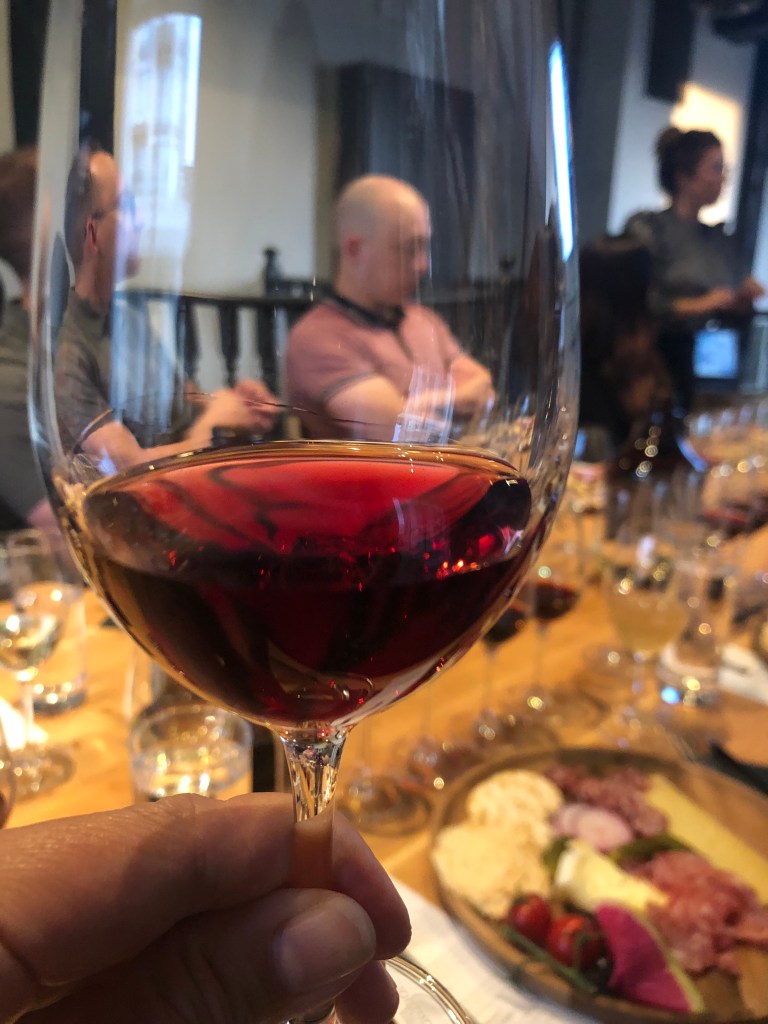
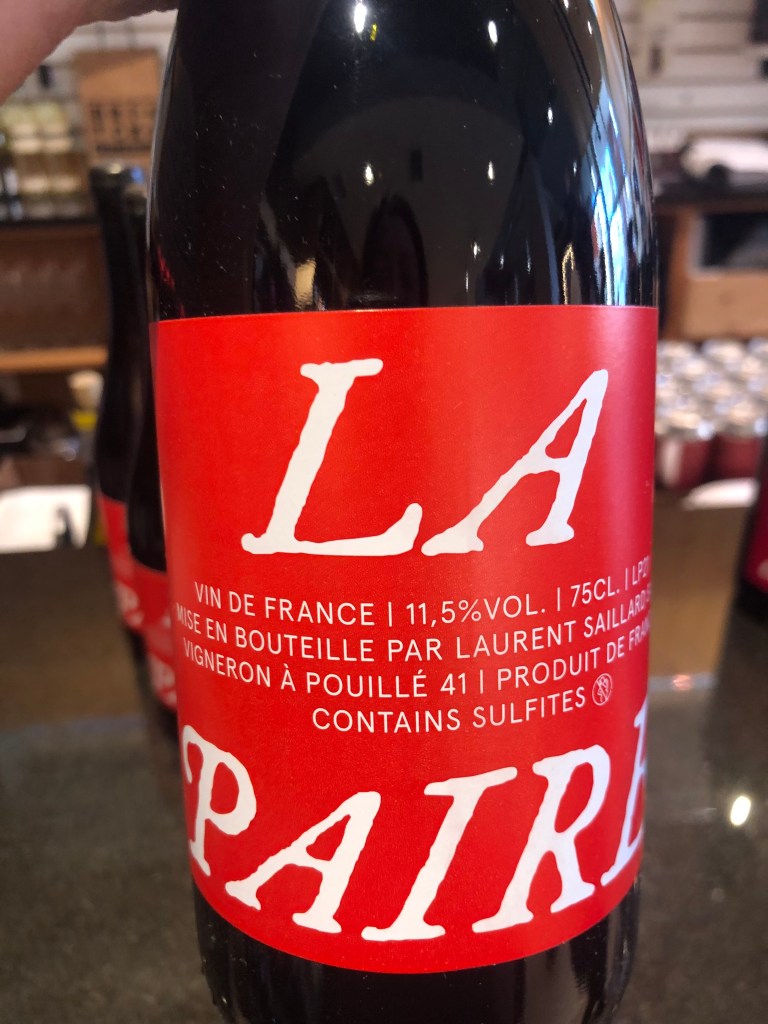
The fourth wine was La Paire Gamay Noir ($37.95). I found this a lively, wild wine with a bite to it. Erik mentioned the whole cluster of grapes and stems are kept on while being pressed. I asked what the branches add to the wine-making process. I learned that the stems are still alive and metabolizing throughout fermentation, contributing to a softer feeling of the wine.
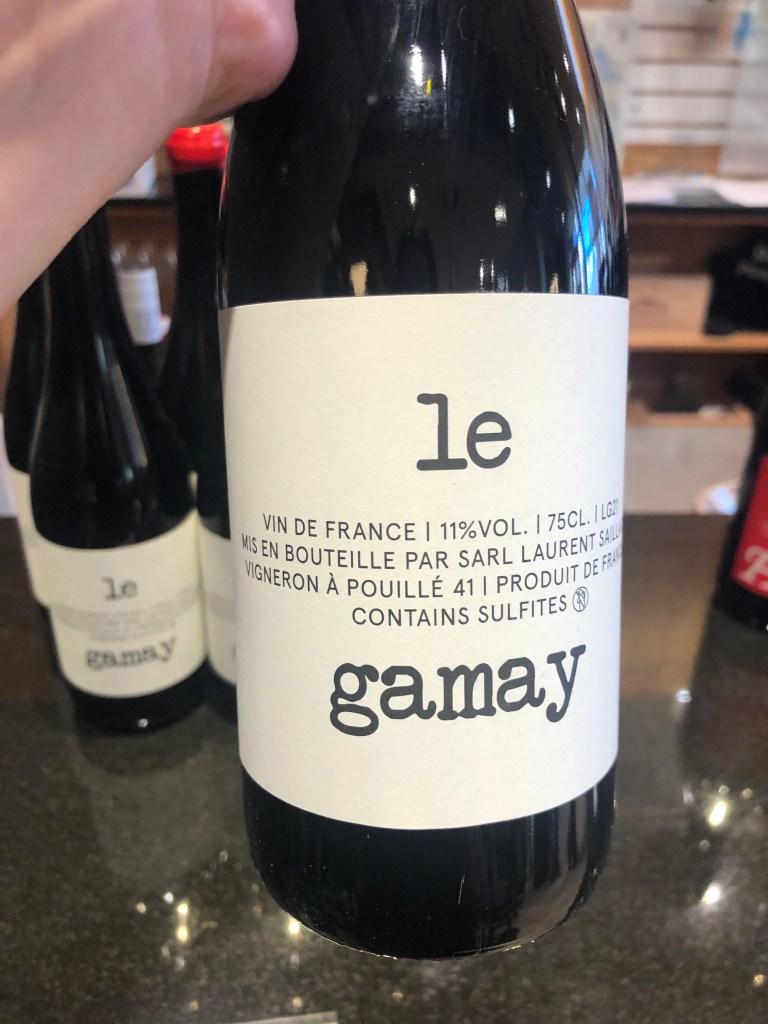
The fifth tasting was La Pause Gamay Noir ($37.95), which reminded me of the smell of a plastic Barbie doll. Turned said she smelled whiskey. I guess our lived experiences do influence what we taste in new wines.
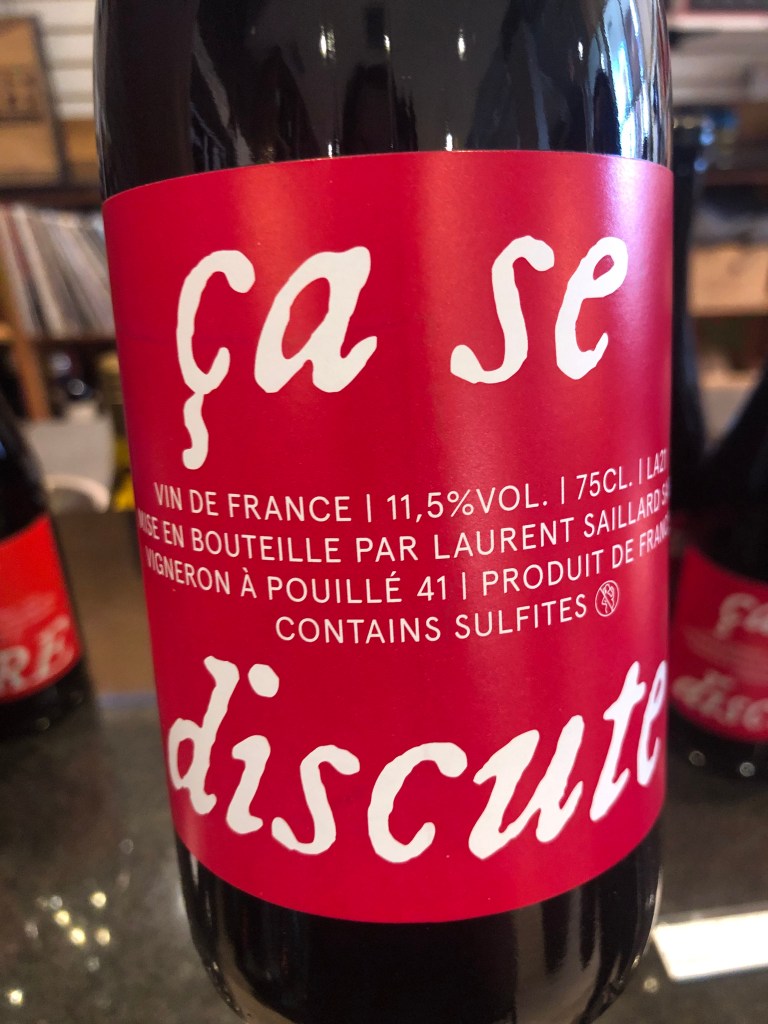
The sixth bottle we sampled was Ca Se Discute Pineau d’Aunis ($37.95). I smelled raisins. Turned tasted Dr. Pepper. Her neighbour Coke said he could taste cola. Erik described this wine as peppery with pomegranate, and he could envision eating this with salami on the steps of a cafe in Paris. Turned joked that this wine would pair perfectly with a cigarette.
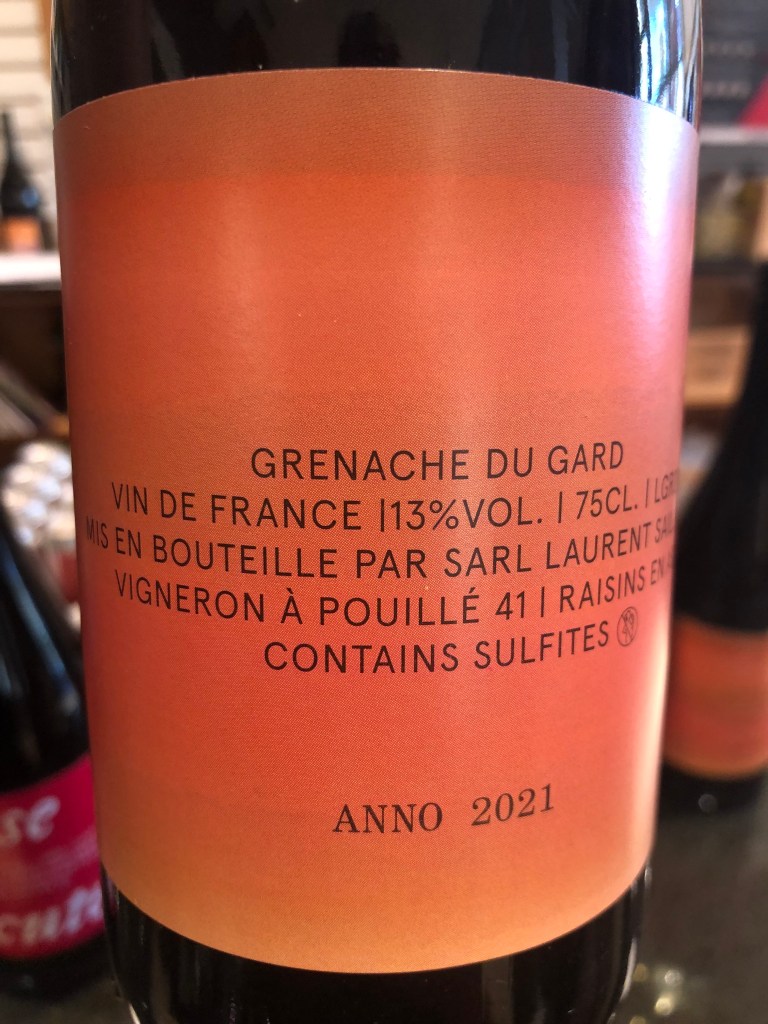
The seventh tasting was Grenache ($37.95). Erik characterized the wine as supple and aromatic. He recommended slightly chilling this wine and all the other wines we tried before drinking it. He noted the cellars in Loire Valley are cool, so the wine is brought up and served colder than room temperature. The coolness gives the wine more structure and grip and allows the flavours to pop out.
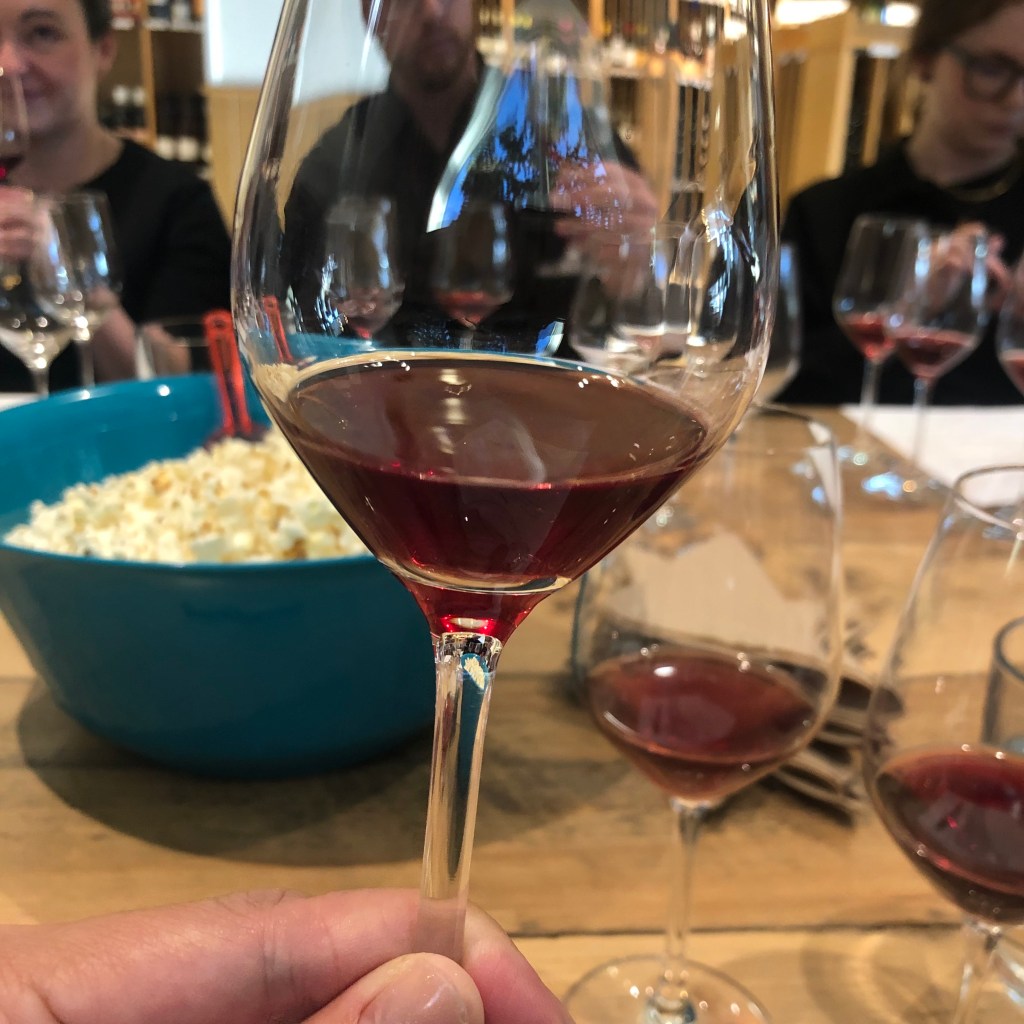
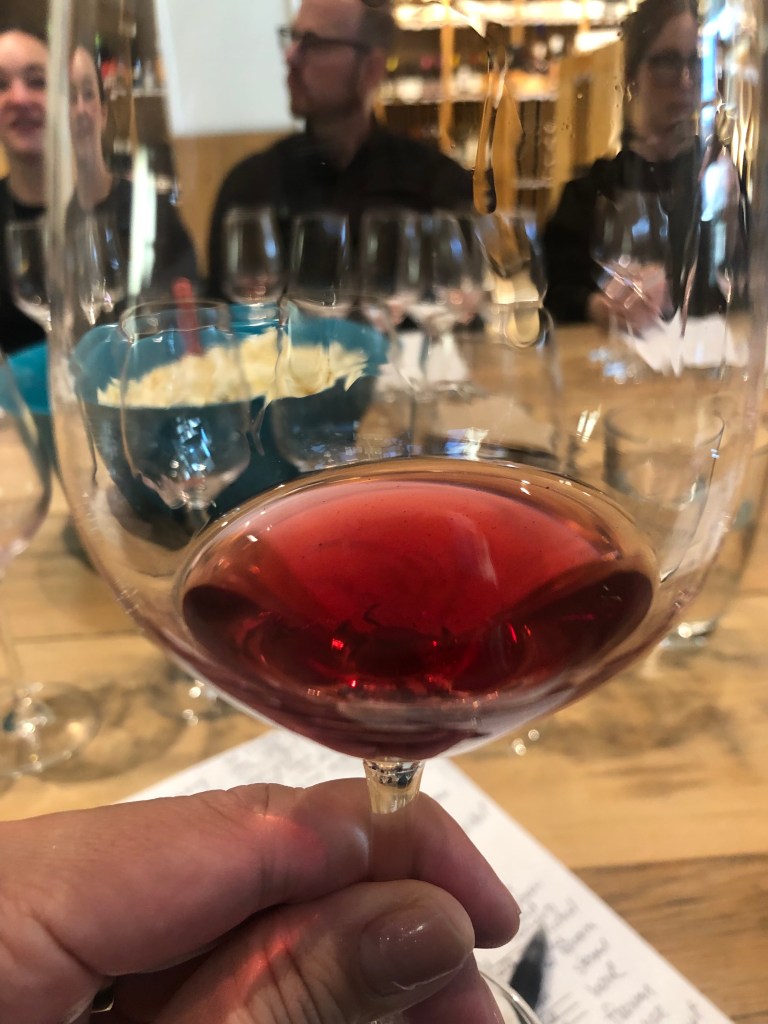
Erik and Mark surprised us with a bonus bottle from their cellar- 2017 La Pause. He described this wine as everything you could want from a Gamay Noir – soy and dried leaves backed up perfectly with cherry Cola.
As with all of Juice Import’s tastings, we received a ten percent discount on the wine we sampled. I left with two bottles, Turned with three, and another guest picked up a case of Laurent Saillard wines. With the wine seminar only costing twenty bucks, the discount on wine, and factoring inflation, this is the deal of the century! Hip, hip, hooray to Juice Imports.
Want more wine tastings? I keep a running list of Calgary wine tastings and events.
Restaurants · Wine tasting

Calgary Wine Event: Kindeli Wines Tasting with Juice Imports

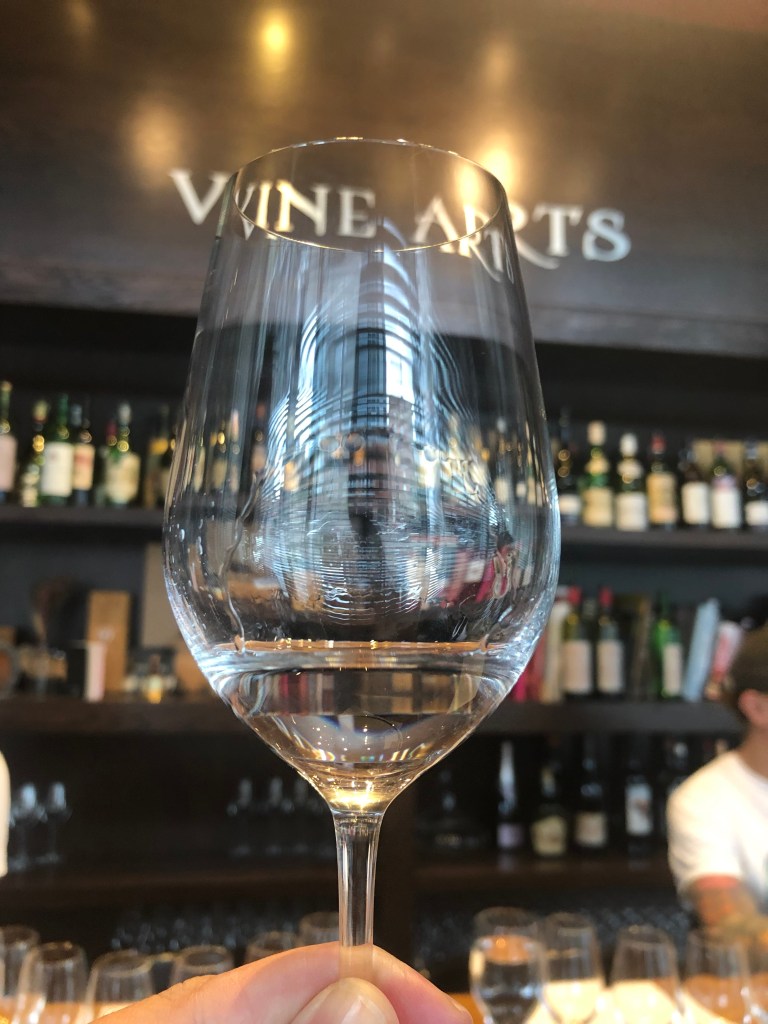
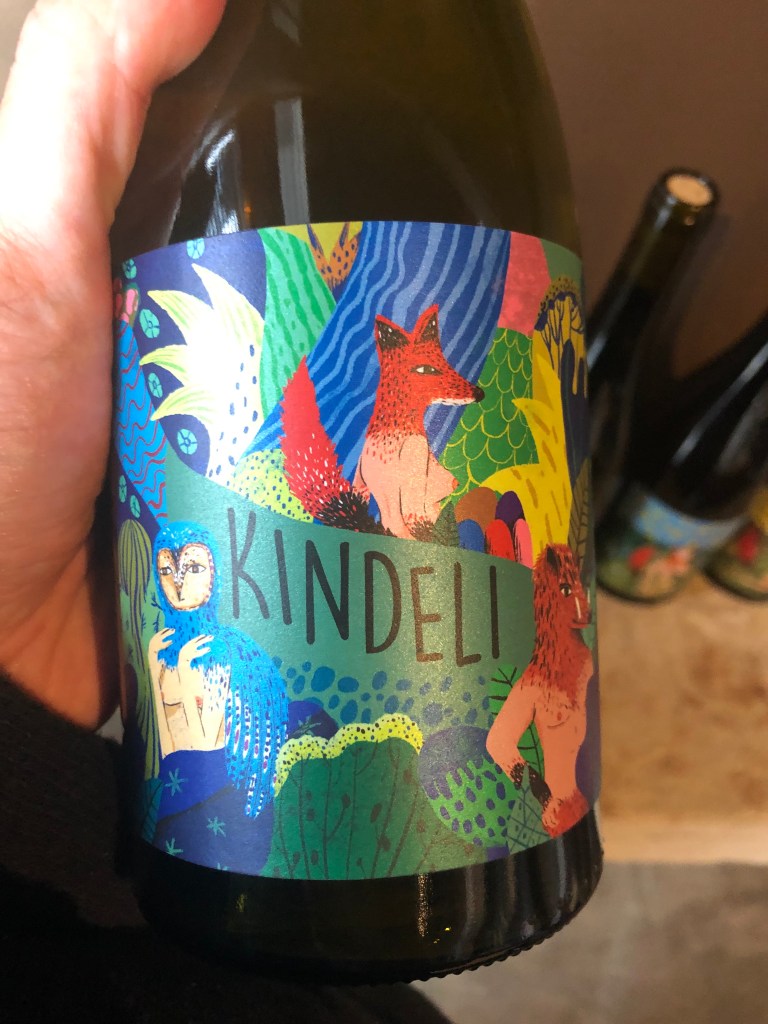
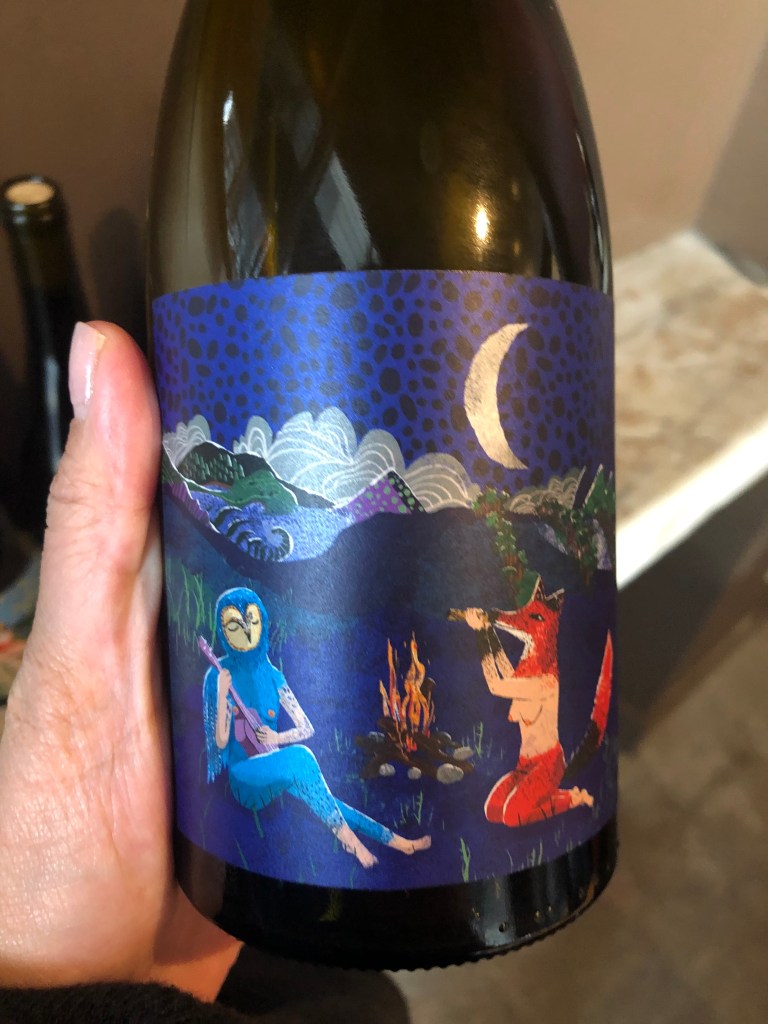
On Sunday, Kournikova joined me for a wine tasting ($29) at Vine Arts. Hosted by the co-owner of Juice Imports, Erik Mercier showcased Kindeli wines from Nelson, New Zealand. Let’s listen to “Hurt Feelings” by Flight of the Conchords for this post.

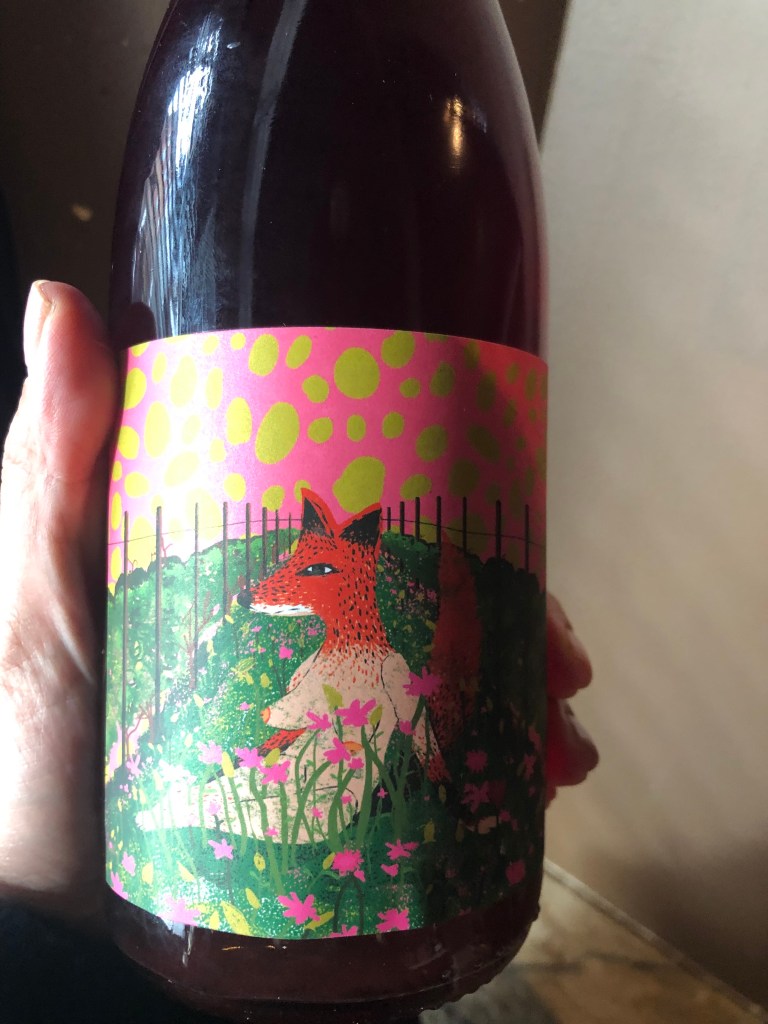
Our welcome drink was Kindeli Primavera, a rosé with a dark, raspberry-like hue and a light sparkle of carbonation. Erik informed us that this wine is made from several grapes: Riesling, Pinot Gris, Riesling, Viognier, Gewurztraminer, and Pinot Noir. He noted this rosé drinks more like red wine. Kournikova liked this one so much that she bought a bottle.

Our first official tasting was Blanco ($39.37). I was surprised when I took the first sniff, as I’d never smelled a wine like this before. Kournikova thought the wine smelled grassy. Erik described this wine as “rocking” and said it smelled like the Sauvignon grapes in Kindeli’s vineyard. He mentioned the wild fermentation process Kindeli employs results in a wider range of flavours.

Kournikova enjoyed the Luna Nueva ($44.91). This wine consists of a blend of Pinot Gris, Viognier, Chardonnay, and Sauvignon Blanc. Erik said this wine had a crazy texture, describing it as round, soft and bright.

When I asked him to define “texture” to me, he compared the difference between skim and whole milk. Erik told me to think about the words “fatty” and “saturation” and what that sensation would feel like in my mouth. For example, he stated Viognier is an oiler and heavier white wine.

My favourite wine was Verano ($44.91). Erik described this dry, fresh wine as savoury, with notes of dried apples and Oolong tea. I knew right away my girlfriends would love this bottle. I bought one bottle for my friend Sunflower, who has a penchant for orange wines.

Erik recommended pairing this wine with something funky and sweet, like a Japanese curry. He stated that Verano represents a complete picture of Kindeli’s farm, as every variety is blended into this bottle: Sauvignon Blanc, Riesling, Gewürztraminer, Chardonnay, Pinot Gris, Pinot Noir, and Syrah.

The Otono ($44.90) is made from Gewurztraminer grapes, fermented on skins for five days in an amphora (Greek vase). After the pressing, Riesling and Pinot Gris juice is added to the “spent skins”. Erik noted this wine is bottled unfined, unfiltered, and without sulphur.

Erik loved the smell of Ivierno ($44.83). He stated one of the many reasons he likes natural wines is the different breadth of flavours it produces. This wine contains about 90% Pinot Noir and 10% Pinot Gris.

Kournikova thought Tinto ($44.83) smelled peppery. Erik described the flavour as dark fruit juicy with a violet floral. Of the red wines, this was my favourite. With each sip, I noticed a new tasting note.

The last wine we tried was Luna Lena ($44.90). Erik described Luna Lena as sweet, with dark fruit characteristics. I asked him why my initial reaction to his wines changed with each sip. At first, I was unsure if I even liked the wine. However, with each quaff, I started to appreciate different flavours I didn’t pick up at first. I told him this experience is the opposite when I drink terrible wine at a pub, as even though I keep drinking it, it never tastes better, no matter how hard I wish it to be.

Erik believes it’s because we initially don’t like unfamiliar flavours that we can’t describe. It is our body’s way of warning us about poison. But after we try something new, such as wild fermented wines, we get used to the unique flavours and begin to taste other things.

I’m looking forward to Erik’s upcoming events in November and December. I already booked up each class he’s teaching. These wine seminars are so cheap that I can afford to splurge on fancier bottles for my forthcoming Christmas parties. Hitting the Sauce gives Erik’s evident passion for natural wines two phat thumbs up.

Want more wine tastings? I keep a running list of Calgary wine tastings and events.
Restaurants · Wine tasting

Calgary Wine Tasting: Fringe France at Vine Arts

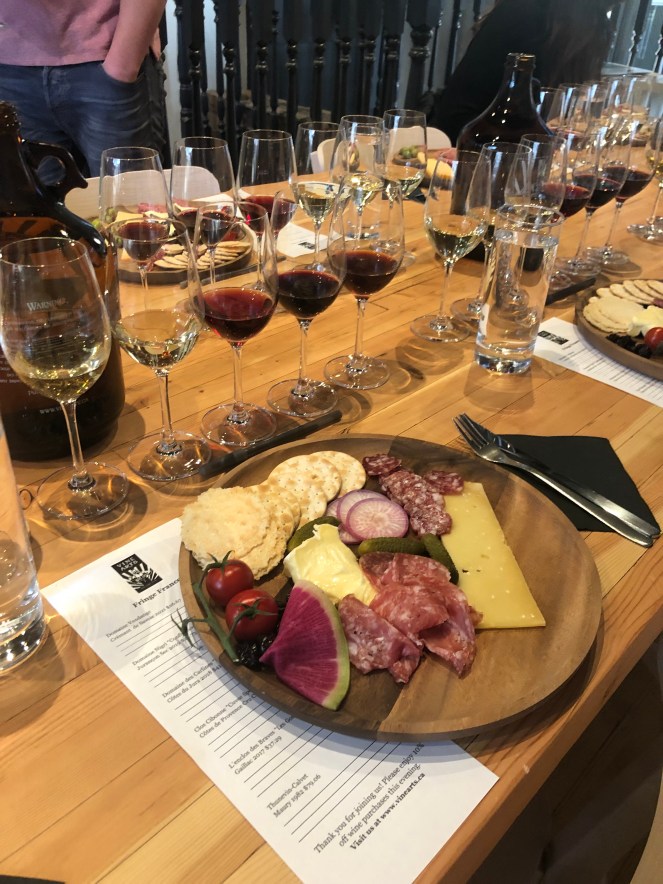
On Friday evening, L, Bottlenick, and I went to the Fringe France wine tasting ($50) at Vine Arts on 17th Ave. Klaire McCallum, our host for the evening, selected wines from France’s lesser-known regions from wineries that produce only a small number of wines each year. Choosing this class was a no-brainer for me, as I have an infinite love for French wines. For this post, let’s listen to “A Bicyclette” by Yves Montand.

Vine Art’s tasting room is brand-new, located on the store’s second floor. We sipped a glass of sparkling wine and introduced ourselves to the guests closest to us.

Everyone was given a gorgeous cheese and charcuterie plate from Peasant Cheese. The brie was ripe and creamy. The gouda was even better, hard yet smooth, with a bit of texture. The charcuterie was so tasty that I chewed slowly to extract the most flavour from each bite.

The first wine we tried was the Domaine Vendange Cremant de Savoie 2021 ($26.67). We learned the location of the winery borders Switzerland and Italy, and the region produces one percent of France’s wine production. Bottlenick commented the wine was toasty. There was a breadiness to it that reminded me of champagne. Klaire recommended pairing this bubbly with alpine cuisines, such as a tartiflette. I bought a bottle of this wine and planned to bring it out while hosting a raclette dinner party.


The second wine was Domaine Nigri “Confluence” Jurancon Sec 2019 ($29.73). This winery is located in the southwest of France, close to Spain. Klaire described this wine as intense, with notes of passionfruit. L said it tasted tropical, while Bottlenick thought it was soft, interesting, and unique. Klaire advised pairing this wine with something rich, like foie gras or duck.

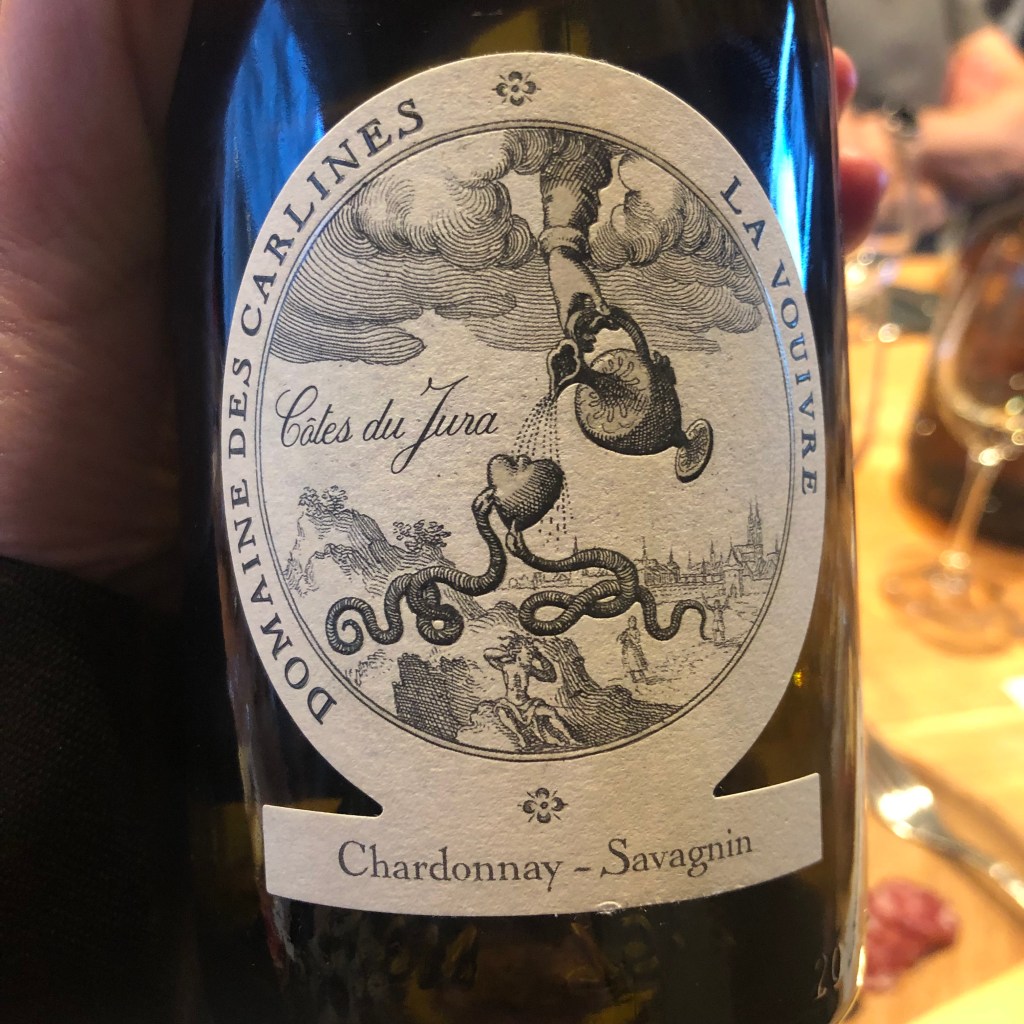
I enjoyed the third wine – Domaine des Carlines La Vouivre Cotes du Jura 2018 ($41.19). Klaire noted Jura is famous for its yellow wines and known for its dry and sweet white wine. Bottlenick and L were fans of this wine as well. Bottlenick thought it was oily, while L said it was slightly sweet. I thought it tasted good.

The fourth wine hailed from Cotes de Provence – Clos Cibonne “Cuvee Speciale Tibouren” 2021 ($58.30). Although the region is famous for its rosé wine, we tried a red wine with a see-through ruby hue. Klaire described this wine as herbal, with rosemary, thyme and lavender notes. L thought the wine tasted peppery.

There were two very interesting points Klaire shared with us about alcohol content and acidity. First, she pointed out the rosé’s alcohol content was 14%. She explained that the higher the alcohol, the more texture and feeling a wine has. Second, she mentioned that wine with high acidity makes the mouth water, while wines with lower acidity create more of a mouth-coating sensation. Klaire stated acidity in wine is desirable when paired with certain dishes, as it helps to cut into the fattiness.

The winning wine for me was the fifth tasting – L’enclos des Braves “Les Gourmands” Gaillac 2017 ($37.29). Klaire suggested pairing this wine with charred food, a stew, chili, or soup. I loved this wine so much that I bought a bottle. I’ll break this wine out the next time I burn a dish for a party.

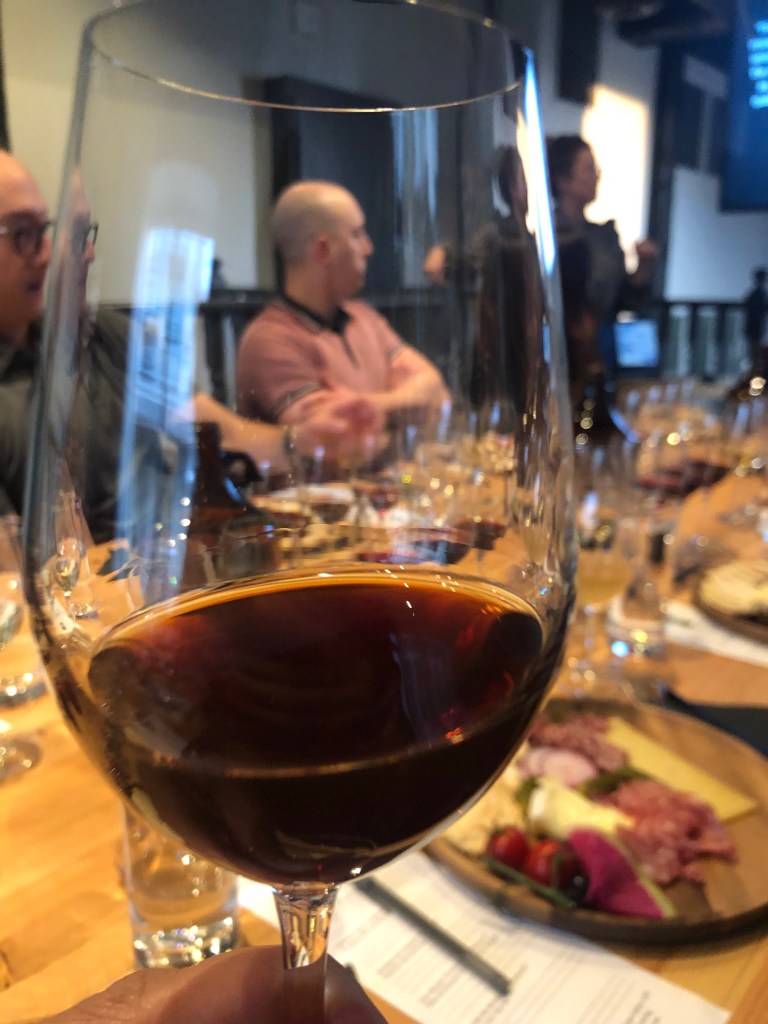
Our last tasting was Thunevin-Calvet Maury 1982 ($79.06). L joked that the wine was almost as old as me. I thought this wine wasn’t as sweet as it smelled and tasted a little like a raisin. This is one of the best ports / dessert wines I’ve tried. We learned this wine is produced on mountain landscapes in a dry, hot, rugged climate. The shrubbery the grapes grow on has deep roots. Due to the poor soil, the stress on the grapes produces the best wine.

By this point in the night, everyone was comfortable, and I heard shouts of “walnut” and “bitter almond” thrown around. When asked what makes a wine worth aging, Klaire listed three things – it must have complexity, tannin structure, and acidity.

Klaire detailed how old this wine was and how this type of wine was made 400 years before the port was made through the mutage mechanism. I piped up and said I didn’t think 40 years was very old at all. The person across from me reminded me we were talking about wines, not people.

These wines were not easy drinking, patio-crushing bottles I usually consume with my girlfriends. However, Klaire noted that she picked unique wines that paired exceptionally well with food. She wanted us to try wines with attitude, not face-ripping weird wines. She succeeded – as I thoroughly enjoyed her selection.

Want more wine tastings? I keep a running list of Calgary wine tastings and events.
Restaurants · Wine tasting

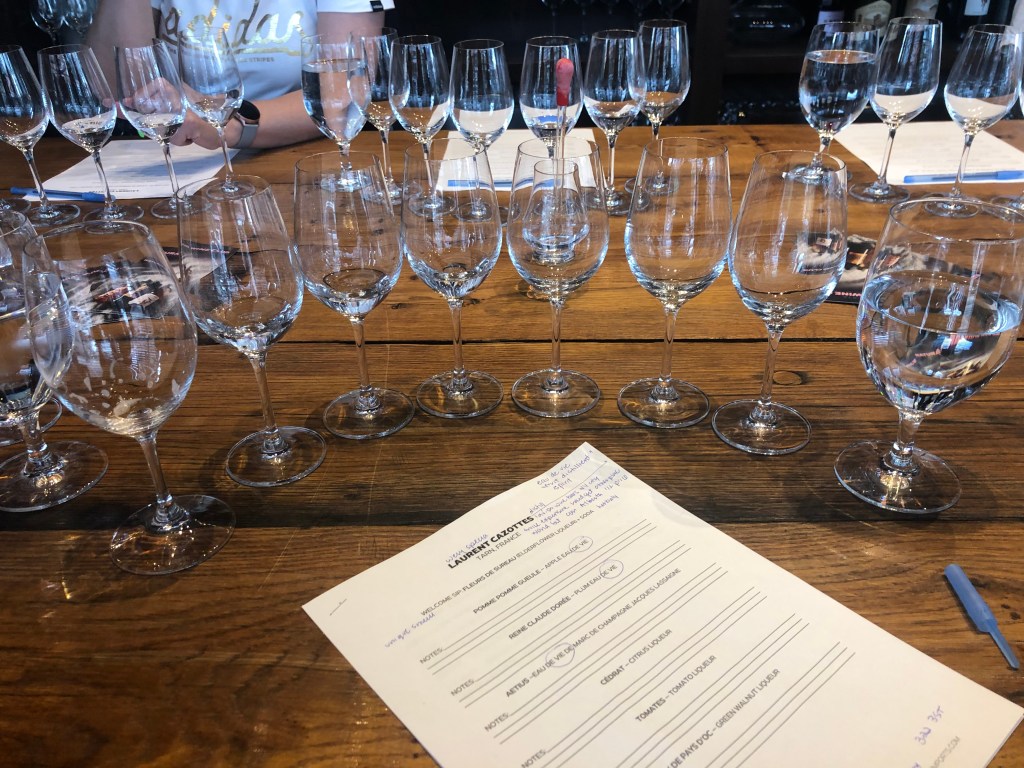
Laurent Cazottes Wine Tasting at Vine Arts Calgary (Juice Imports Event)

My buddy Chen is in town! I invited him to my newest addiction, a spirit tasting ($30) by Juice Imports at Vine Arts. I told Chen this was a rare event, as there are less than 30 bottles of each cuvée in Alberta. For this post, let’s listen to “We’re Are Going to Be Friends” by The White Stripes.

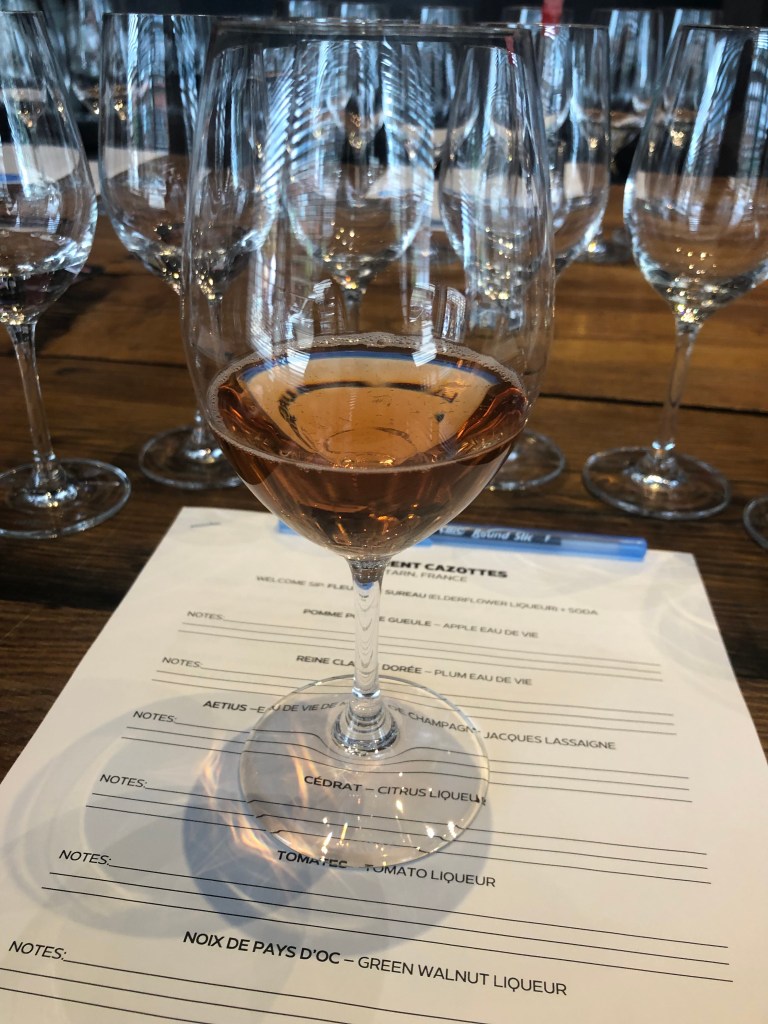
Erik was showcasing seven different spirits and liqueurs from Laurent Cazottes. Located in Tarn, France, Laurent Cozottes is a small farm with only 10-20 hectares of land. Erik told us that “eau de vie” means fruit distillment. He describes eau de vie as wine-like but with the spirit of fruit. Erik has a way with words.

We were treated to Fleurs de Sureau mixed with bubbles (Elderflower Liqueur, $54) for our welcome drink. I found the fragrance unique. Chen enjoyed this refreshing cocktail.

We learned the process the owners of Laurent Cazottes employ is time-consuming and labourious. For example, for the apple eau-de-vie, each fruit is hand quartered, the seeds scooped, destemmed, and made into a delicate cider through a maceration process. Then, a small quantity of the cider is distilled and aged in a glass bulb for years to create a smooth, soft finish with a ton of complexity.

The Pomme Pomme Gueulle (Apple Eau-de-Vie, $108) has a strong scent. Erik said he could smell the essence of the apples. The apple eau-de-vieu is made from 15 varieties of apples from the estate. As I sipped, I felt a warmth in my throat. Erik suggested adding drops of water to change the flavour profile and observe how the oil separates from the water. Erik drinks eau-de-vieu straight up but also recommended serving it with crushed ice and bubbles.

The Reine Claude Dorée (Plum Eau-de-Vie, $89.50) is made from golden green plums. Erik thought this was the most expressive de vie – a powerful floral violet. I enjoyed the full body and rich texture. However, I didn’t finish the entire glass because I felt buzzed. Erik said we could spit out the alcohol, but I whispered to Chen that I don’t drink to just taste but also to feel. Chen snickered and told me to slow down, pointing out that I drank more than him and perhaps I was getting too intoxicated. I responded that he was reminding me of my mother.

The Aetois (Eau-de-Vie Marc de Champagne Jacques Lassaigne, $90) is made from fresh champagne pressed grapes, mixed with water to extract the full flavour from the skin, then fermented for a lengthy period. Erik mentioned the eau-de-vine has a strong chardonnay finish with some fire. Someone else said it was spicy. Mark, Erik’s business partner, said he could taste blueberry. Unfortunately, I didn’t taste what everyone else was describing and began wondering what was wrong with my tastebuds.

The Cedrat (Citrus Liqueur, $63) tasted a little bitter from the pith of the lemons. However, the smell was bright and sunny. Erik told us that the citrus liqueur is aged in barrels and blended with fresh grapefruit. Chen said he could taste the lemon peel. I found the citrus liqueur intense and refreshing.

The Tomates (Tomato Liqueur, $66) is made from 72 varietals of tomatoes from the farm. Chen smelled sun-dried tomatoes and tasted prunes. Erik described this liqueur as having lots of umami with a sweetness to it. He said that everyone’s experience influences what they taste, and what matters most is how the spirit feels and impacts you.

The next tasting was Noix de Pays d’Oc (Walnut Liqueur, $52.50), made with green walnuts, wine and brandy from the farm’s production. I could taste brown sugar. Erik described this liqueur as savoury, rich and supple. Laurent Cazottes uses a solera process for aging and blending this liquor, which produces a higher range of flavours and complexity as all the vintages play together.

We were given a special treat for our last tasting – De Poire Williams, a pear liqueur. I could smell and taste pear. Erik declared that these particular spirits taste alive because of the farming techniques employed. In organic farms, the fruit is far superior, making it a better product. Chen told me he was glad he came; as it was an eye-opening experience.

According to Erik, if stored in a dark place, the eau-de-vie lasts forever. For the lemon and tomato liqueur, you will want to drink it within three weeks, as you will lose some of the freshness. The walnut liqueur can last three months in the fridge.

I learned that Calgarians don’t know how lucky they got it. Typically these liqueurs are only found in the most lavish wine bars in New York. Even if you could get your hands on a bottle at a specialty liquor store, it is twice the amount that sells at Vine Arts.

With the rising cost of groceries, I’m eating out less and entertaining more at home. That’s why I love coming to Erik’s Sunday wine tastings. I can taste incredible wines for an insanely low price and pick out new fun drinks to hopefully impress my guests. After consulting with Erik, I bought the walnut liqueur for an upcoming dinner party and a bottle of Cocchi Rosa to liven up some Italian bubbles I purchased for my forthcoming Stampede party. I also concocted a fruiter, sweeter alternative for the lightweights.

I hear Erik is hosting a traditional wine tasting in two weeks. I’m heartbroken, as I can’t make it on that Sunday. If you are lucky enough to snap a seat, send me a note and tell me what I missed out on.

Want more wine tastings? I keep a running list of Calgary wine tastings and events.

Restaurants · Wine tasting

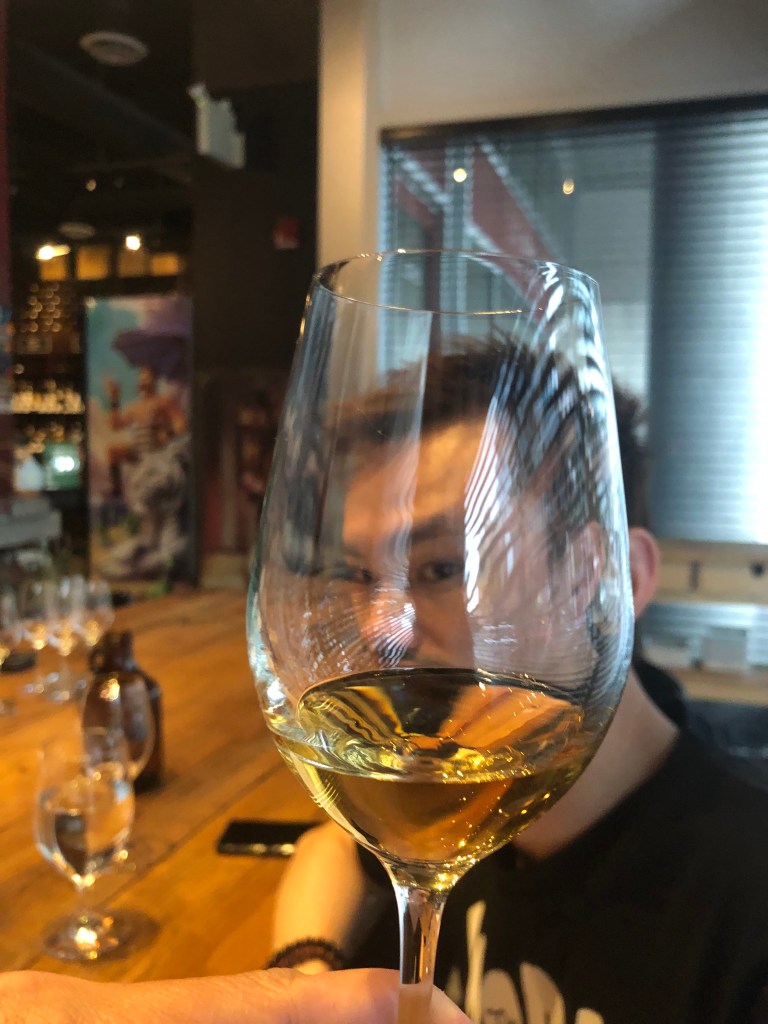
Calgary Wine Tasting: Meinklang by Juice Imports

Sunflower brought over a beautiful wine from Meinklang for me to try. The next day, I saw Juice Imports was hosting a Meinklang tasting ($20) at Bricks Wine Company. I took this as a sign and snapped up two tickets. For this post, let’s listen to “Hang Me Up To Dry” by Cold War Kids.

A thoughtful employee from Bricks Wine Company called me before the tasting to remind me of a marathon in Inglewood, which shut down several main streets. She suggested a roundabout way to access the wine store. I promptly informed Books, Sunflower’s fiancé, who was dropping us off. I offered to book an Uber back, but Sunflower mentioned that with Covid, Books prefers her not to take public transportation or Uber. He kindly came and got us after the event.

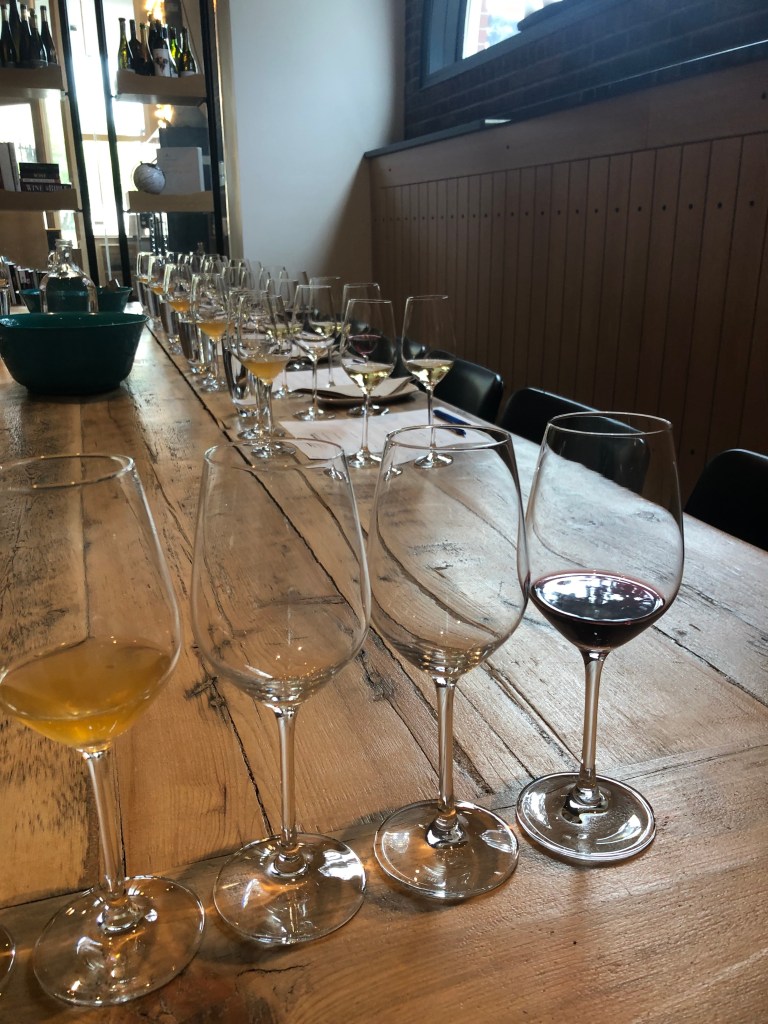
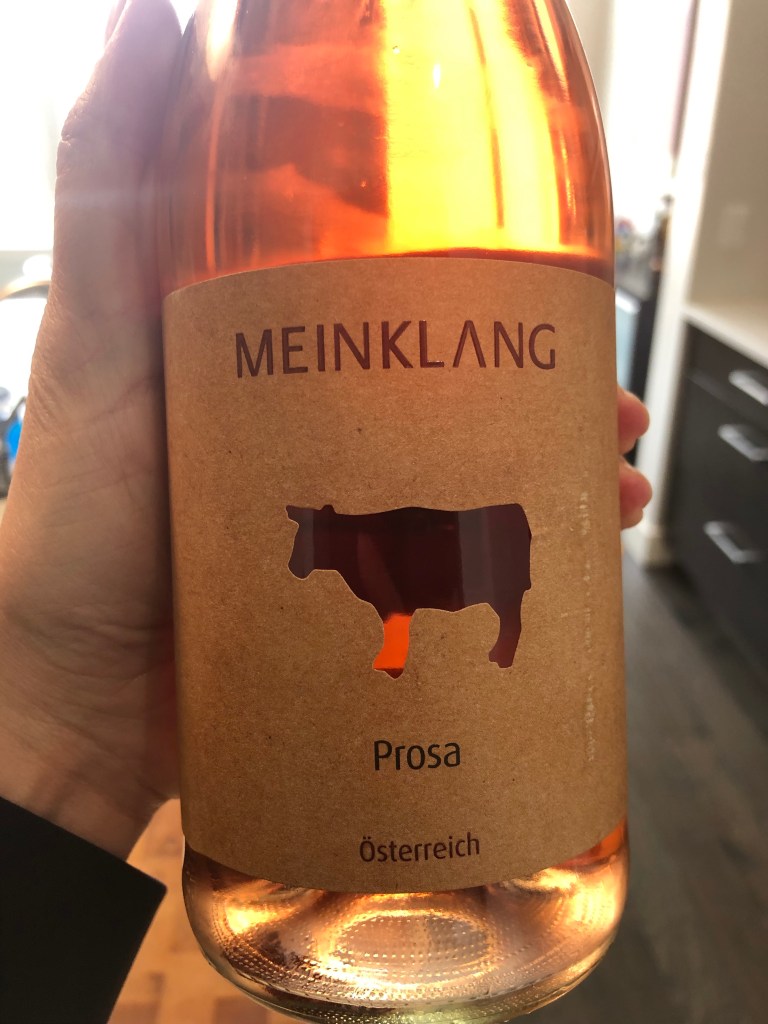
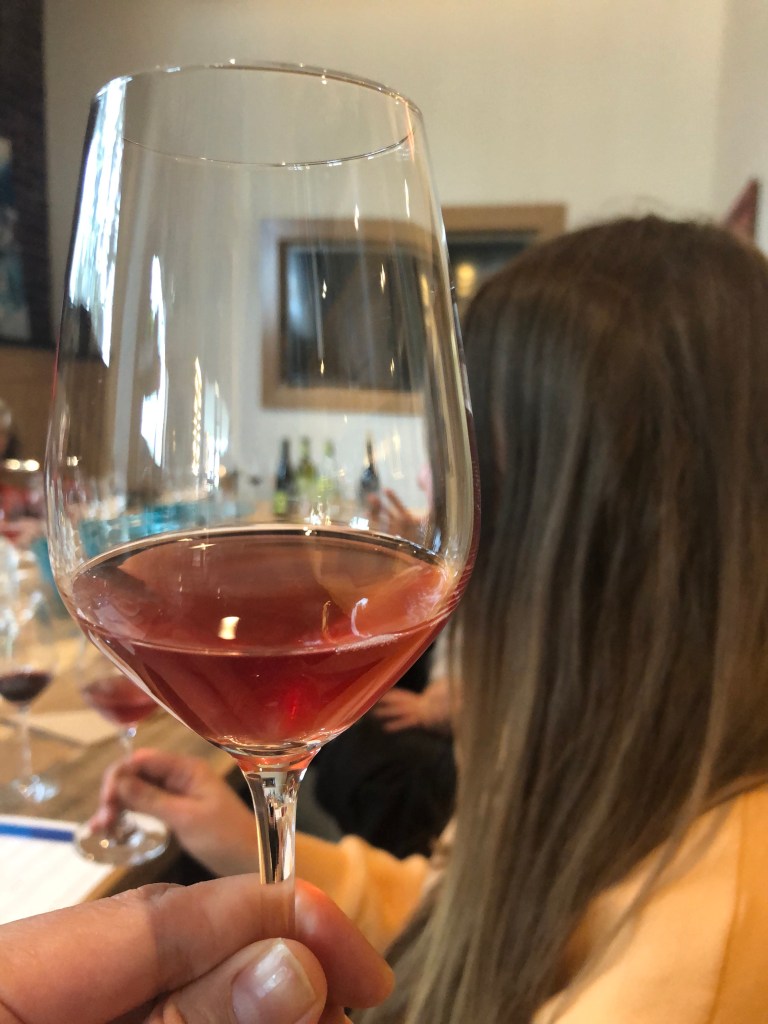
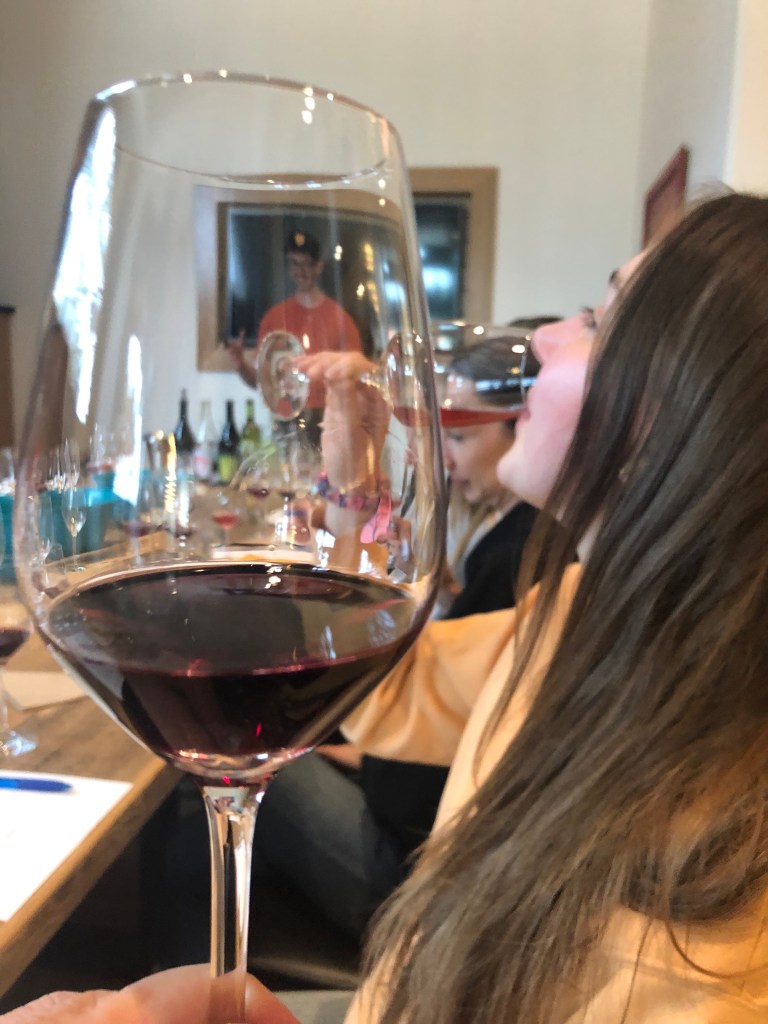
Once we arrived, we sipped on a flute of Prosa, a sparkling rosé. I adore this wine – it’s juicy, bright, yet subtle. I ended up buying two bottles. We sat in a beautiful tasting room, similar in vibe to Vine Arts, where I attended Juice Import’s past wine tastings. I think both venues would be ideal for hosting a team-building event.

We learned that Meinklang is located in Burgenland, Austria, bordering Hungry. Ponds and a lake surround the certified biodynamic family farm. Erik informed us the nearby water takes in the heat and slowly releases it, which helps prevent fluctuation in temperature. He added that it is hard not to like these gentle, charming wines. I agreed, already swooning from the Prosa.

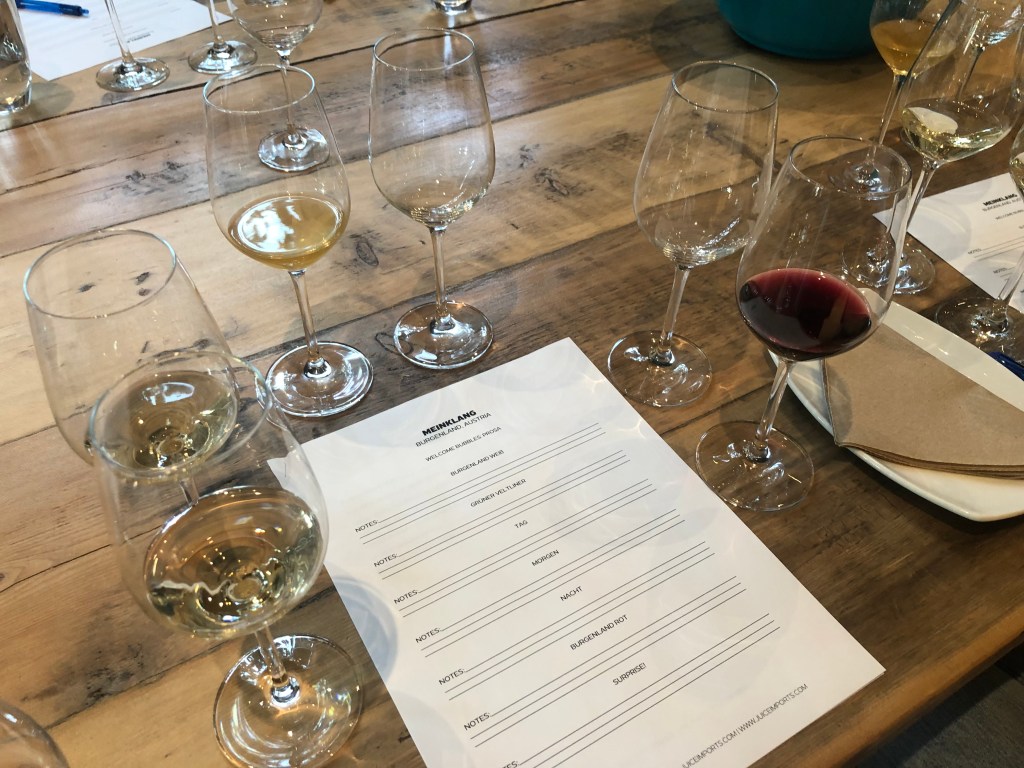
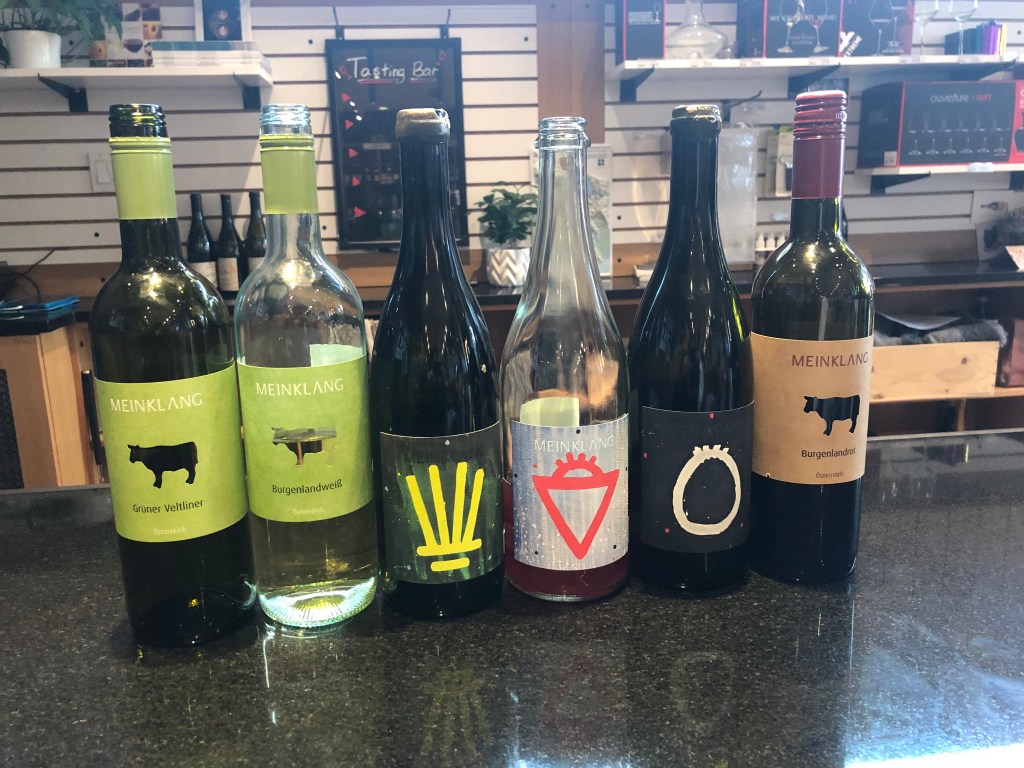
Surprisingly, I was a big fan of the entry-level wines – the Burgenland Weib and Gruner Veltliner. The Burgenland has a unique fragrance. Sunflower thought the wine was scented like lilacs, and she wanted her whole house to smell like it. When asked what he would pair with this wine, Erik, the co-owner of Juice Imports, suggested dill potato salad, smoked trout or mushroom morels. I liked this wine so much that I purchased three bottles.

The Gruner Veltliner was bright and clean. Erik noted there was so much flavour in this light wine, despite being only 11% in alcohol content. He described notes of green apple skins, with texture and freshness to it. Erik mentioned that 60% of the flavour in wine stems from yeast and bacteria rather than the grapes themselves.

Next up was Tag, one of the winery’s “big” wines. Tag is a one-off, meaning Meinklang doesn’t make this wine every year. Erik described this wine as intense but with a softness. This wine woke up my tastebuds with its lip-smacking flavour. Sunflower was a fan – she could taste passionfruit and pineapple, and thought the wine had a bite to it, like a cider.

One of my favourite bottles was Morgen. The fragrance reminded me of roses. The bubbles were tiny, and the flavour was fun to drink. Erik called this a breakfast wine, and said it reminded him of sour cherry. He mentioned this wine is similar to pinot noir in that it is challenging to grow these thin-skinned grapes. I bought a bottle for Sunflower and me to enjoy at a future time.

The next bottle we tasted was Nacht, a rare wine that even Erik hadn’t had the chance to try. The wine smelled like olive oil to me. When Sunflower took a sip, she exclaimed how good it was, similar to mushrooms but in a funky way. Erik described this wine as smelling like cherry blossoms or dank flowers.

I noticed Sunflower appreciated the more unique, expensive bottles. While I enjoyed the experience of the fancier bottles, I preferred the easy pleasantry of the entry-level wines because I could shut my mind off. When I drink, I like to feel the wine rather than think about what I’m tasting. I guess that’s the beauty of a wine tasting, you don’t have to commit to sharing a whole bottle.

The second last wine we tried was the Burgenland Rot. Sunflower said it smelled like her grandmother’s house. Damn girl, we sure had different experiences growing up. Erik informed us this was his number one selling red wine. He described the Burgenland Rot as a soft, gentle, picnic wine. I enjoyed this red wine, but preferred the white wines. For me, it’s a harder challenge to find good white wine at a reasonable price than red wine.

For our last tasting, Erik surprised us with an orange wine from 2018, made with 100% pinot gris grapes. I admired the soft, peachy colour. Sunflower is into orange wines and noted that this older vintage tasted quite different from a newer vintage she recently tried from Meinklang.

There was one interesting fact Erik told us that really got my attention. Fifty percent of Meinklang wines go to Whole Foods for their house wine. The next time I’m in Seattle, I’m picking up some Whole Foods house white wine.

Meinklang wines are now my go-to, not only because the wines are freaking fantastic but also because this winery offers such incredible value. The wines we tried ranged from $26 to $55, with my favourite ones being the entry-level wines. I think it’s a win-win to support producers doing beautiful things for the environment and sustainability that also charge the same price as wineries that produce less delicious unethical wines.

Thank you, Erik, for hosting such a fun tasting, and Sunflower, for being my new wine partner in crime. I look forward to future Juice Import tastings.

Want more wine tastings? I keep a running list of Calgary wine tastings and events.