Restaurants · Wine tasting

Gut Oggau – Vine Arts

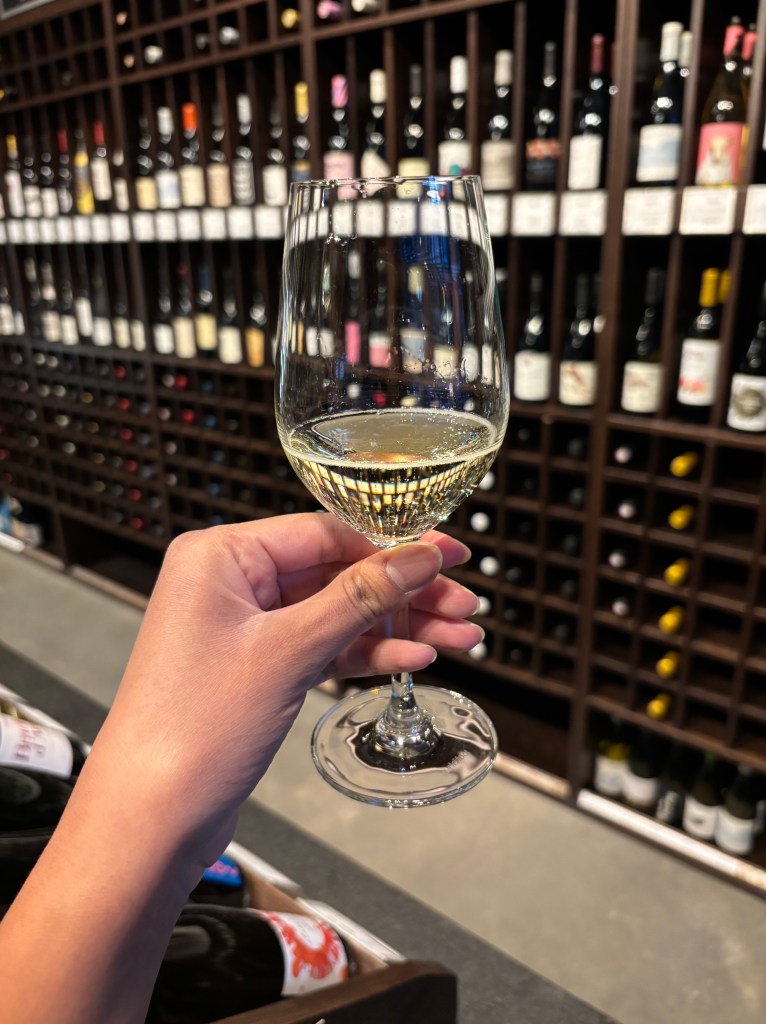
Last Sunday, my friend Lululemon took me to a Juice Imports tasting ($35) at Vine Arts. I was extra excited. The wines are from Gut Oggau, located in Austria, where Lululemon and I are visiting with Juice Imports in 2026 for a wine tour. Let’s listen to for this post “The Lonely Goatherd”.

Typically, it’s Erik who speaks at their tastings. However, this time around, his business partner, Mark Coulliard, led the class. I like the speed at which he speaks, which is fast enough that I don’t zone out and that he’s to the point. Mark is a skilled storyteller, weaving between his personal experiences at the winery while dropping juicy nuggets of information.
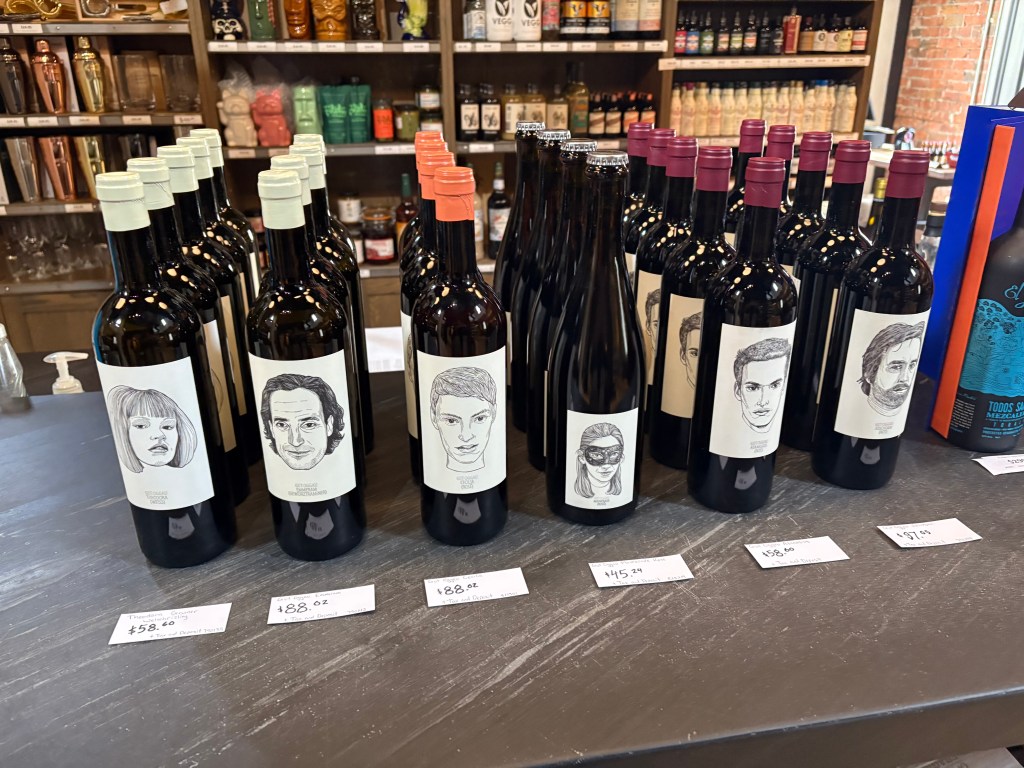
Juice Imports doesn’t make any money off these tastings, and to add to the incredible value, he and Erik offered Gut Oggau wines at a much lower price point. The reason? Though these high-quality obscure Austrian wines are priced accordingly, many people in Canada, unfamiliar with Gut Oggau, may be reluctant to spend the money. While wine bars in New York and Tokyo are willing to pay for these high-in-demand wines, the locals here haven’t caught on. So they wanted us to taste them at a lower price point. The Guu collection ranges from $60 and up; even by Mark’s standards, the line-up we were trying was an indulgence.
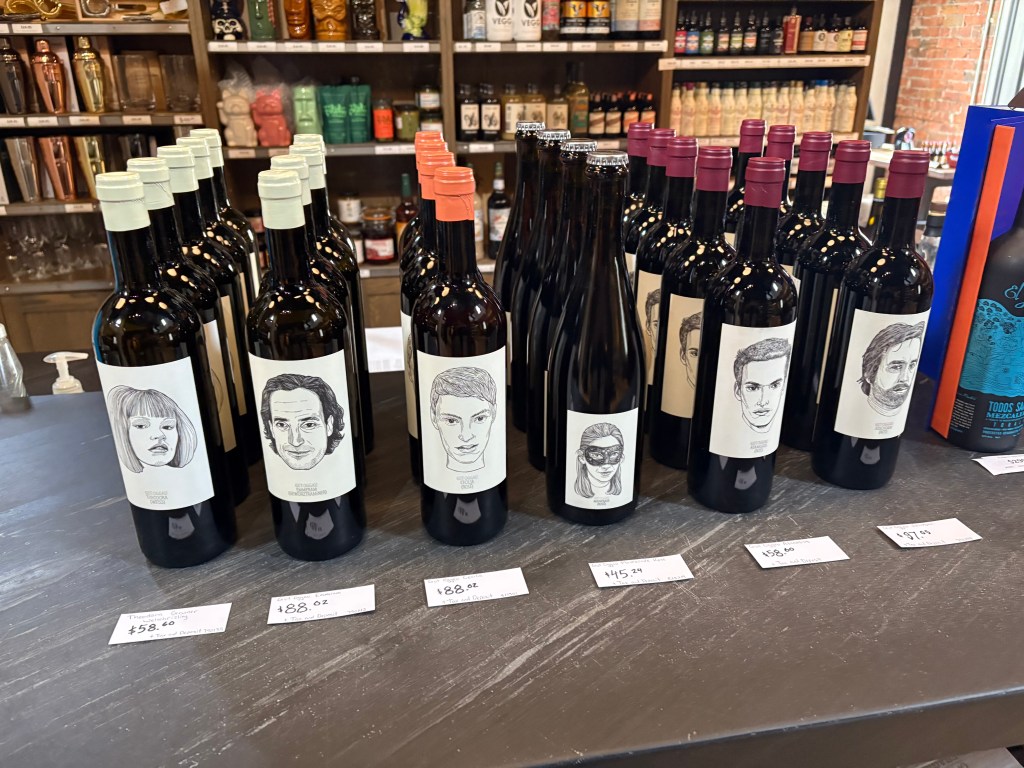
The label on each bottle features a person, and I initially assumed that each name and image represented a family member. However, I soon discovered that they were part of a fictional family. I felt a sense of disappointment, as I had grown fond of the idea of a large, eclectic family who boozed it up together.
Mark met the owners, Stephanie and Eduard Tscheppe, in 2016 when Erik signed them. Now, not even a decade later, the wines are world-renowned. Throughout our tasting, Mark would reminisce about their subsequent visit to their 17th-century farmhouse, eating at their sister’s Michelin restaurant and picking out any bottle they fancied in the cellar. I nearly fainted from excitement when he recounted how wine was poured from 12-litre bottles.

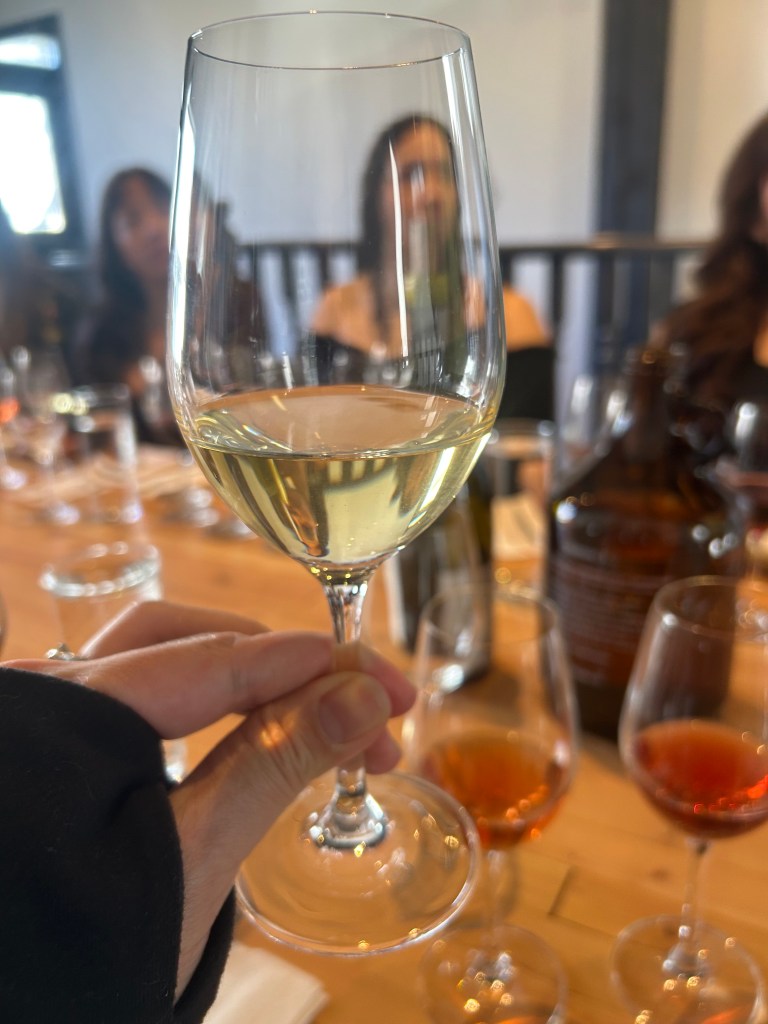
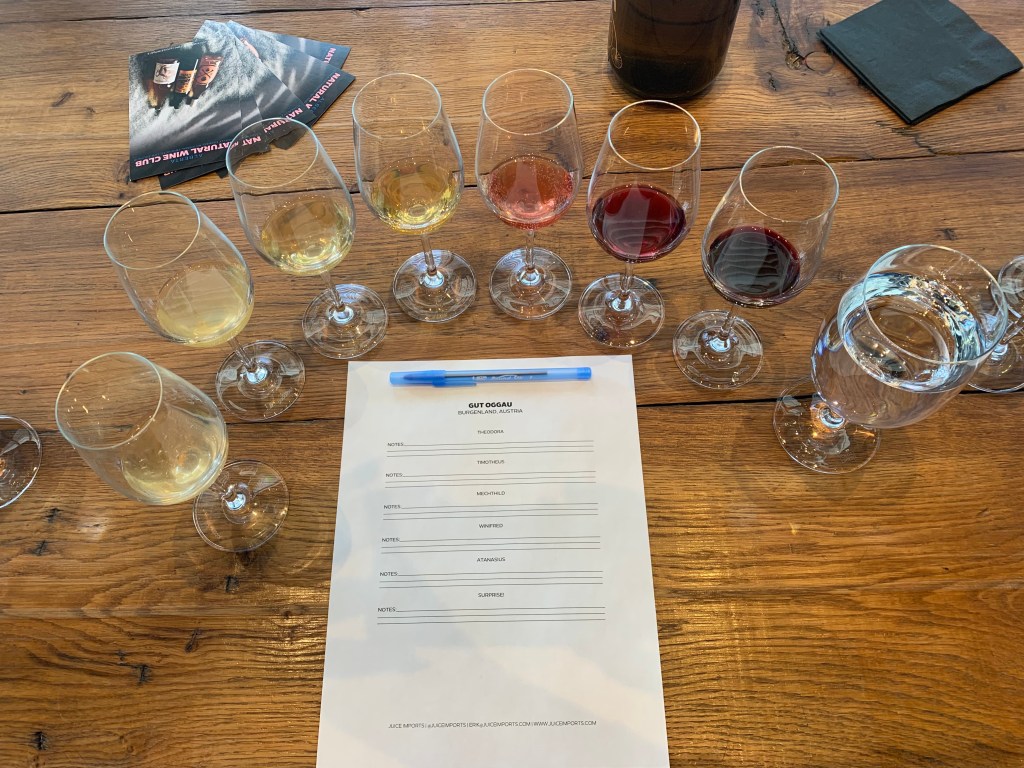
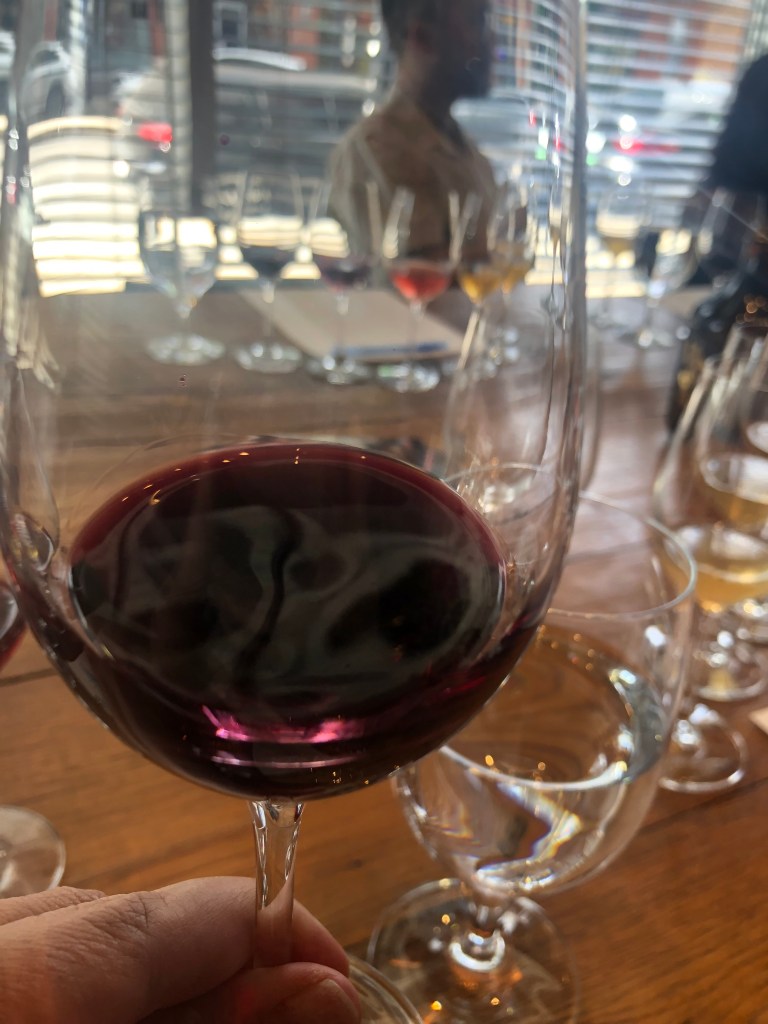
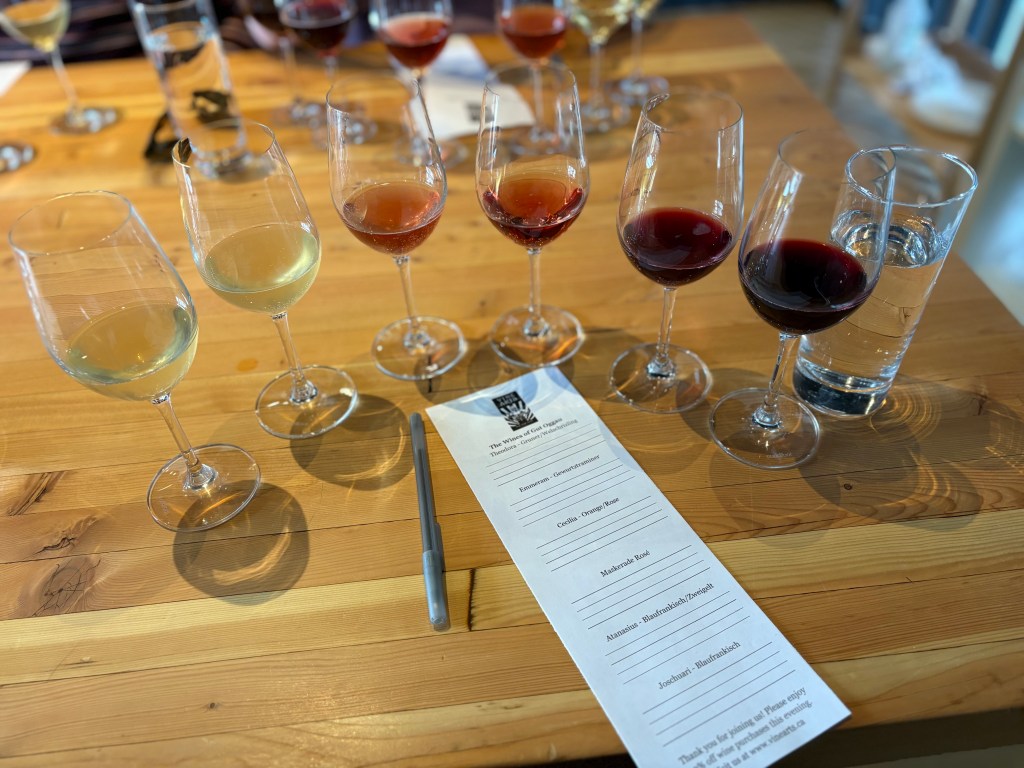
The first wine we sampled was the Theodora (Gruner/Welshrizling), Gut’s version of white. A mellow yellow, Mark described the wine as light and fresh. I thought it was nice and lemony. I learned that their wine is made in Austrian wood, which is more neutral than oak.
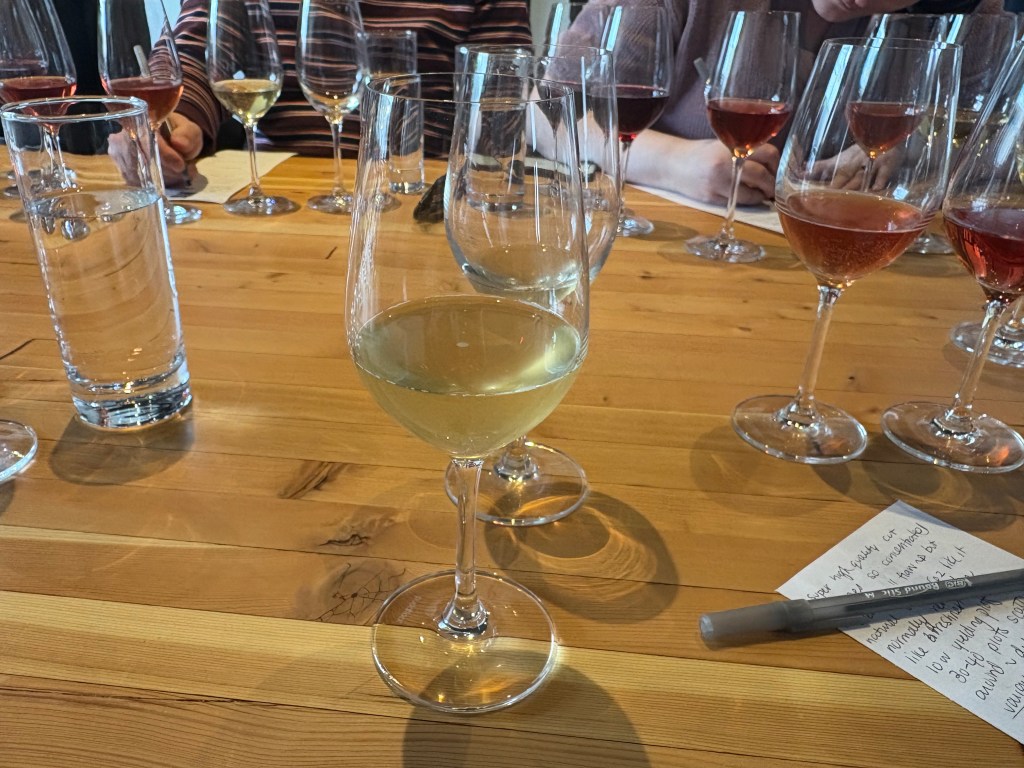
My favourite wine was the Emmeran Gewurtztraminer (discount $61). Lululemon and I loved the floral fragrance. Mark mentioned he likes a good Gewurztraminer, especially when it’s so aromatic, juicy, and bright. To him, the Emmeran tastes like spring. We learned this wine is produced from forty-year-old vines with a low grape yield. Lululemon got a bottle. I wanted to buy this bottle, but it’s beyond my 2025 budget, even with the big discount.
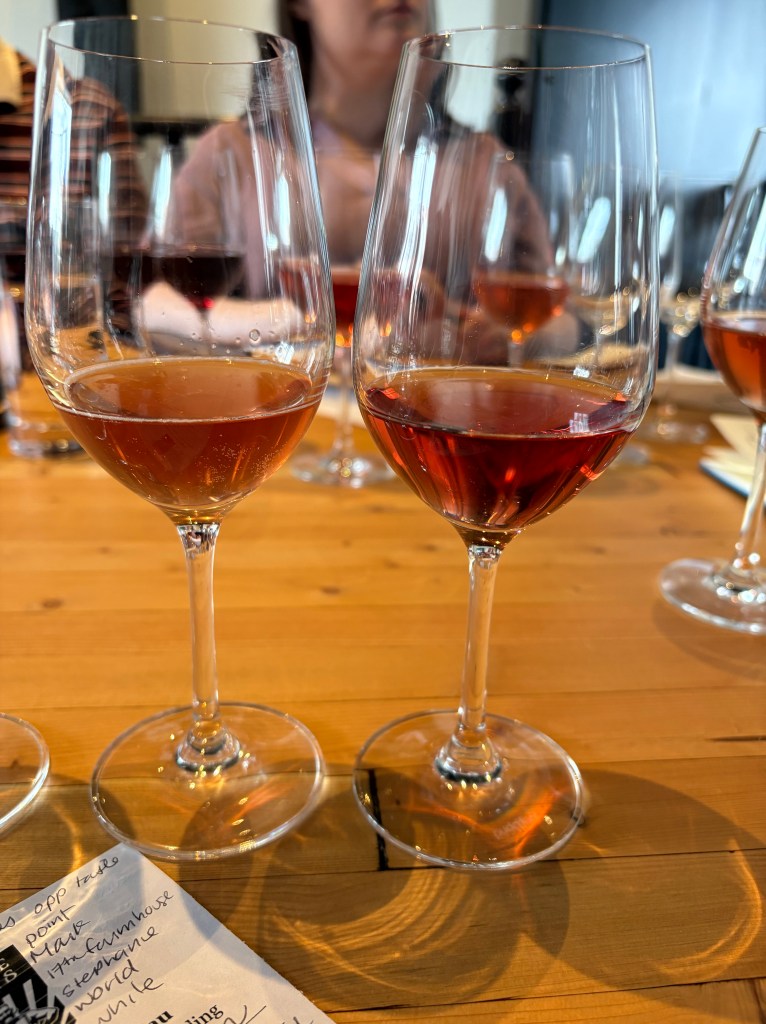
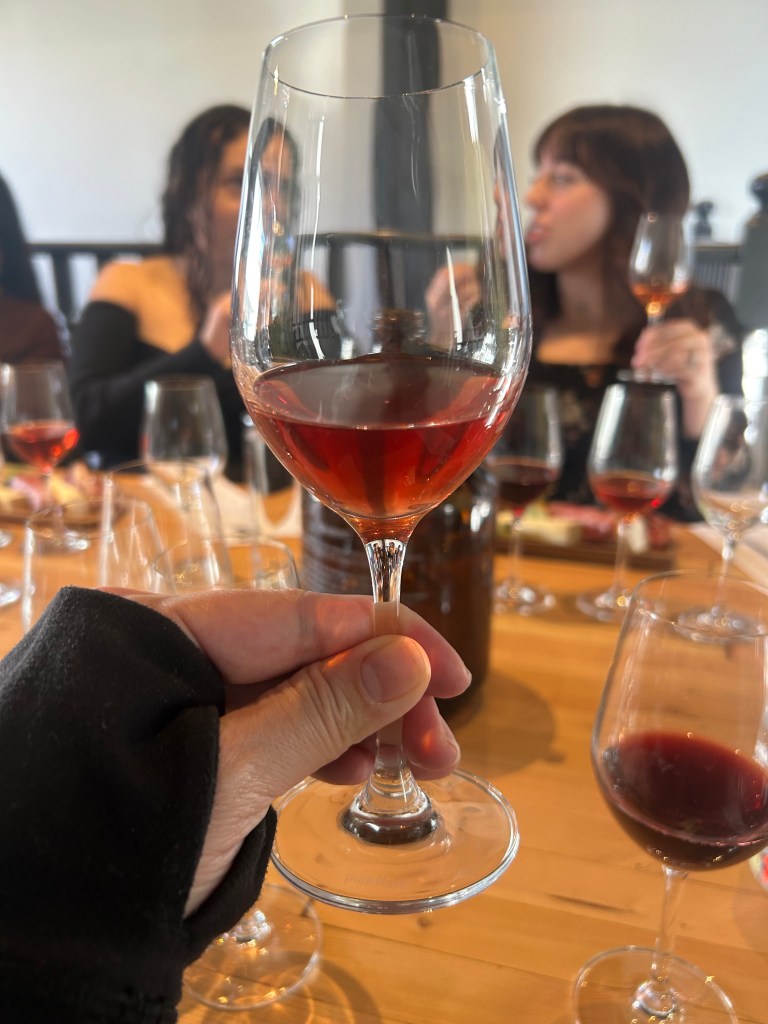
The next wine was Cecilia (discount $75), an orange rose wine. Mark noted this was a new wine, at least for him. As he sipped, he described the wine as unique, explaining it was very different from all the others. Mark informed us that Cecilia is made with a blend of unknown red and white grapes. An easy-to-drink wine, he described the flavour as rosy oranges. I found this one subtle, light and interesting. If I weren’t such a small potato, I would substitute water with Cecilia.

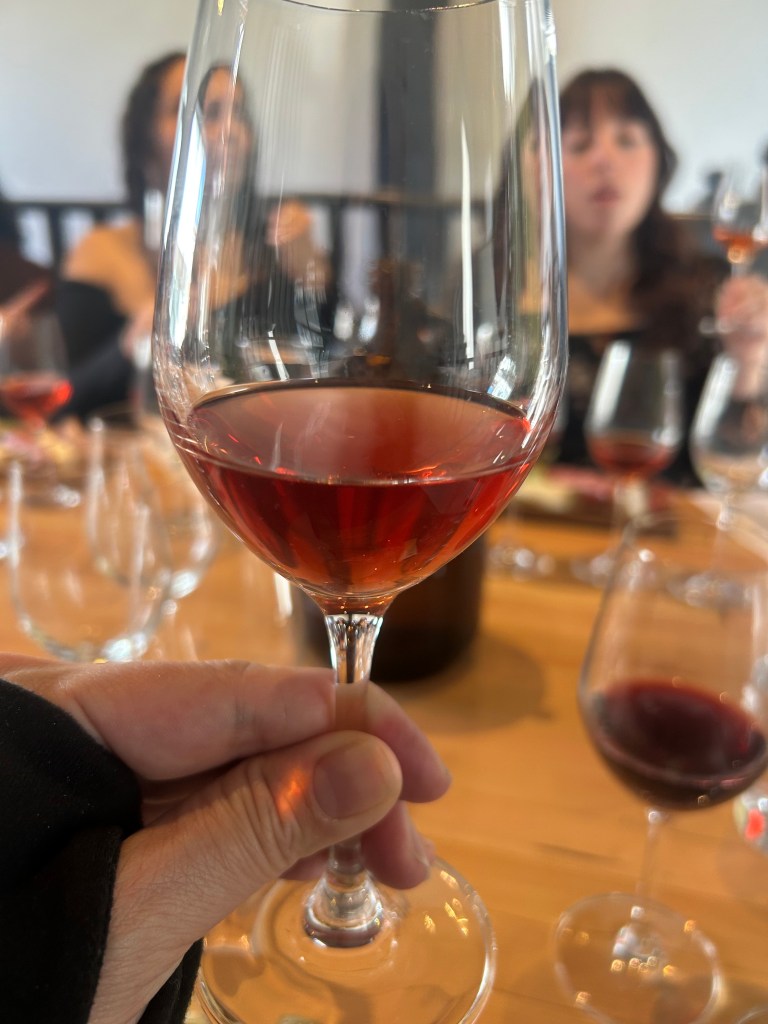
The fourth tasting was Masquerade Rose (discount $35). The rose smelled like port, with a dessert-like sweetness that reminded me of cherries. Mark characterized this wine as bright, easy, and approachable. I bought a bottle for myself and one for Lululemon, who treated me to this tasting. When asked how long it takes to hold onto these wines, Mark recommended five years.
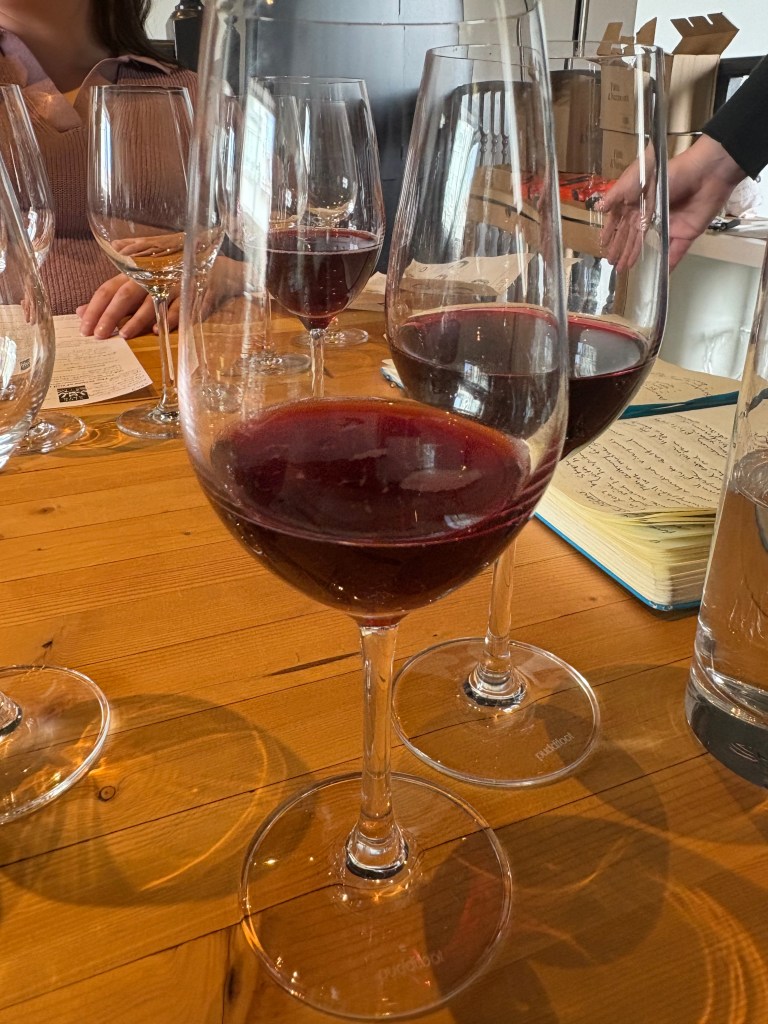
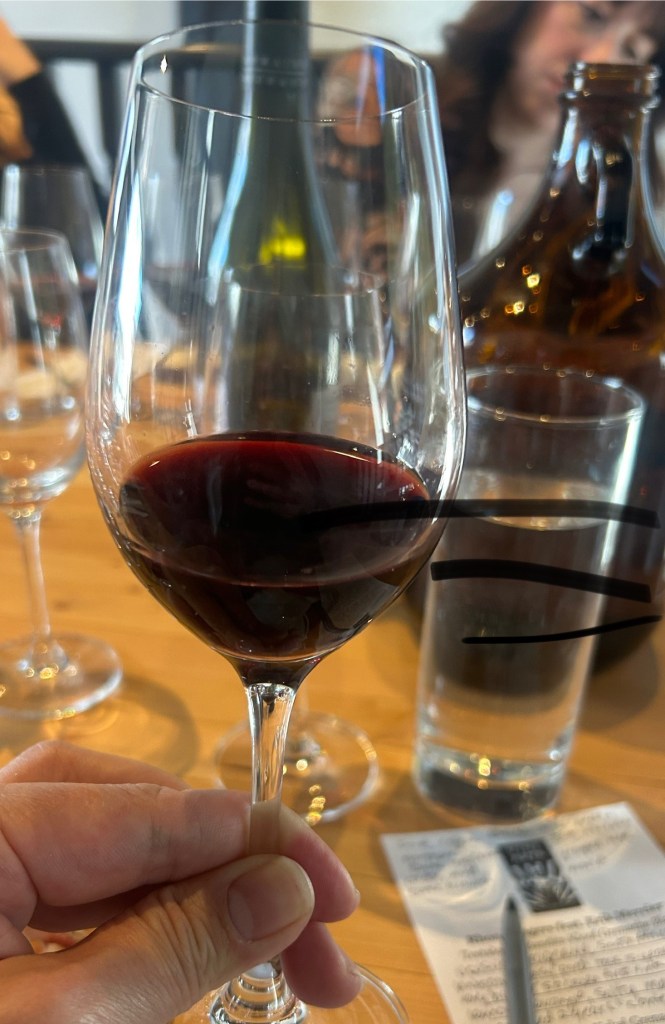
The fifth wine was a winner, though apparently, transporting a living product across the ocean turned Athanasius Blaufrankisch/Zweigelt (discount $40) into a frothy, spritzy red wine. I liked the juicy, light flavour and the bright red hue. I bought two bottles, and Lululemon bought one. Mark explained that most wineries remove the C02, but natural wines make them more alive and fresh.
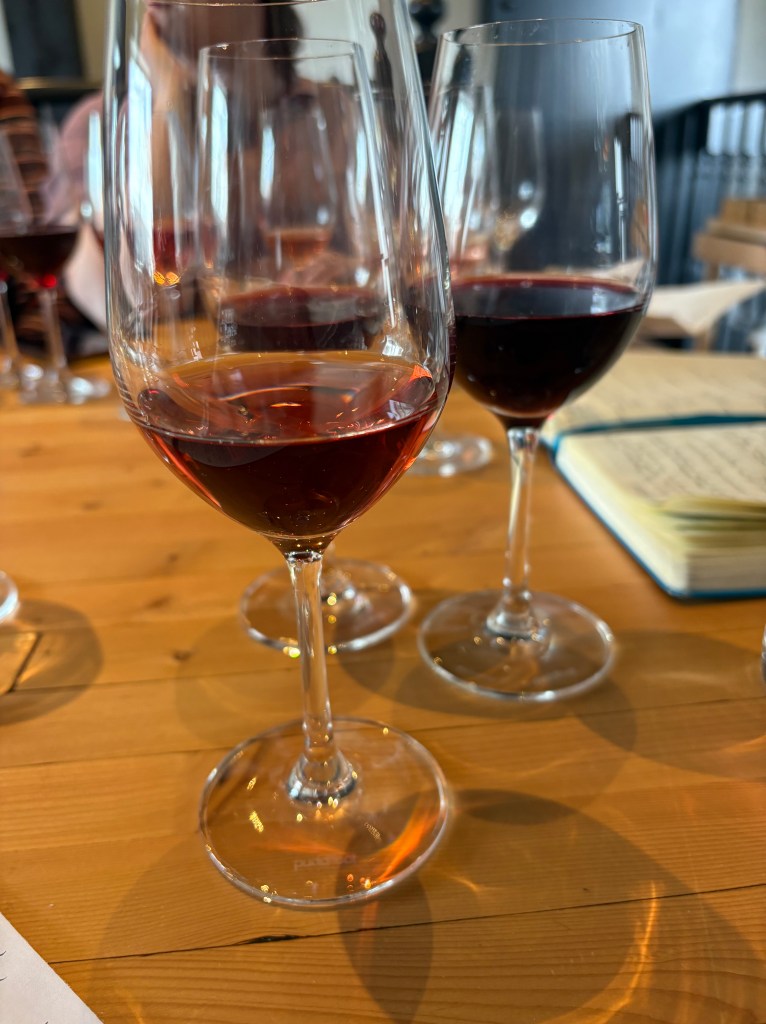
The sixth wine was Joschuari Blaufrankisch. I found this wine punchier and heavier than the previous ones. We learned the Gut land consists of low-yielding plots of 30-40 plants, all scattered around different soil types, making various wines. Mark stated these are soulful wines made from super high-quality grapes. For example, they cut out grapes to concentrate on the remaining ones.
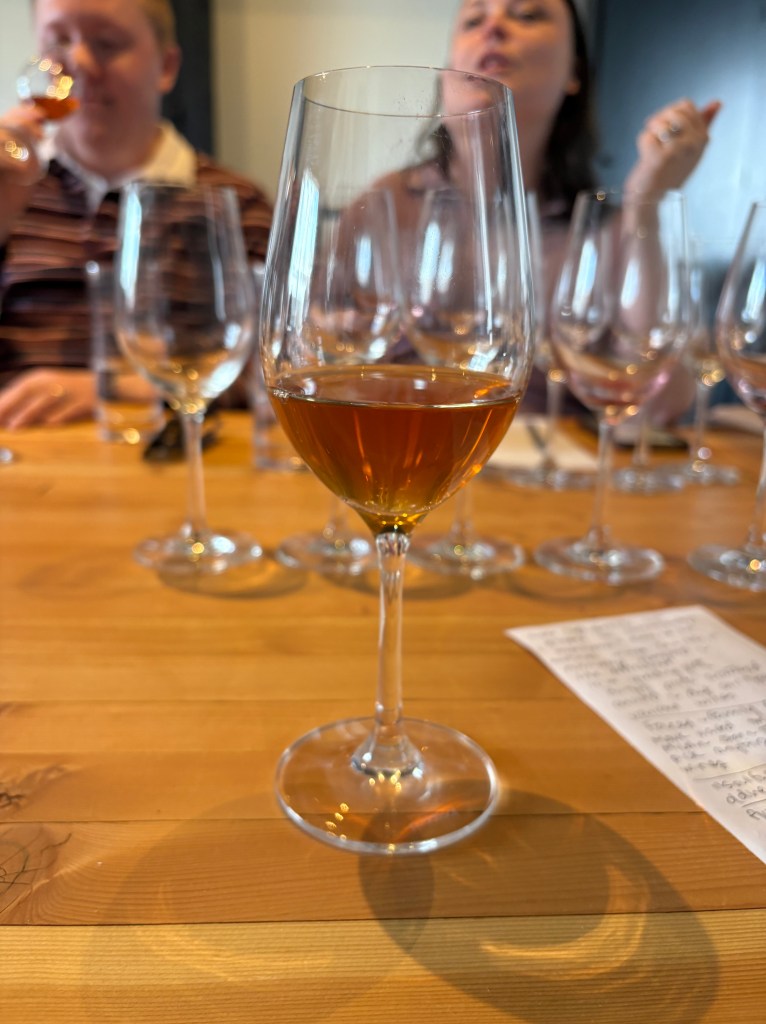
Mark treated us to a special bottle, Edmund, made from unpruned vines. Mark described this as bright and fresh with teeth. I loved this wine. I found it unusual but in a good way. When asked what temperature red wine should be drunk, Mark suggested 13 degrees or popping the bottle in the fridge half an hour before consuming it.
The conversation about the price of wine going up in Alberta came up. Mark predicted that customers at restaurants would either face higher prices or have fewer options, while other establishments might start offering cheaper, more standardized wines. He rationalized that most customers have a budget, and convincing them to spend more is becoming increasingly difficult. I couldn’t agree more. With the rising costs of everything, I’ve found myself cutting back and dining out less.
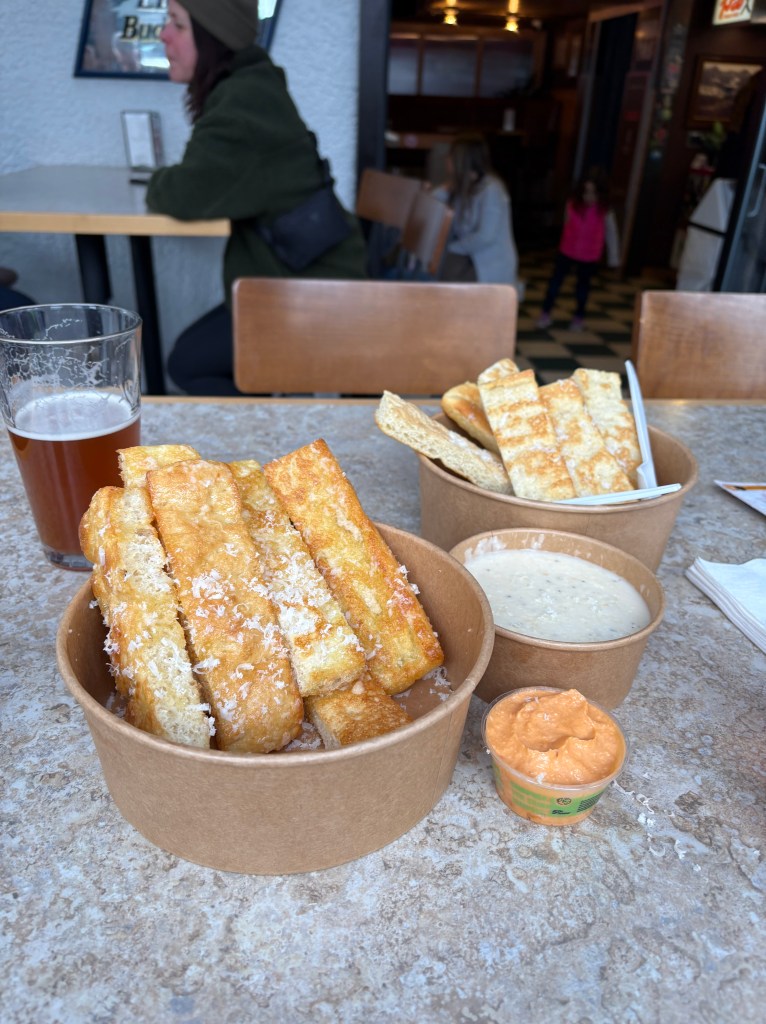
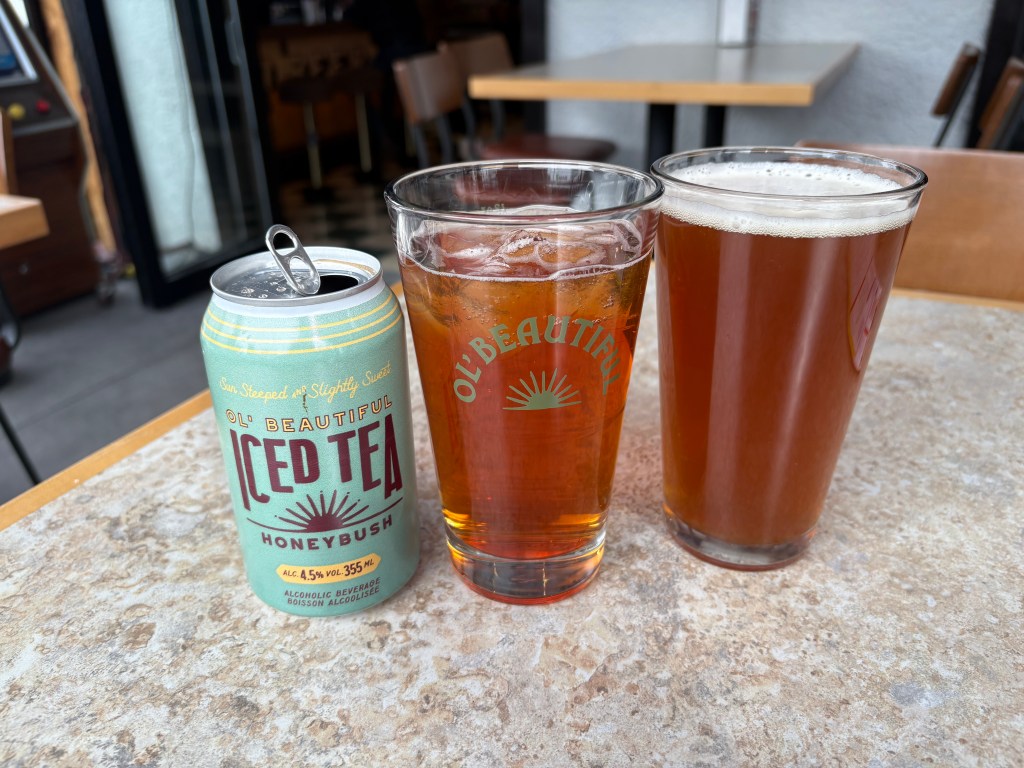
Regardless, this was the perfect way to spend a lazy Sunday afternoon. Afterward, Lululemon took me to Cold Beer and Pizza, a casual little joint across the street. She plied me with fresh bread, dips and my beloved Ol’ Beautiful hard ice tea as we plotted our wine getaway in 2026. Thank you, Lululemon and Mark, for a glorious afternoon.
Restaurants · Wine tasting

Rhone Ragers – Juice Imports

Erik is back in town! I saw on Instagram he was hosting Rhone Ragers ($50) at Vine Arts. I immediately called my trusty wine pal, Lululemon, to find out if she was up for some natural wines. Let’s listen to “Voulez-Vou” by Abba for this post.

I was early, so I shopped and picked up some Ol’ Beautiful Hard Ice Tea ($18) and non-alcoholic mocktails from Wild Folk ($5.50). At 3:00 p.m., I noted that Lululemon hadn’t arrived yet, which is uncharacteristic of her. Usually, I text her the day of, but I knew she had back-to-back events, so I didn’t want to bug her. It turns out she forgot but managed to scoot down in time. I drank her welcome bubbles because I figured, why not?

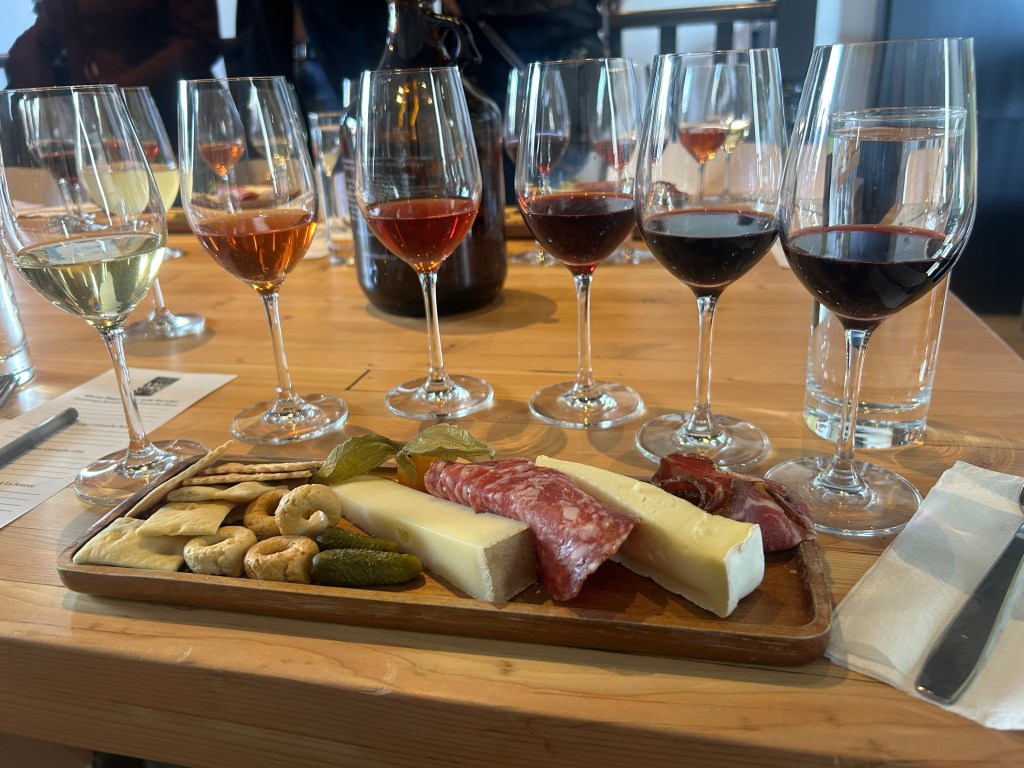
Erik knows how to set up a tasting. The pastel colours in each glass shone in the sunlight and lit up like liquid gems. I’m also noticing his wine gatherings always attract a young female demographic.

Erik chose his favourite region for this tasting, with rare examples to sip. He mentioned that Rhone Valley is the ancestral home of many of the world’s favourite grapes: Syrah, Grenache, and Viognier.

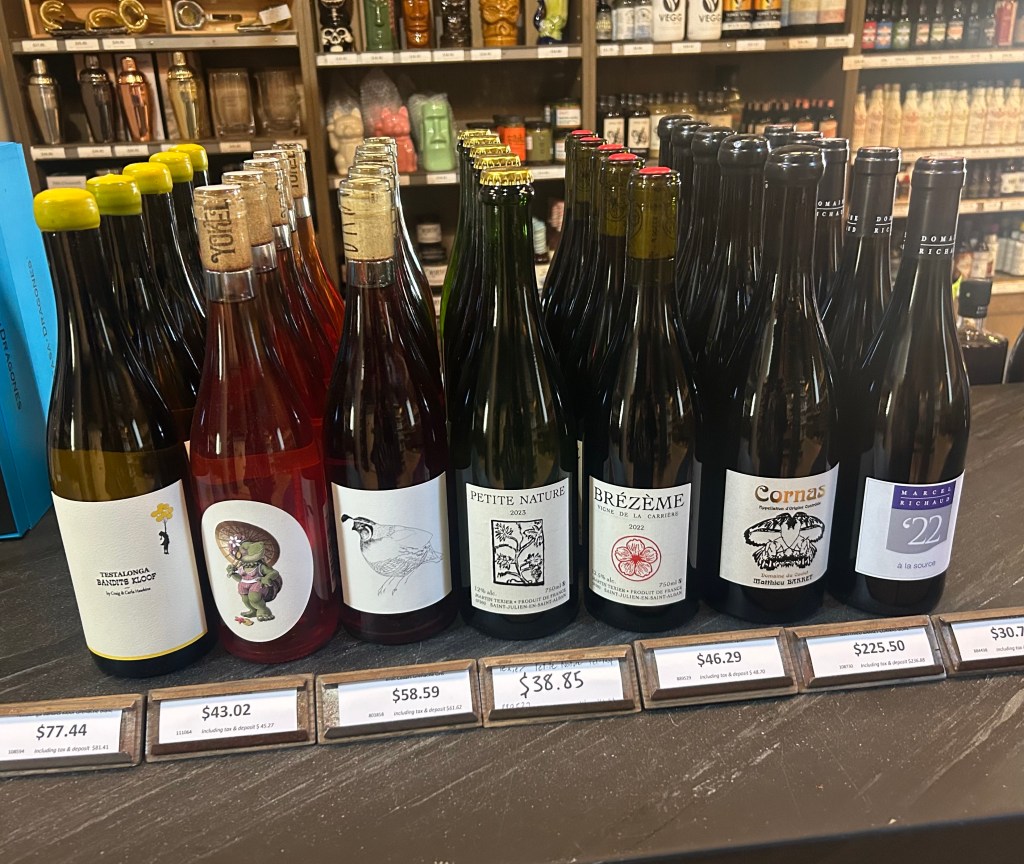
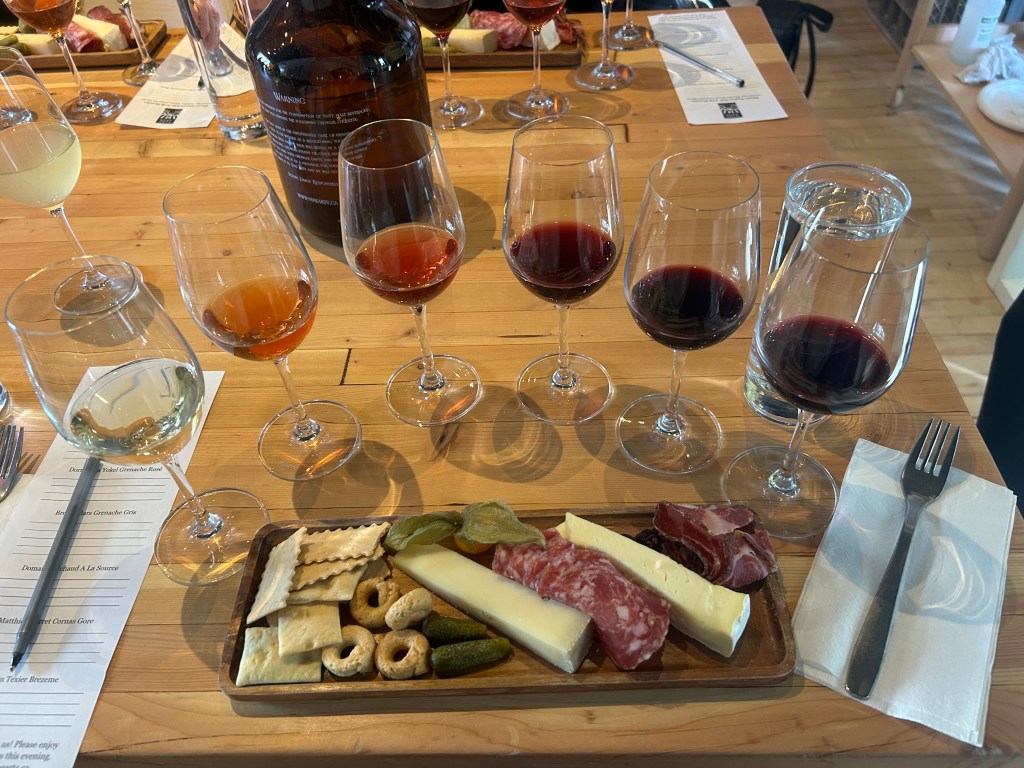
First up was a South African white wine, Testalonga Bandits Kloof Grenache Blanc. The fragrance was unusual, as I wasn’t familiar with it and couldn’t identify any particular scents.

Erik described the land, how scary baboons hung around the winery and how it took the owner ten years to produce his first vintage. Aged for two years, I found this wine really bright on the tongue. He took a sip and described the wine as tasting like a lemon meringue or a salty margarita. He thought this was a nice, contemplative wine to sip in a quiet space.

In contrast was the Dormilona Yokel Grenache Rosé. I liked how the wine wasn’t tart or sweet like other rosés. Erik mentioned that grapes grow in very hot temperatures, as high as the mid-40s. If you live by the winery, you can drop by with an empty one-litre and get it refilled. Lululemon is a huge fan of this woman-led winery, and she bought a bottle.

In contrast to the rosé, which everyone in the room agreed was very gulpable, we tried an orange wine, Broc Cellars Grenache Gris. This scent was nice, but again, I found it unfamiliar. The Grenache is grown from 110-year-old vines and aged sandstone jars. Erik mentioned this as one of the best vintages he tried, as it was a great season. Erik tasted blood orange, Aperol spritz, and rose hip tea.

We were looking at the labels on the bottle and Erik noted how much money goes into a label and how many other things can increase the cost of a bottle, such as the cork, weight, colour and gloss on a label.

I observed one man sitting at the back of the table. I’ll refer to him herein as the Winefather. When he spoke, it reminded me of a school principal speaking at an elementary school assembly. I was mesmerized as he punctuated Erik’s lecture with his own nuggets of knowledge. He exuded mystery with his European accent and authoritative tone, which sharply contrasted with Erik’s gentle, easygoing charm.

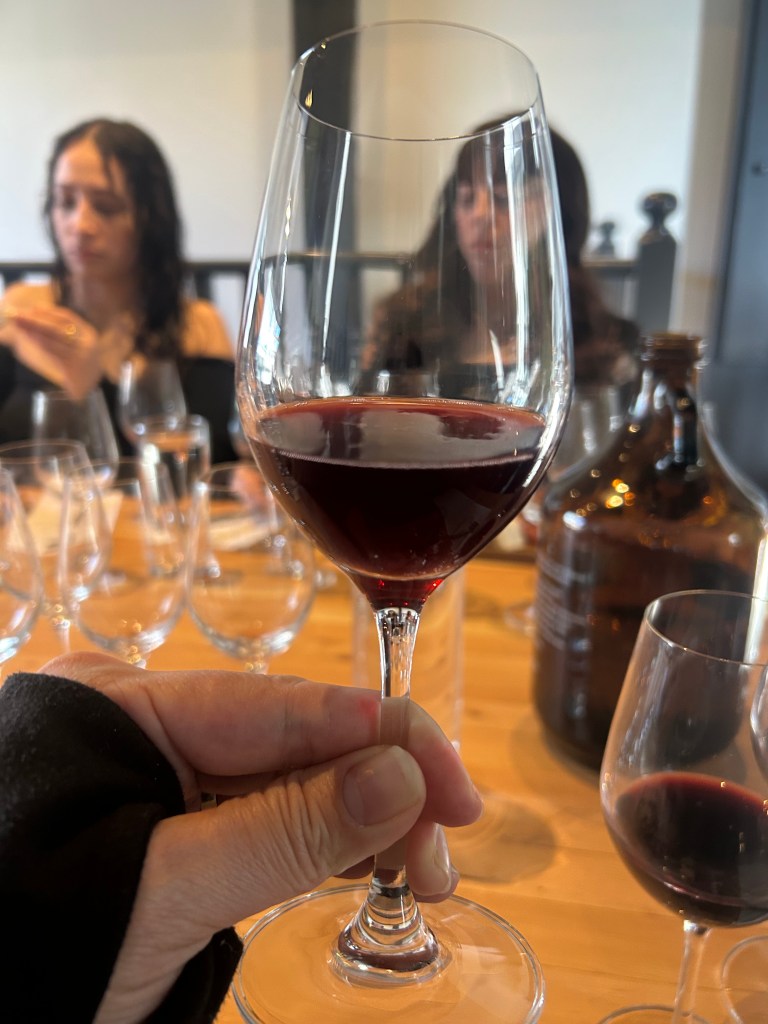
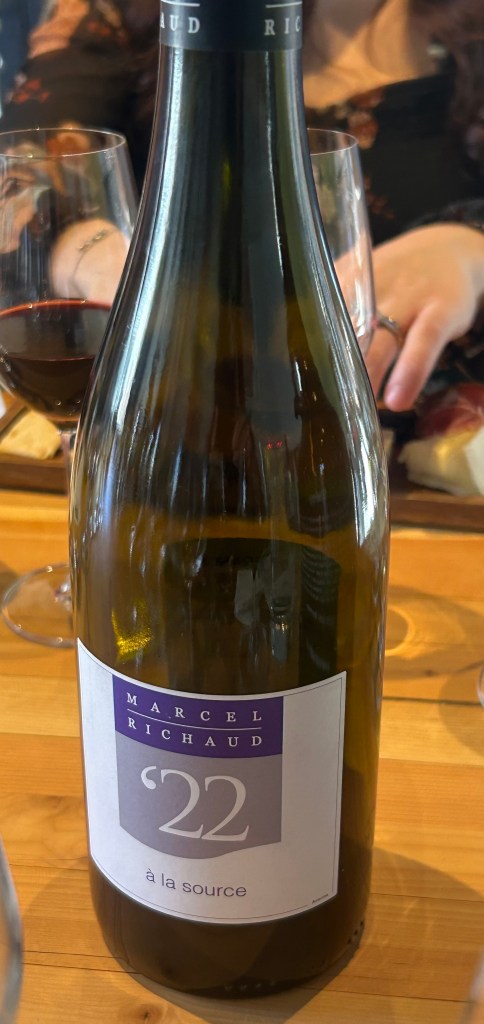
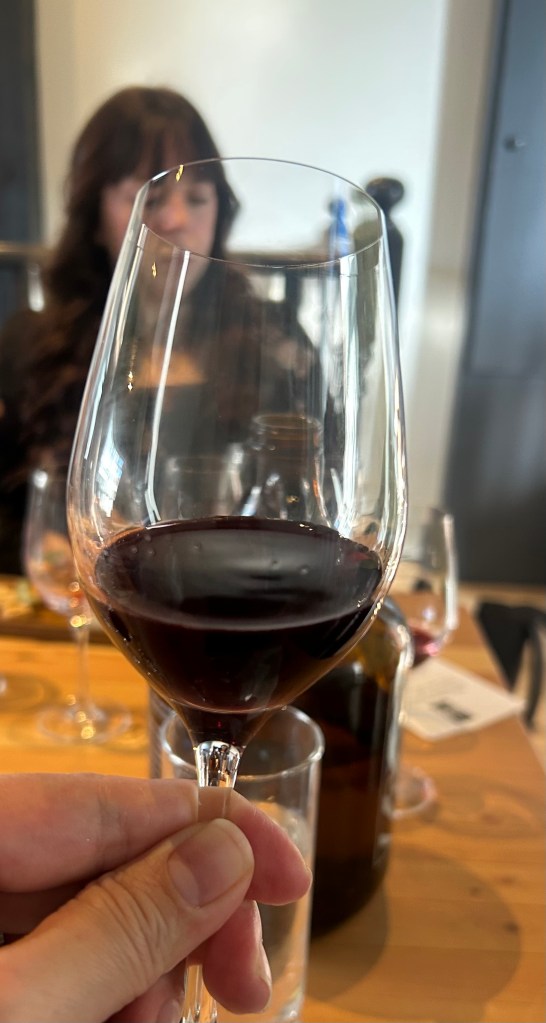
The next wine was from southern Rhone, Domaine Richaud A La Source (discount $27.64). I admired the pretty scent and the raspberry hue. The winemaker told Erik he knew he would be famous at a young age and decided to drop out of school at 14 to pursue his dream. I’m glad his confidence wasn’t misplaced. Both Lululemon and I bought a bottle.

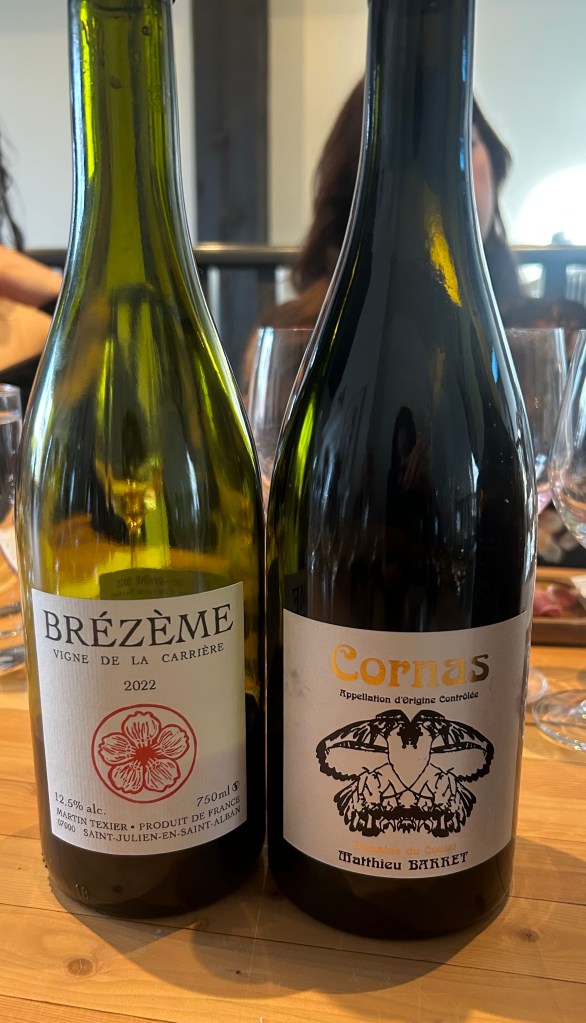
We tried the last two wines side by side. The first of the two was a super badass wine, Matthieu Barret Cornas Gore ($220). The scent was beautiful. Lululemon smelled olives. I found this wine tangy, like cherries. Erik described the wine as wild, bombastic, and dark-fruited. We learned this wine is fermented in glass.

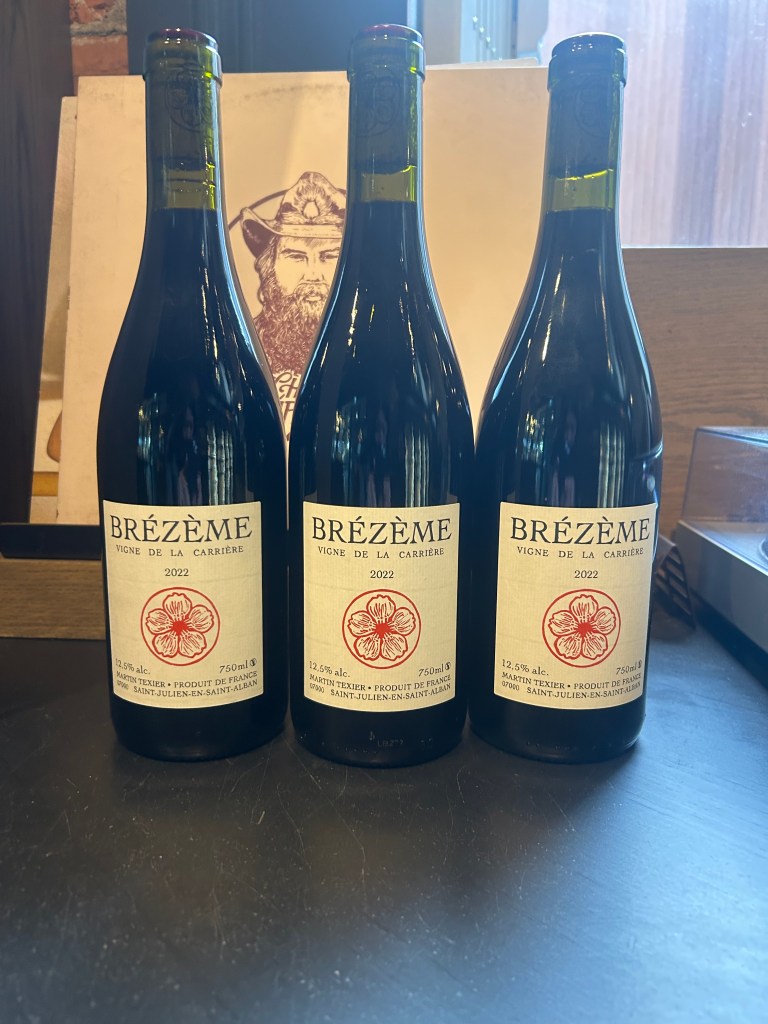
The other wine, Martin Texiere Brezeme (discount $41.61), was more to my liking. I appreciated the black tea notes and the herbal element. The Brezeme is made two kilometres away from the Cornas Gore. Erik informed us the wine is made from 100% Syrah grapes and, unlike the Cornas, was destemmed and aged in a neutral barrel. I bought two bottles.

Two wine tastings in a week! It’s been a wild ride. I’ve also blown my monthly budget but stocked up on some epic wine for future parties.

Lululemon asked Erik if he would organize and host a wine tour for us. He said he was up for it. Lululemon has a lot of friends, so I’m optimistic that I’ll be enjoying a Juice Imports tour in 2026-2027.

Restaurants · Wine tasting

Mikko Alkio of Clos Alkio – Vine Arts

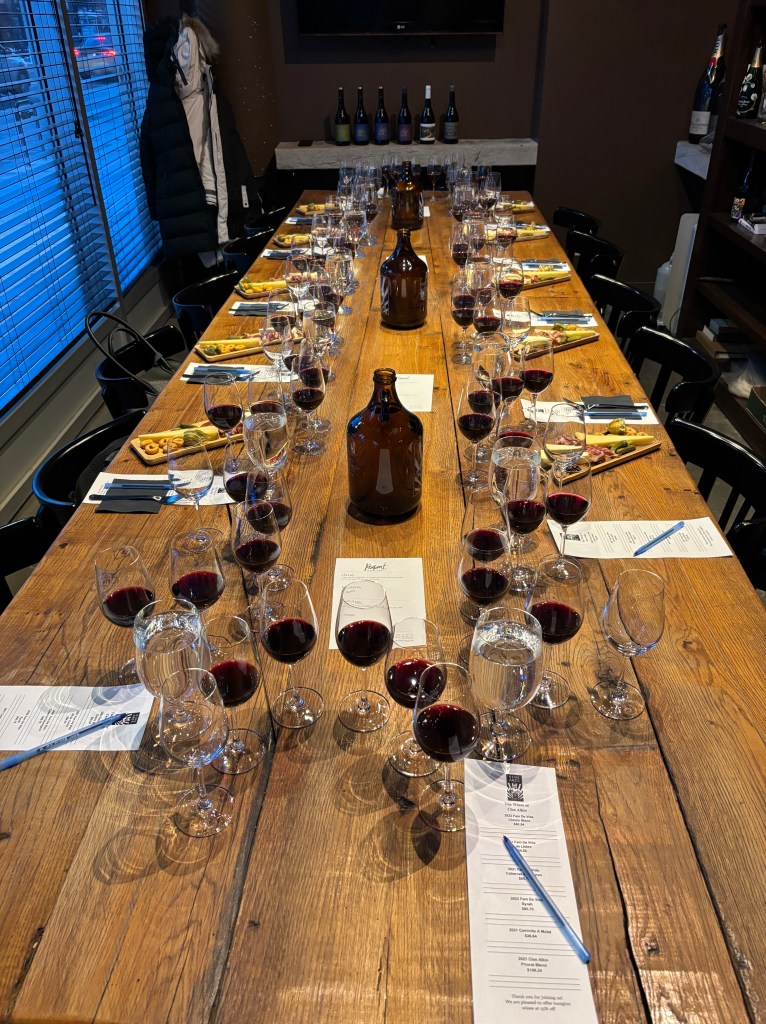
On Wednesday, Divine Offering and I went to a wine tasting at Vine Arts – Meet the Maker – Mikko Alkio of Clos Alkio. For this post, let’s listen to Caminito a Motel.

We checked out Sound Bar before the tasting. It’s a cozy, dimly lit space reminiscent of a chic basement. I was early and walked up to someone I thought was Divine Offering. After the woman told me she was not Divine Offering, I noticed she wasn’t even of the same ethnicity. This isn’t the first time I’ve made an error like this. Face blindness is a real thing.

Photo Credit: Divine Offering

Divine Offering texted me and asked me if I was inside. Yes, of course, I responded. Why would I wait outside in -25 weather? It turned out that someone had locked the door, and she couldn’t get in. When I went to open the door, another customer next to her yelled at me for locking him out. I responded indignantly that I didn’t lock him out. I was letting him in! He apologized.

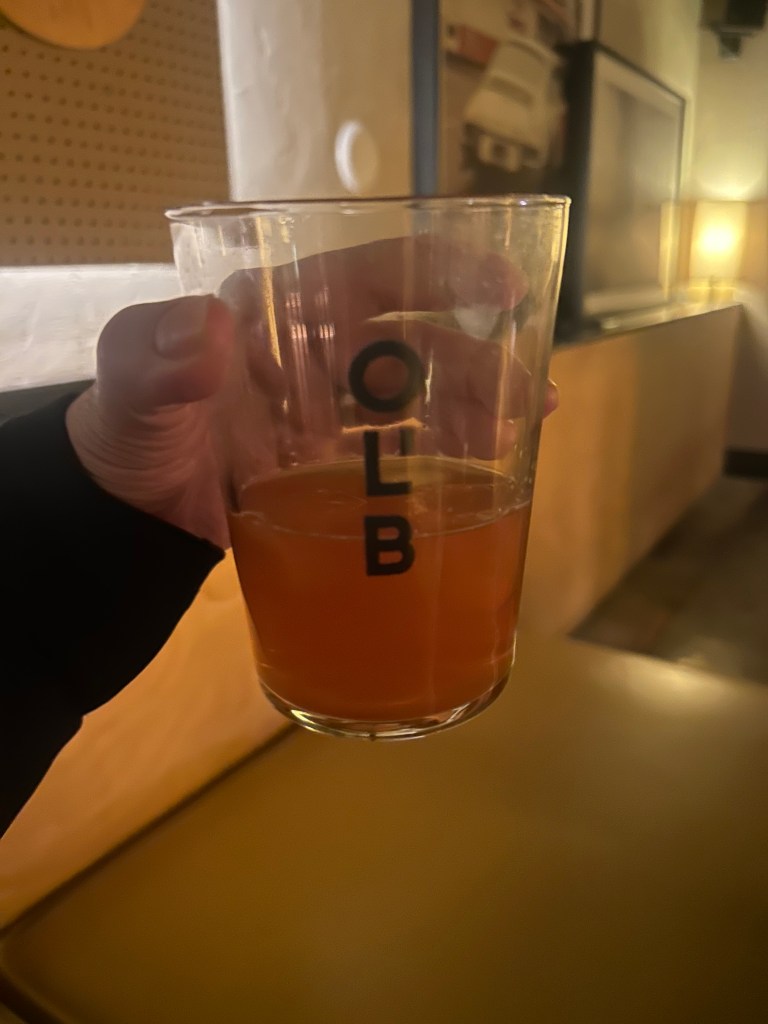
I’m a big fan of the hard iced tea ($7) —it’s bubbly, full of rich black tea notes, and perfectly sweet without overpowering the tea flavour. Divine Offering tried a blood orange beer ($5), and for her second drink, she went for the non-alcoholic Bees Knees cocktail, which she loved. Divine Offering liked that the music was at just the right volume—not too loud. She also mentioned wanting to come back to try their snacks.

Photo Credit: Divine Offering

Right on time, we walked across the street to Vine Arts. Mikko, the winemaker, is from Finland. We learned that he’s familiar with Calgary. As a youth, he did a homestay in Calgary, where the hosts became like a second family.

Photo credit: Divine Offering

His passion for wine became a business when he and his family moved to Barcelona so his three kids could immerse themselves in the city’s tennis scene. As there were no iPhones at the time to distract him, he developed a deep appreciation for Spanish wines. Despite being a partner at a law firm in Finland, he also chose to create a side hustle as the proprietor of a world-class winery in Priorat, Spain.

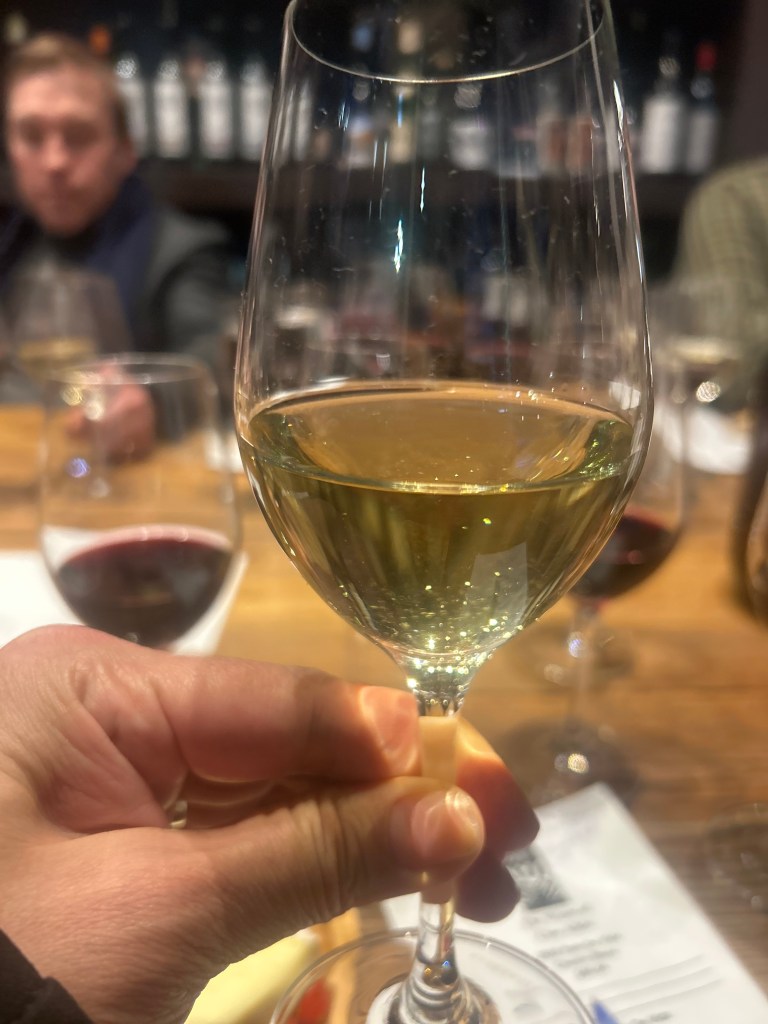
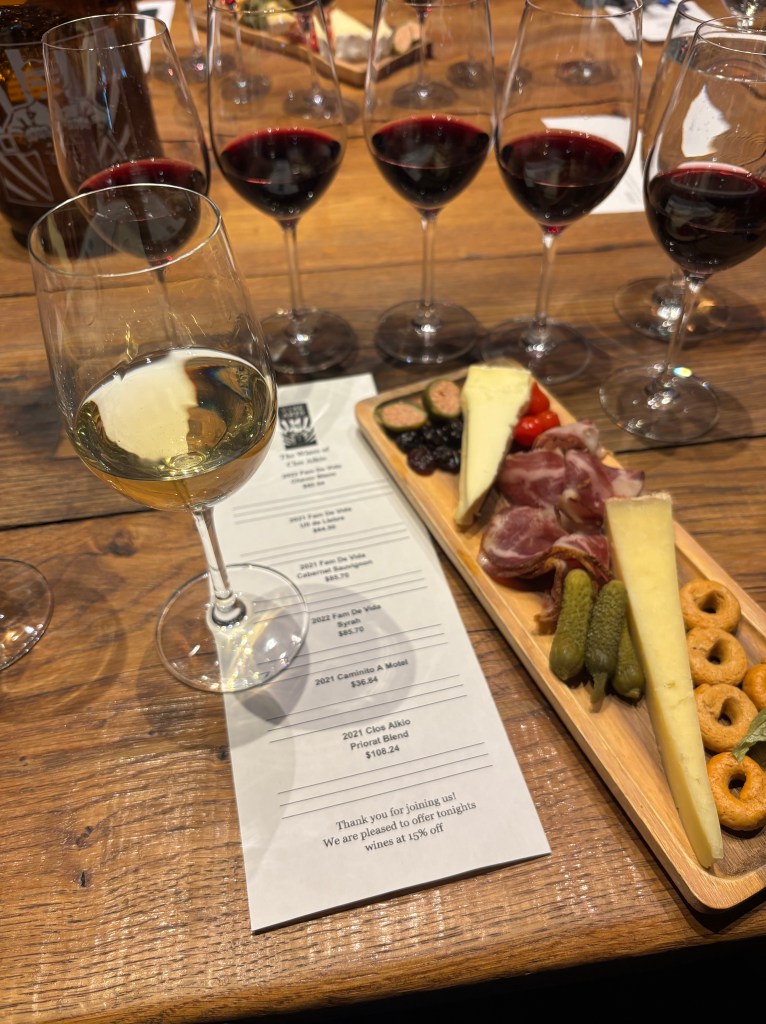
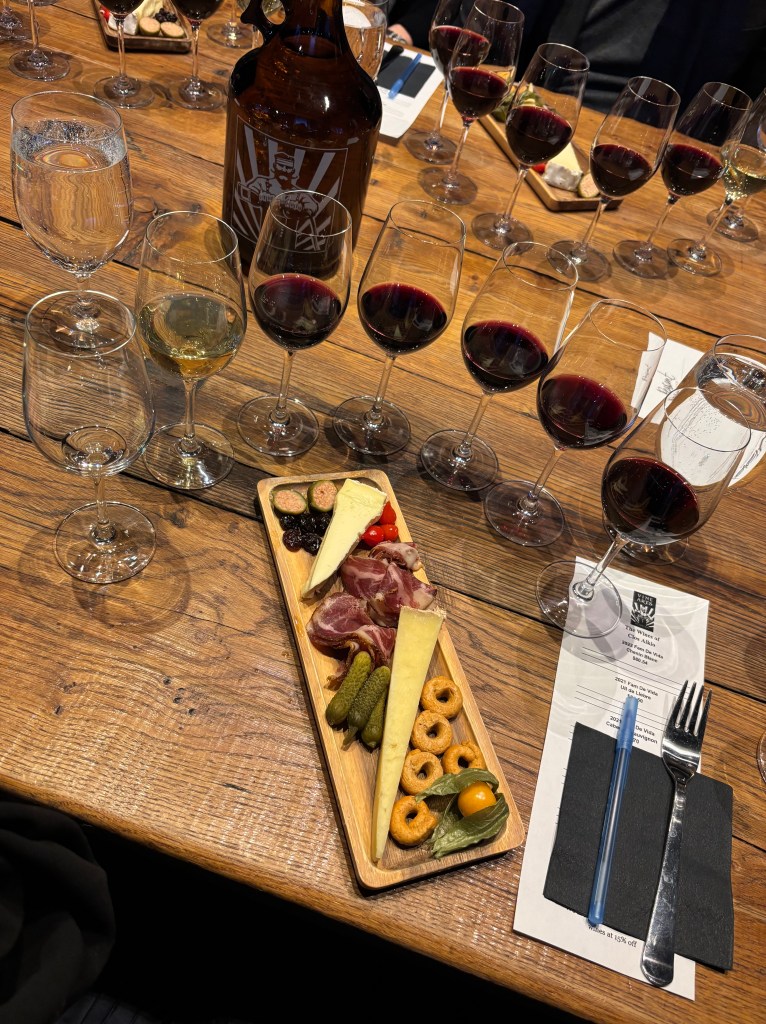
The first wine we tried in his line-up was Fam de Vida Chenin Blanc 2022 ($60.54). I found this wine fresh and clean, with a non-typical sweetness. Mikko noted that 14% of the wine was produced in high-quality inox tanks, with no oak aging, producing 900 bottles. Mikko said to wait eight to 10 years for the wine to mature. Divine Offering loved this wine so much that she purchased a bottle.

Photo credit: Divine Offering

The second wine was a 2021 Fam de Vida Ull de Liebre ($64.50). I marvelled at the pretty purple hue and its smooth flavour. Mikko mentioned he was pleased this wine was well-received at one of Spain’s biggest festivals, which showcased thousands of Spanish wines. He shared that, much like law, the devil’s in the details regarding winemaking. He’s all about precision. His grapes use significantly less water than other wineries and have about five times less sulphur than other winemakers.  

Photo credit: Divine Offering

The third wine was my favourite – Fam de Vida Cabernet Sauvignon 2021 ($85.70). The fragrance was so lovely, reminding me of something very pretty and floral. It tasted clean and vibrant. I loved it so much that I stopped eating the cheese and charcuterie before me and sipped as slowly as possible. Mikko recommended aging this wine for ten years, but there’s no way I will wait a decade. I liked this one so much I bought two bottles. I asked Mikko what he would pair with this wine. He looked surprised as if the answer was so obvious, and apparently, it was to everyone except me. Cheese! Divine Offering also bought a bottle.

Photo credit: Divine Offering

Mikko clearly favoured the fourth tasting – Fam de Vida Syrah 2022 ($88.70). This wine is aged in French oak for 14 months. He recommends tasting the difference after ten hours and then again the next day. I’m an impatient drinker, so this bottle was a no-go for me to purchase.

Photo credit: Divine Offering

You can tell by listening to Mikko that he is obsessed with grapes, which is reflected in his wine quality. He’s all about letting his grapes speak for themselves, making wines that authentically reflect the land and the fruit.

The fifth wine was Caminito a Motel 2021 ($36.85). The wine is named after a song his son recommended,  Caminito a Motel. Mikko would often listen to this song while searching for property.

Carminito a Motel is a blend of 35% Garnatxa, 35% Cabernet Sauvignon, and 30% Carinyena, with a 15% alcohol content. Aged in French oak for eight months, Mikko recommended opening this wine in five, 10 and 15 years. I bought three bottles for friends of mine who like to age their wines.

The last wine of the evening was Clos Alkio 2021 ($108.24), a top blend Mikko is so proud of he put his name on it. Plucked from aged vines, the grapes blend 30% Garnatxa Negra, 30% Carinyena, 20% Syrah, and 20% Cabernet Sauvignon.

Divine Offering and I had a blast. The wine importer who set up the event was a great host, ensuring we had everything to be comfortable. Thank you, Mikko, for braving the cold Canadian prairie and sharing your wines. Hitting the Sauce gives this wine tasting two phat thumbs up.

Restaurants · Wine tasting

Gut Oggau Wine Tasting – Vine Arts

Lately, one of my favourite things to do is to learn about wines from Erik, one of the owners of Juice Imports. On Sunday, he hosted a wine tasting ($30) to try all the Gut Oggau wines in stock and some unique gems from their cellar. Let’s listen to “Strawberry Wine” by Deana Carter for this post.

Our class started with a glass of sparkling organic cider from the Okanagan. The cider was fresh and bright. I bought a bottle for my neighbour, who recently became my dog’s godmother.

Located south of Vienna, Erik informed us Gut Oggau was one of the first wineries he ever signed. He fell in love with the uniqueness and personality of the wines. He considers the husband and wife team – Stephanie and Eduard – some of the most thoughtful winemakers dedicated to the land and their employees. For example, the owners pay their six full-time workers year-round rather than seasonally, so the employees can experience how the wines sleep in the winter and wake in the spring. As a result, the prices of their wines reflect this philosophy.

Erik mentioned that Theodora (2020, $50) was the winery’s entry-level wine. Yikes, I would never want to host a dinner party for Stephanie and Eduard. The cloudy yellow hue reminded me of chicken stock. My friend Bubbles said she could taste citrus.

We learned two interesting facts. First, Gut Oggau produces its wines without any sulphur, and second, sulphur doesn’t cause headaches. People get headaches from wine due to the alcohol or a reaction to the tannins. I wanted to pipe up and add that people also get headaches from excess drinking, but I read the room and decided to keep my thoughts private.

Photo Credit: @miss_minds

Next up was the Timotheus (2018, $79). Erik said in all of Alberta, and there are only 24 bottles of Timotheus. The vines are planted in complex soil, such as slate, sand, gravel and limestone. The texture and flavour sent shivers down my spine as the liquid tingled on my tongue. Erik described this wine as having intense character, with umami notes of white truffle.

The Mechthild ($158) we tried was sold out, which was fine with me as this wine was beyond my budget. Erik noted that the vines produced a low yield but produced the cleanest and highest quality grapes using a crazy, archaic process called a tree press. The person sitting in front of me described the colour as sunshine gold, with a gorgeous glow. I was jealous that I didn’t come up with that description myself.

My favourite wine was Winifred ($48). At first, I didn’t realize this wine was a rose. The texture was silky, with an aftertaste of fresh strawberries. My friend Bubbles said the gentle tartness reminded her of crab apples. I enjoyed this wine so much that I bought it for my next girls’ night with Kournikova, Quebecoise, and Betty.

The last wine we tried was the Athanasius (2020, $51). We learned this was the most planted grape in the winery. The vines are 38 to 40 years old. Erik described this wine as fresh and intense, aged in old Austrian oak. We marvelled at the dark, ruby red colour and the high viscosity. Erik mentioned the flesh of the grapes is red, which is rare as most red wines are made with white-coloured fruit.
I could tell these wines spoke to Erik, who said each wine tasted alive, soft and supple. This wine tasting was dirt-cheap, particularly for these wines. Erik himself rarely gets to try these bottles, so it was a luxurious treat for everyone. I enjoyed every wine I tried, though I got the impression from Erik’s physical and verbal reaction from drinking each wine that I didn’t fully grasp the greatness of these wines. Though I was out of my element, I was fine with it. I’m more comfortable with pearls being cast upon me than being a pig at a trough. I’ve recently signed up at Grand Cru Wine Society in the hopes of learning more about wine and food pairings.