Vine Styles in Kensington offers free tastings every Saturday, from 2:00 to 5:00 p.m. Divine Offering and I dropped by as Mark from Juice Imports was sampling three newish wines. For this post, let’s listen to Oh! Darling.
There was quite a line to taste these wines, proof that Vine Styles is full of “grape” neighbours from the hood. Throughout the afternoon, groups of friends, of all ages, dropped in.
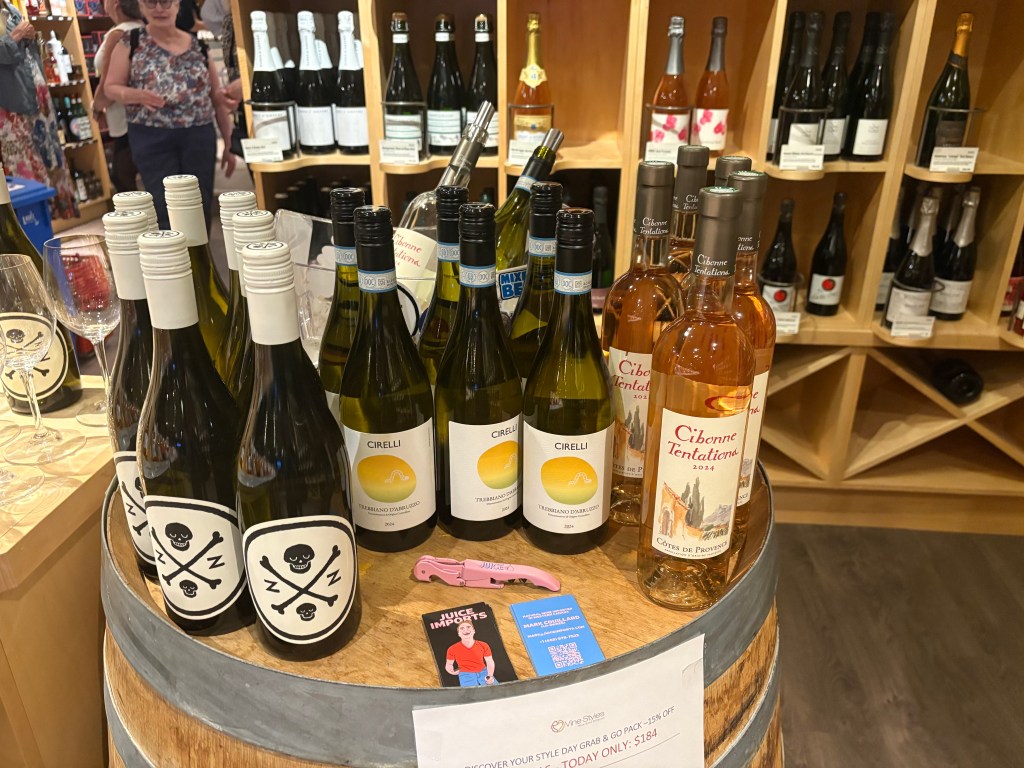
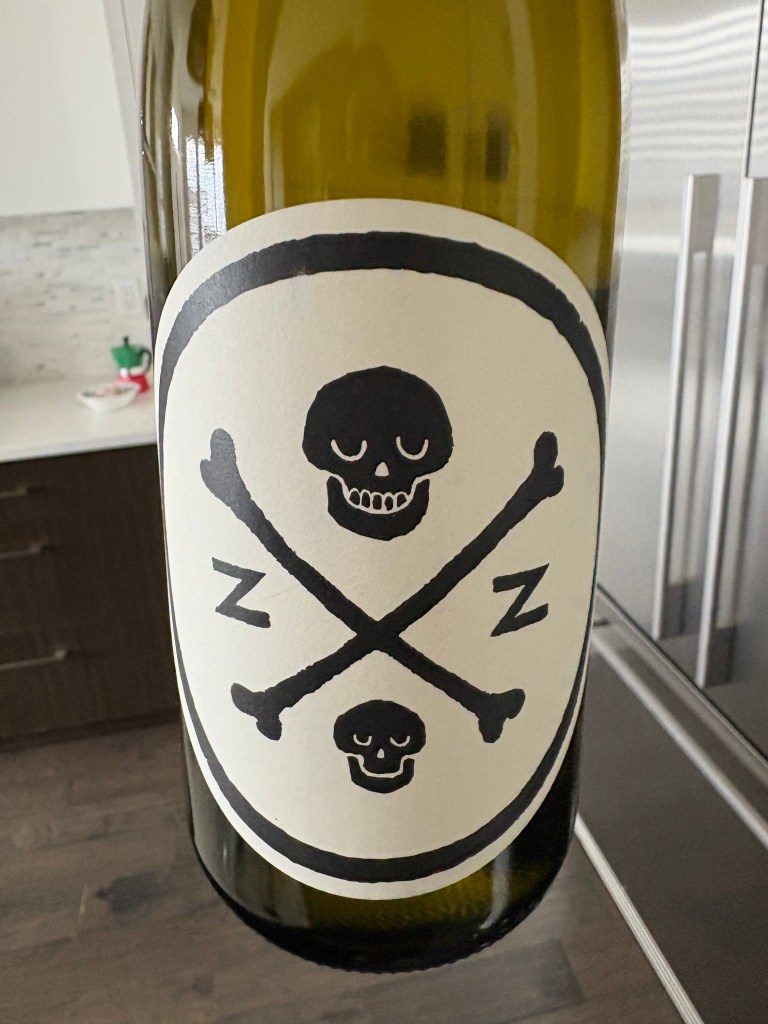
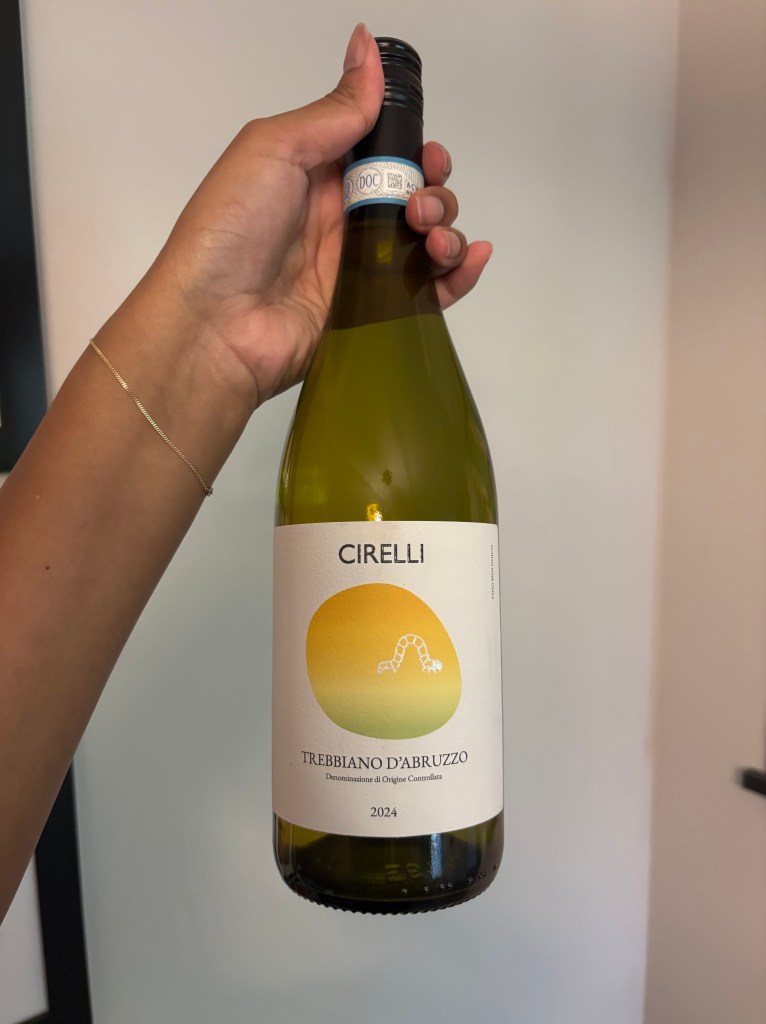
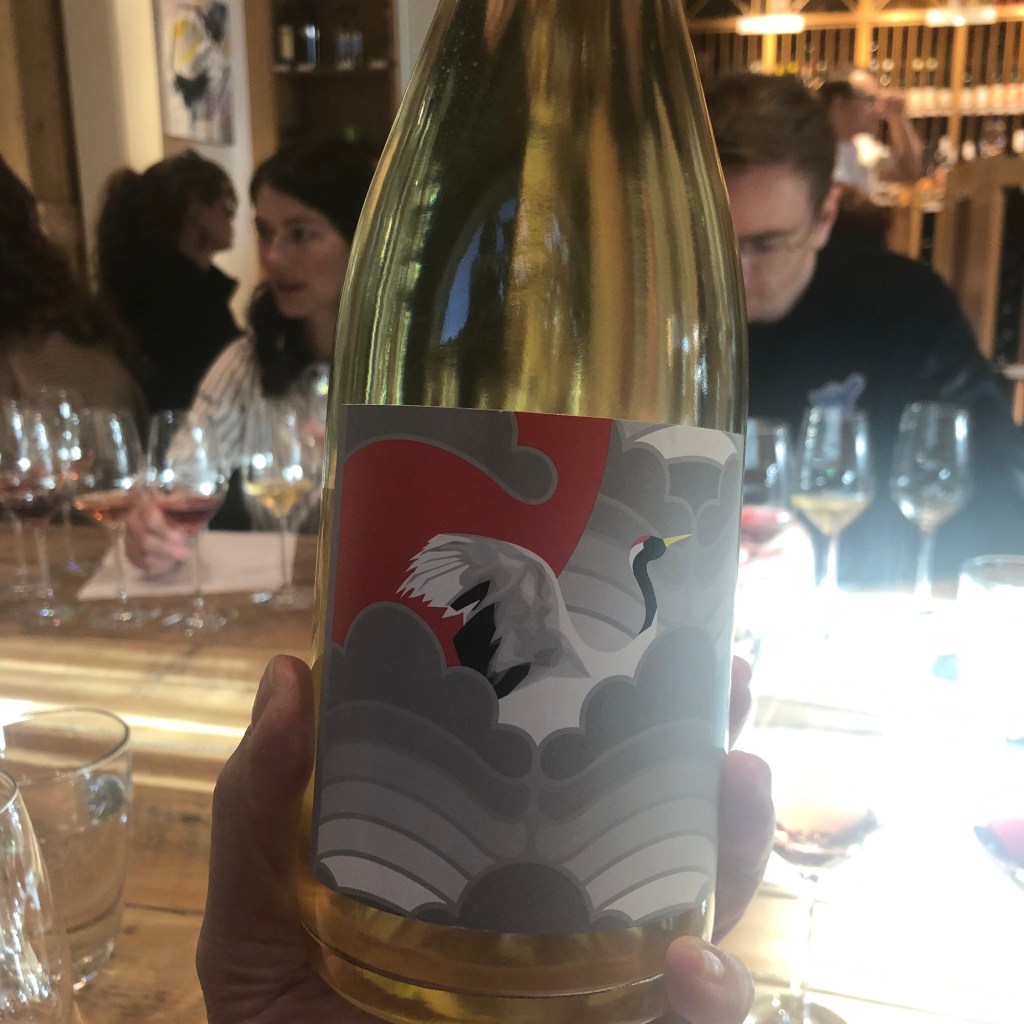
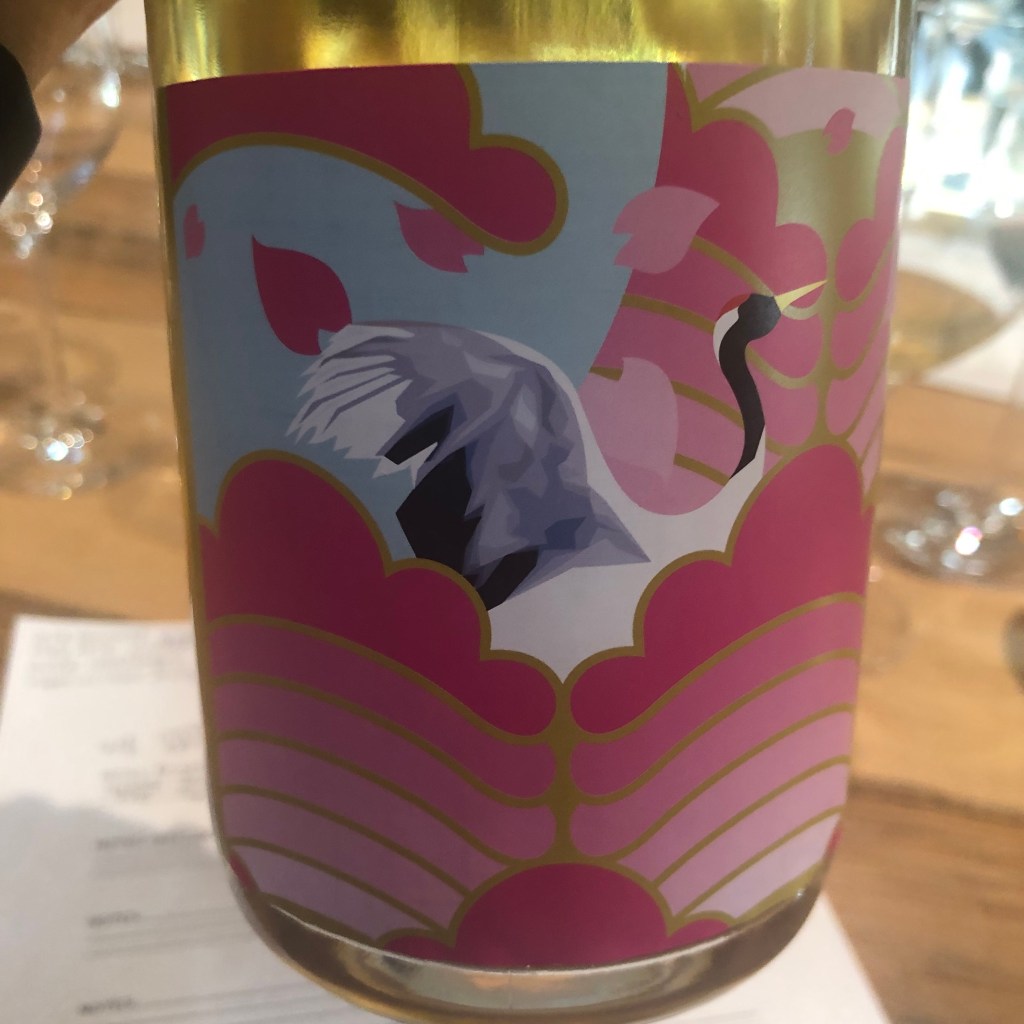
Mark was showcasing Dormilona 2024 Blanco ($37.95), Francesco Cirelli 2024 Trebbiano d’Abruzzo ($35.95), and Clos Cibonne 2024 Tentations Rosé ($38.95).
I’m familiar with Dormilona wines, a woman-led winery in Margaret River, Western Australia. Mark described this wine as creamy, crisp, and fresh. I liked the vibrancy of this white wine and picked up a bottle. It’s hard to find a wine that pairs well with salads, and apparently, this one pairs nicely with any vegetables and mint.
The flavour of Francesco Cirelli was unique to me. Mark mentioned this Italian white was an easy-drinking, savoury wine that paired well with seafood, such as ceviche. Divine Offering picked up a bottle because it stood out from the wines she had been stocking. She tasted peach or apricot, and thought it would be a good, cold summer wine. I remembered that I was already sharing a case of white wine from Domaine Richaud with Lululemon and Divine Offering, so I bowed out.
The third wine, Clos Cibonne 2024 Tentations Rosé, was described as a classic Provence rosé. Unsure of what that meant, I looked up an AI definition and got “A classic Provence rosé is pale and elegant, with crisp notes of citrus, red berries, and herbs, finishing clean and refreshingly dry.” The Tentations rosé was lovely, but with a case of Domaine Richaud rosé already at home, I decided to pass this time.
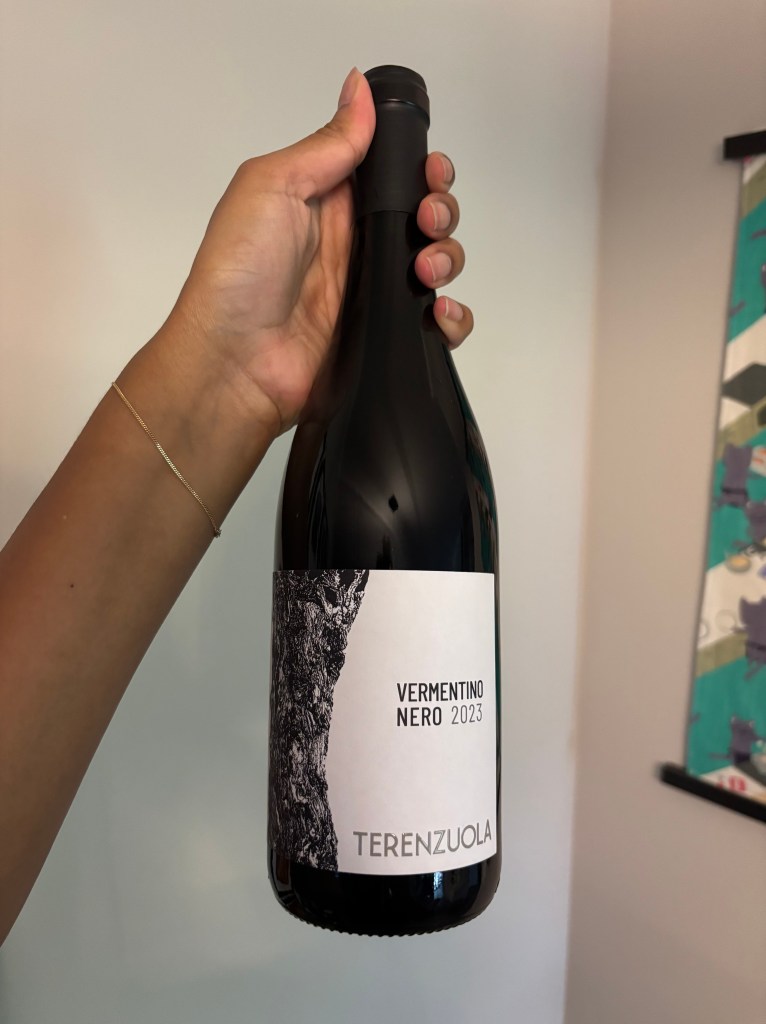
We tried the other three tastings from another wine merchant. Divine Offering bought a bottle of the Terenzuola Vermentino Vero ($38.95, discount $35.06). She found this wine smooth and thought it would pair well with a variety of snacks. She doesn’t usually drink a lot of red wine, so she must have liked this one.
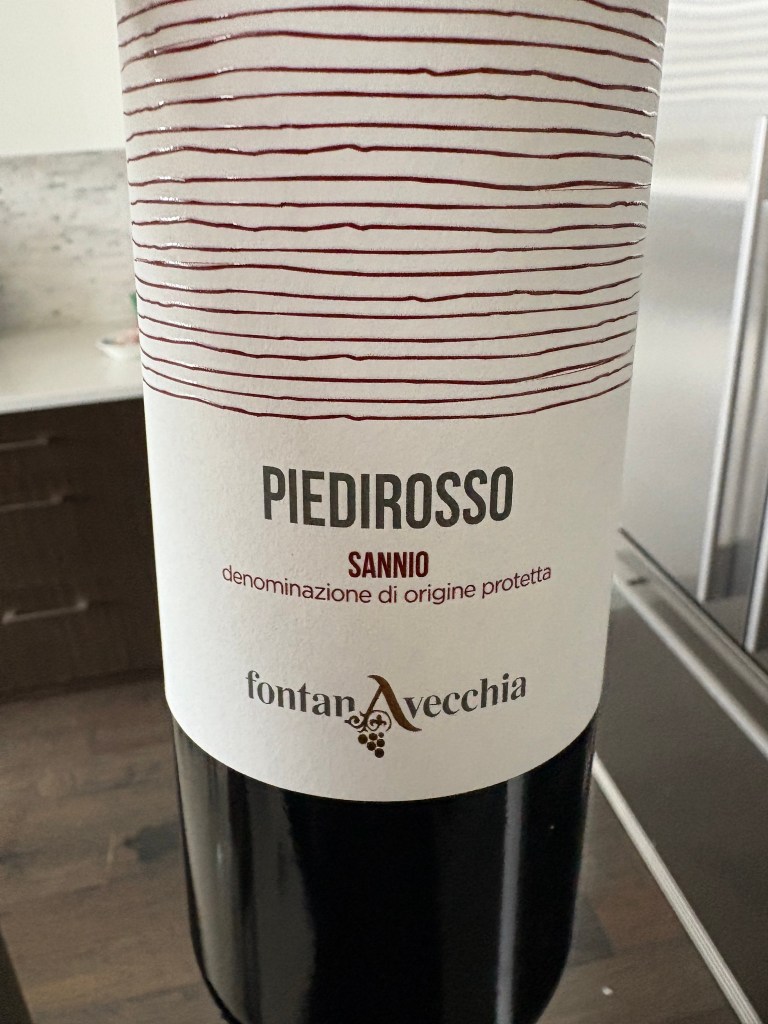
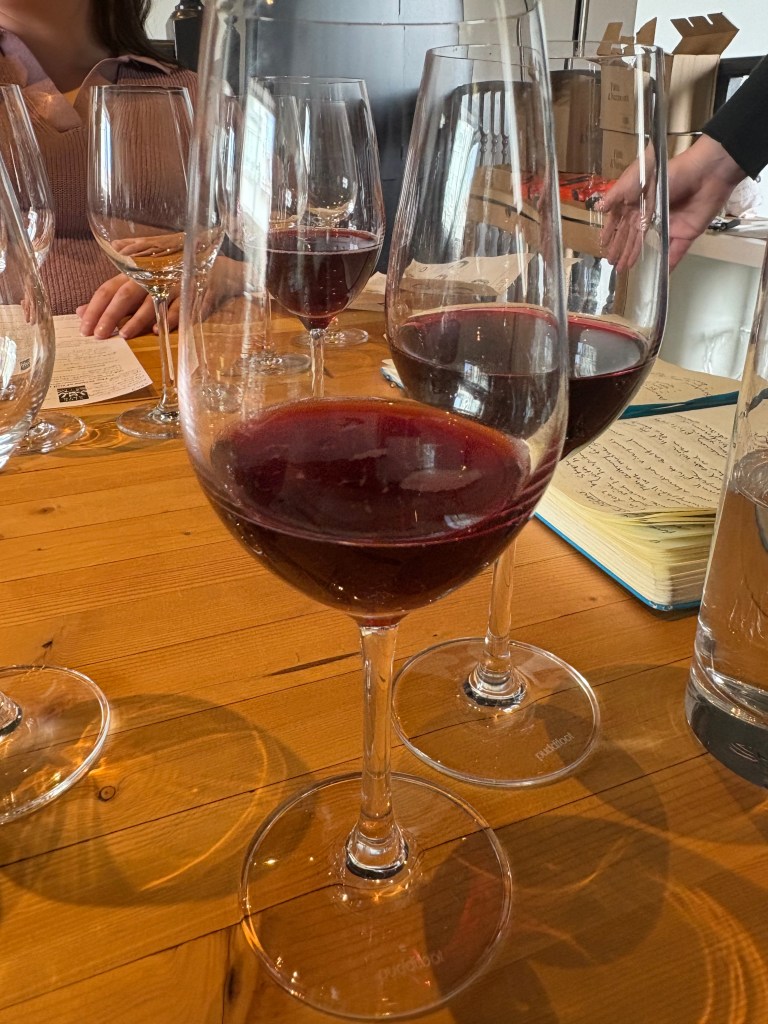
I bought a bottle of the Fontana Vecchia Piedirosso ($31.95, discount $28.76). Described as bold and full-bodied, I took to the fragrance and the juicy flavour. I was told this wine pairs well with any protein, pasta and pizza.
If you haven’t been to Vine Styles, check it out. On a Saturday afternoon, it’s a lively spot to discover something new. Even better, time your visit so you can leave with the perfect bottle for dinner.
Lululemon and I dropped by to visit Mark Couillard from Juice Imports, as he was featuring a tasting at Unfiltered Wine Bar in Calgary’s Sunalta community. Let’s listen to ‘Milkshake’ for this post.
When we arrived, there was a line-up to get in. I’m unsure if it’s usually this busy or if it was Mark’s featured wines that were ‘bringing in all the oenophiles into the yard’. In any case, I’m thankful Lululemon made a reservation.
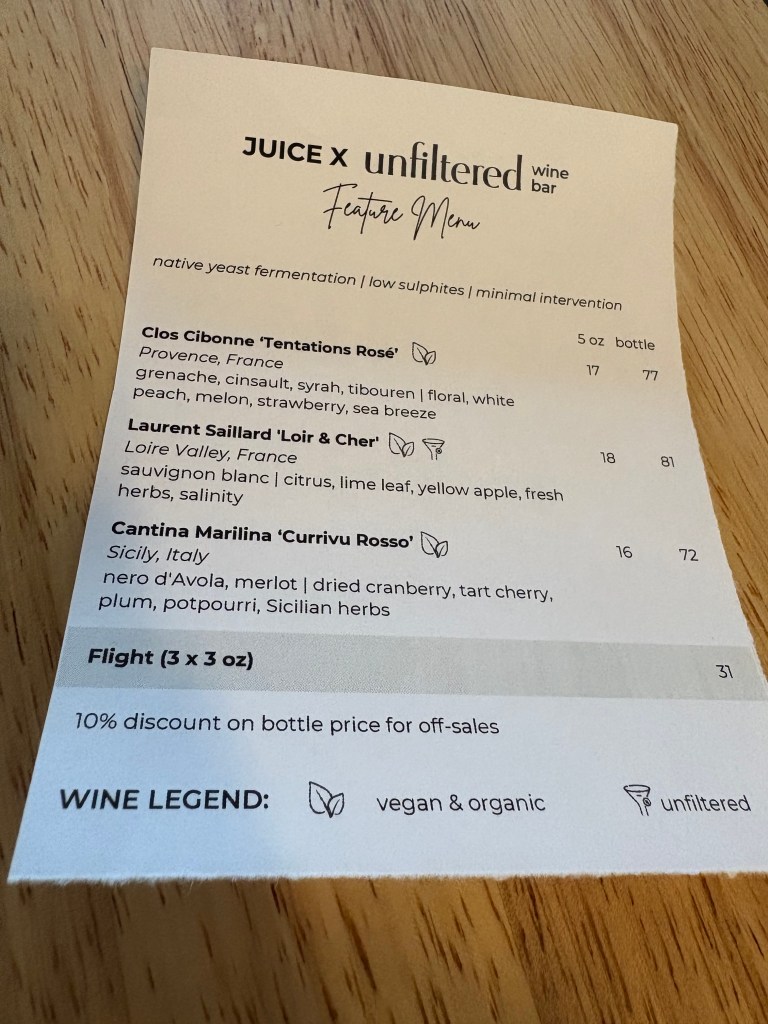
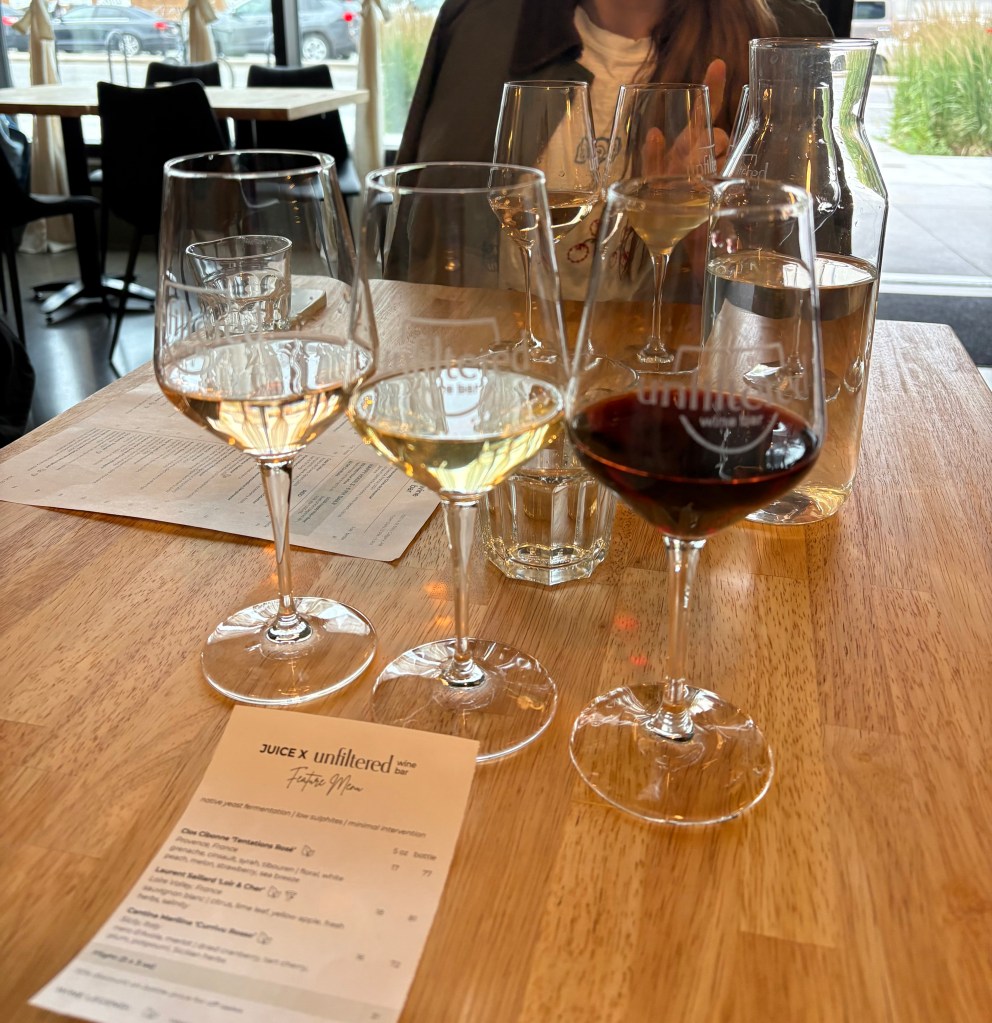
We chose Mark’s flight ($31), which featured three wines: Laurent Saillard Loie & Cher, Clos Cibonne Tentations Rose, and Cantina Marilina Currivu Rosso.
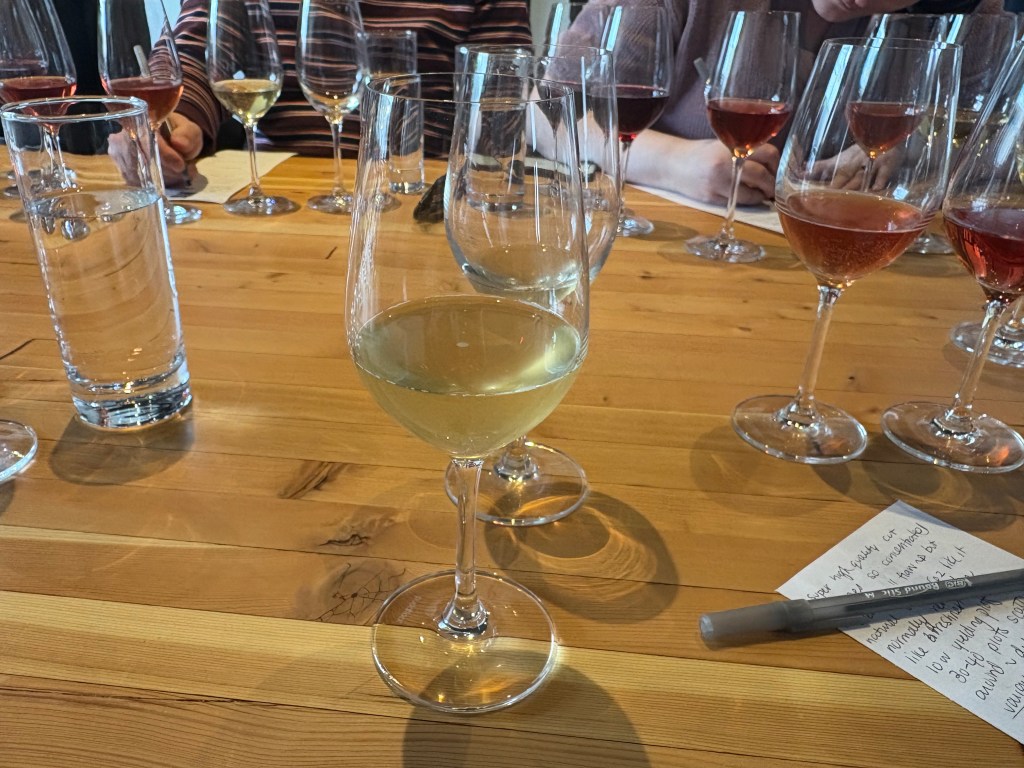
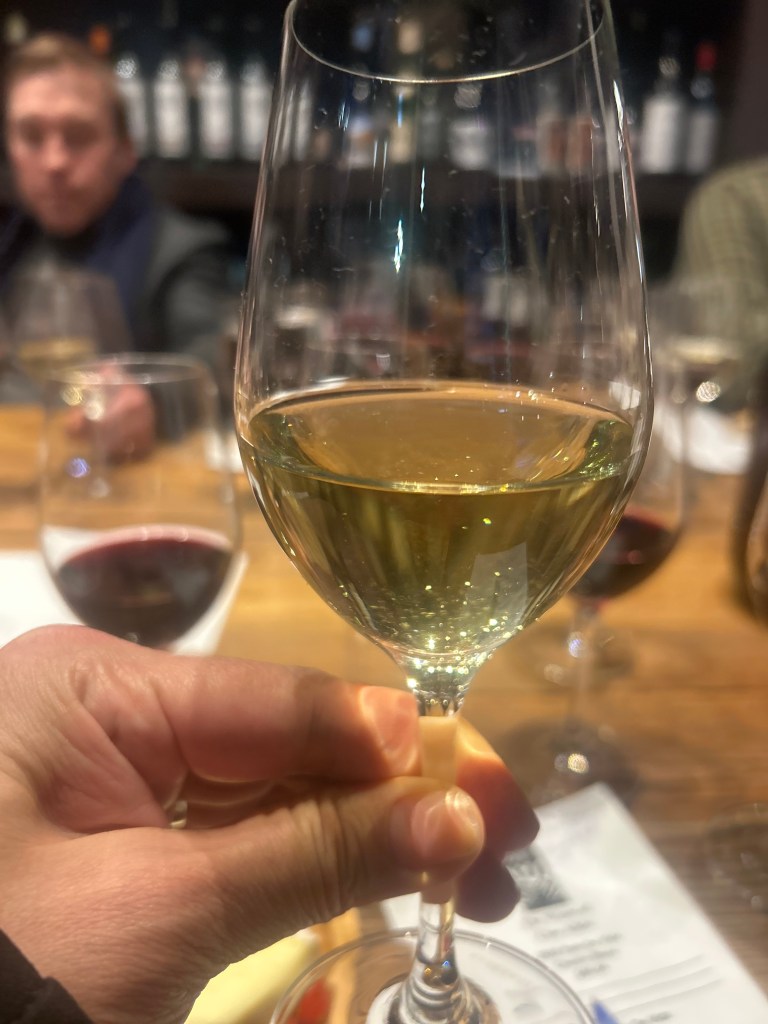
The first wine we tried was Laurent Saillard Loie & Cher ($81/bottle). Lululemon noticed immediately that her wine was cloudy, and mine was clear. Mark explained that Lululemon’s glass was from the last pour, while mine came from the first pour of the bottle. He described the wine as having a slightly brassy character, similar to a New Zealand Sauvignon Blanc, with a tart, fresh, and fun profile. I recalled buying another bottle from Laurent Saillard, Lucky You, last year.
The second wine, Clos Cibonne Tenttions Rose ($77/bottle), was some damn easy sipping. Mark informed us that the winery is located in a very hot climate, which is cooled off by the sea breeze. He described floral notes of melon, peach, and strawberry. I could taste strawberries.
The last wine we tried, Cantina Marilina Currivu Rosso ($72/bottle), hails from Sicily. The red wine had a distinct fragrance. Cantina Marilina is a women-led organic farm, located in the province of Siracusa. He described the wine as bold, plummy, fruity, with herbaceous notes. I could taste cherry. I recognized this label as Lululemon, Divine Offering and I both shared a case of Cantina Marilina’s Fedelie Rosato.
After our fun tasting, Lululemon took me to Una’s takeaway store for a pizza slice and fried dough balls. I ate more there than I have in a month! If you’re after a quick bite, a slice is the perfect nightcap.
A recent health development has kept me mostly at home over the past few weeks. However, I’ve been punctuating my sad little existence with the occasional jaunt. For example, I prebooked a Vine Arts wine tasting ($50) with Erik Mercier from Juice Imports before I was diagnosed, and I figured going wouldn’t literally kill me, so I went. Let’s listen to ‘Edelweiss’ for this post.
Having attended Juice Import’s tasting for years, I realized early on that the two business partners, Erik and Mark, have a passion so deep for their work that they are willing to host these lovely tastings essentially for free. The only things in life that are free are air and pain. So, not to be dramatic, but I’ll always gladly take in a Juice Import’s tasting. The fee for the tasting goes towards using the space, which Vine Art kindly allows them to use for a minimal cost.
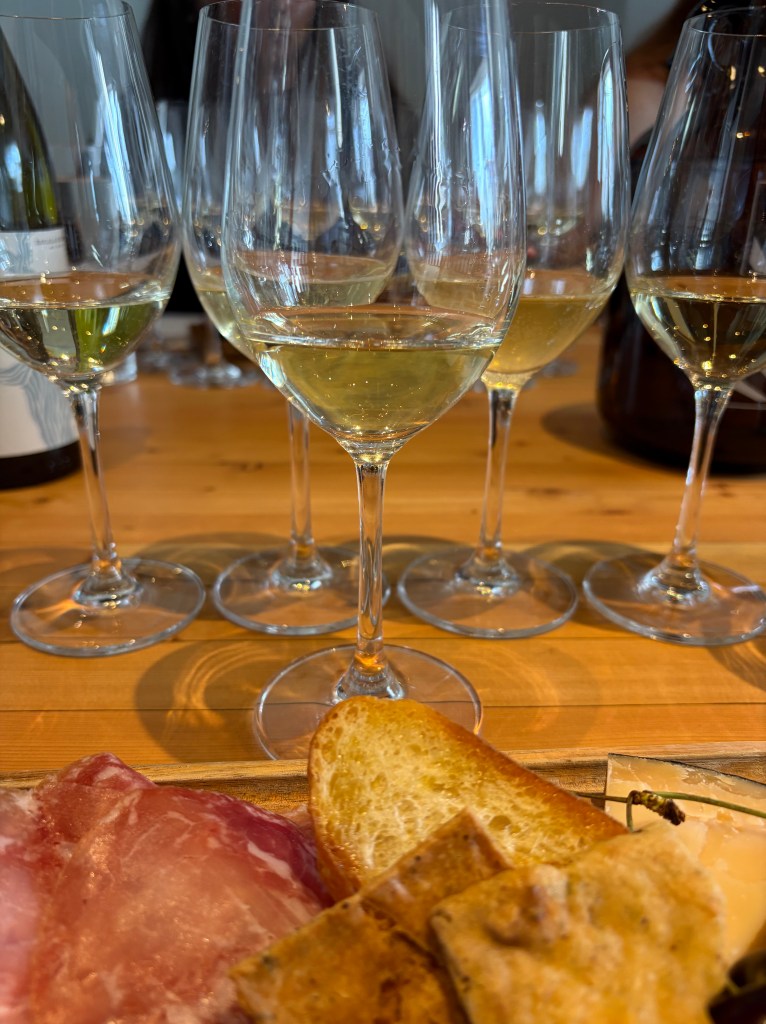
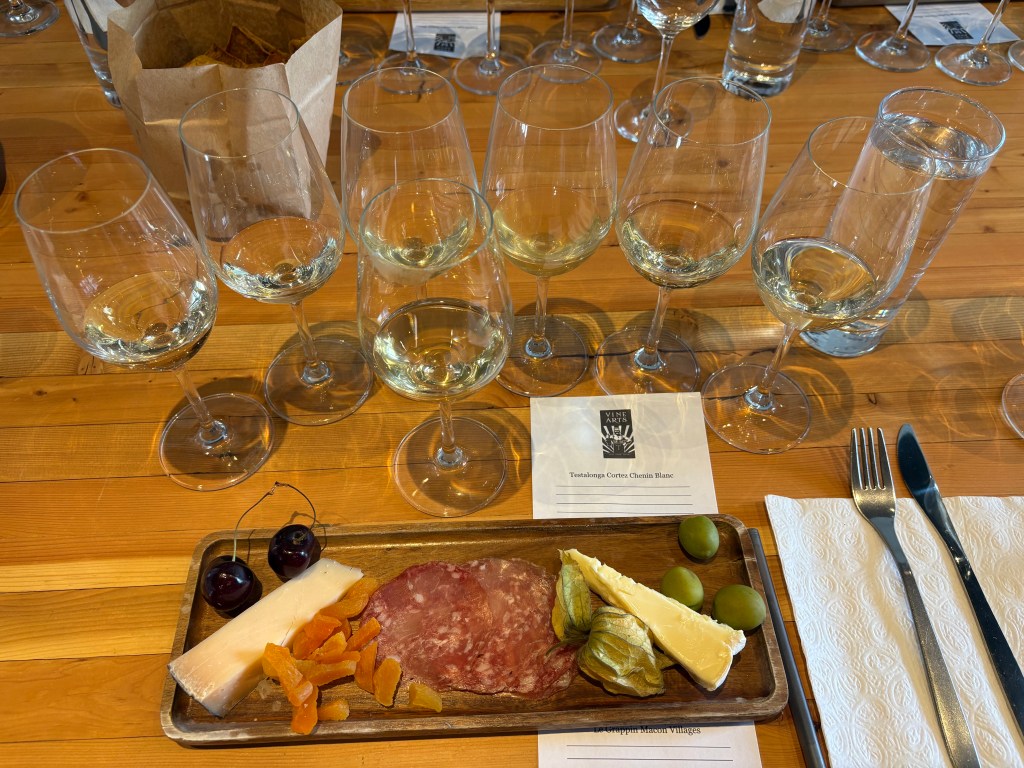
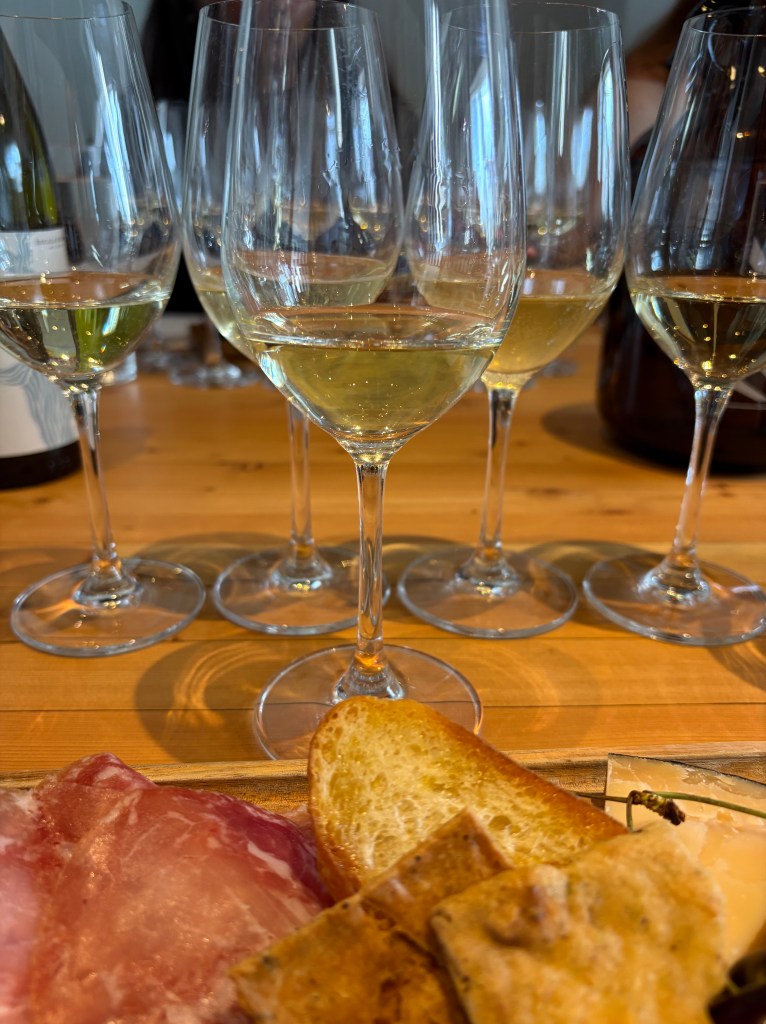
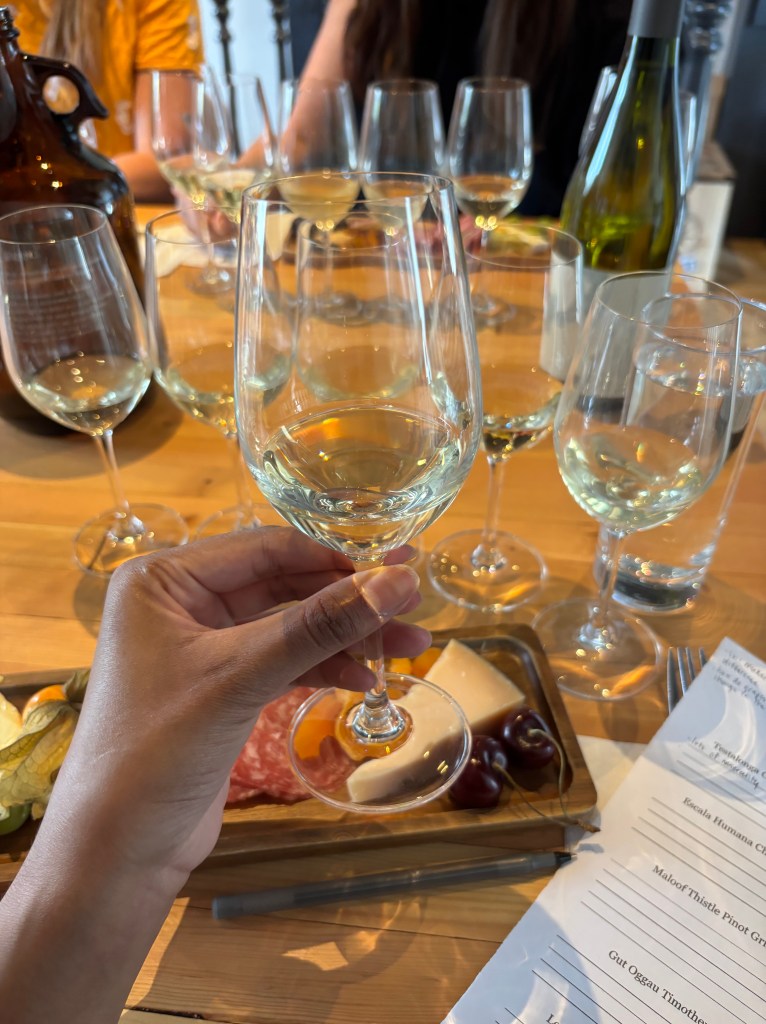
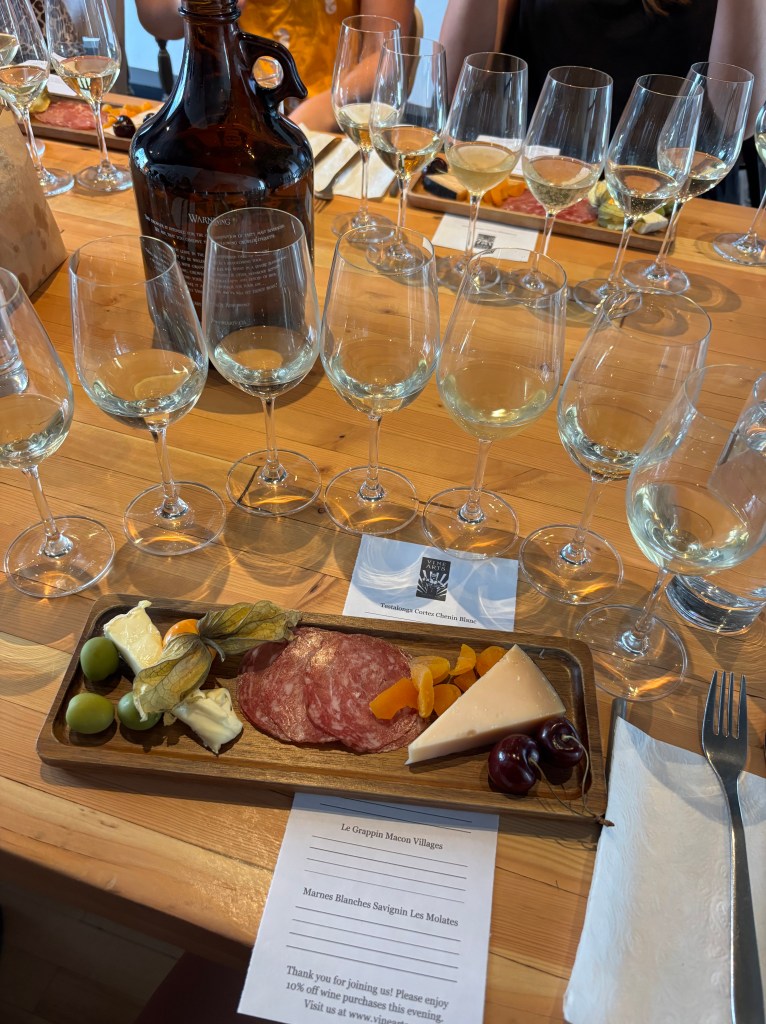
My friend Divine Offering came this time, along with Lululemon. I wanted Divine Offering to meet Erik and Lululemon, as we are all taking a wine tour with Erik and Mark in 2026. We sat in the front of the tasting room, where we soaked in the sun-filled room and the shining variety of white wines, varying in minerality.
Photo credit: Divine Offering
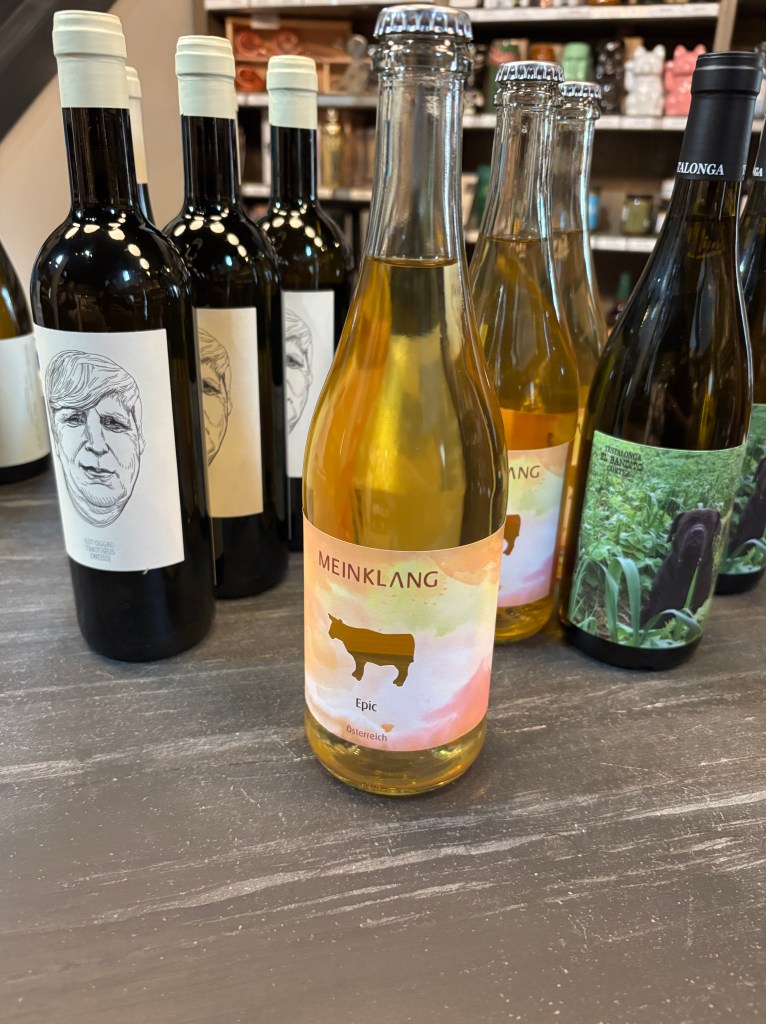
Our welcome bubbles were Meinklang Epic ($29, discount $26). I found this wine refreshing with lovely tiny bubbles. I bought a bottle.
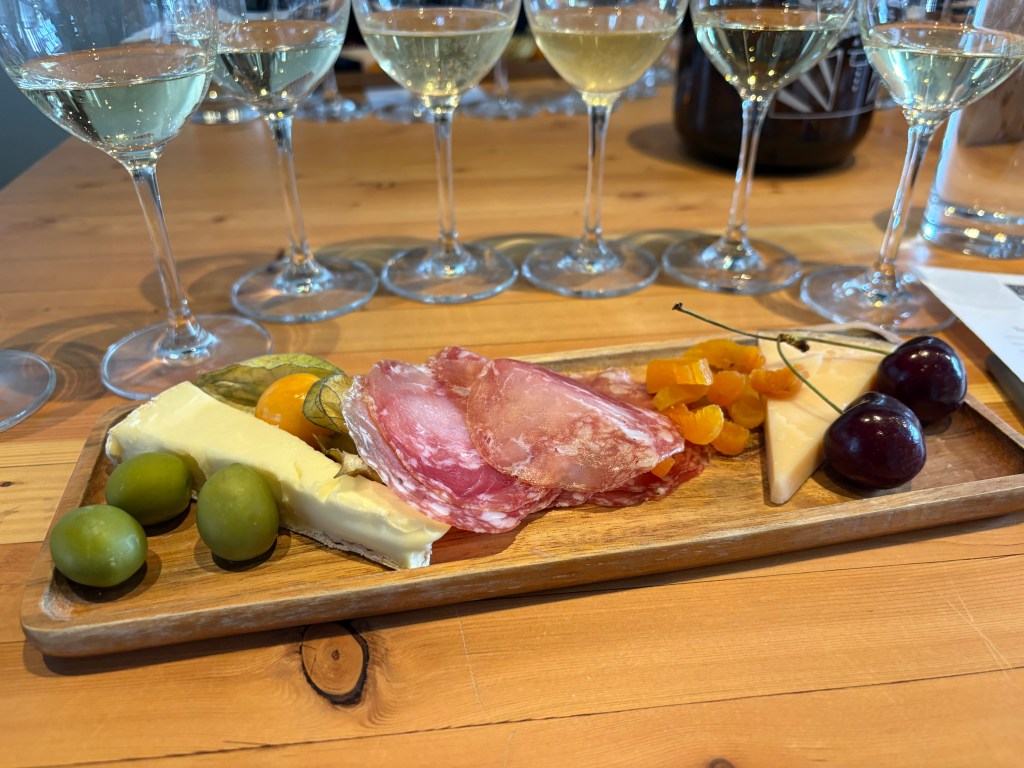
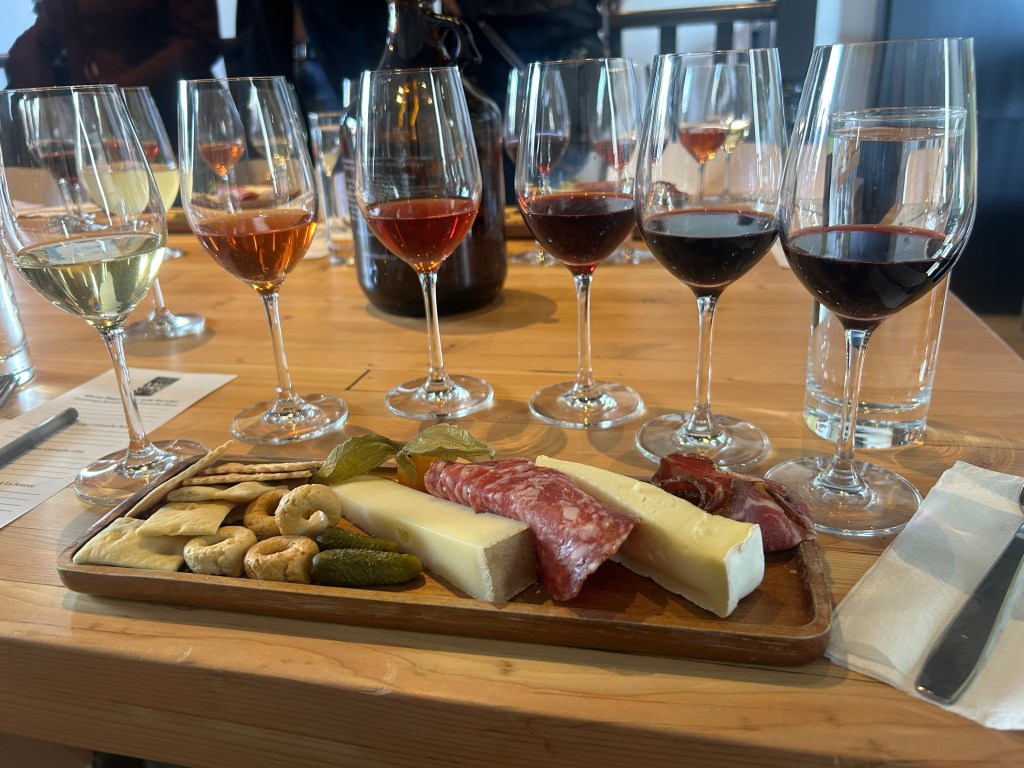
I hadn’t eaten much that day, and oh boy, was that cheese platter delicious. Peasant Cheese always does it right. The brie was soft and gooey, even better when paired with various crackers and dried apricots. The hard cheese was buttery yet creamy. And those big, fat, sweet red cherries tasted like it was just been plucked from a tree in the Okanogan.
The first wine was Testalong Cortez Chenin Blanc ($57). Testalong is one of the top three wineries in South Africa. Grown on decomposed granite with quartz and silica, Erik observed the stony characteristics. I find it challenging to describe minerality because I haven’t had much experience tasting things like stone or flint. Erik explained that flavours in wine that aren’t fruity, floral, or spicy are often considered mineral notes.
We compared Testalong Cortez with Escala Humana Chenin Blanc ($37.50), a wine from Argentina. Erik described this wine as fruity, with floral notes and citrus aromas. Lululemon liked this wine a lot. Divine Offering mentioned it complemented the fruit on her plate. Both purchased a bottle.
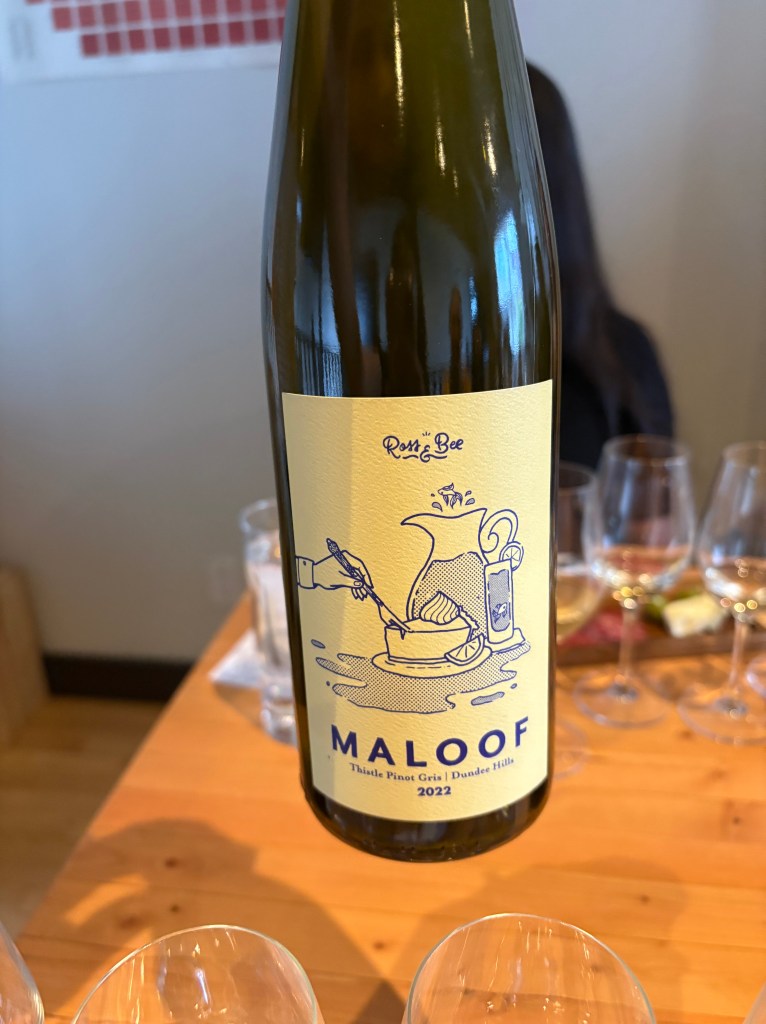
The Maloof Thistle Pinot Gris ($40, discount $36) was just right for me. Erik could taste both spices, such as cinnamon and cardamom, as well as the iced tea and lemon. The grapes grow on ‘Jory soil’, found in Oregon. The soil is volcanic, which is considered ideal for growing Pinot Noir grapes. I picked up a bottle for my in-laws, Turned and Dave.
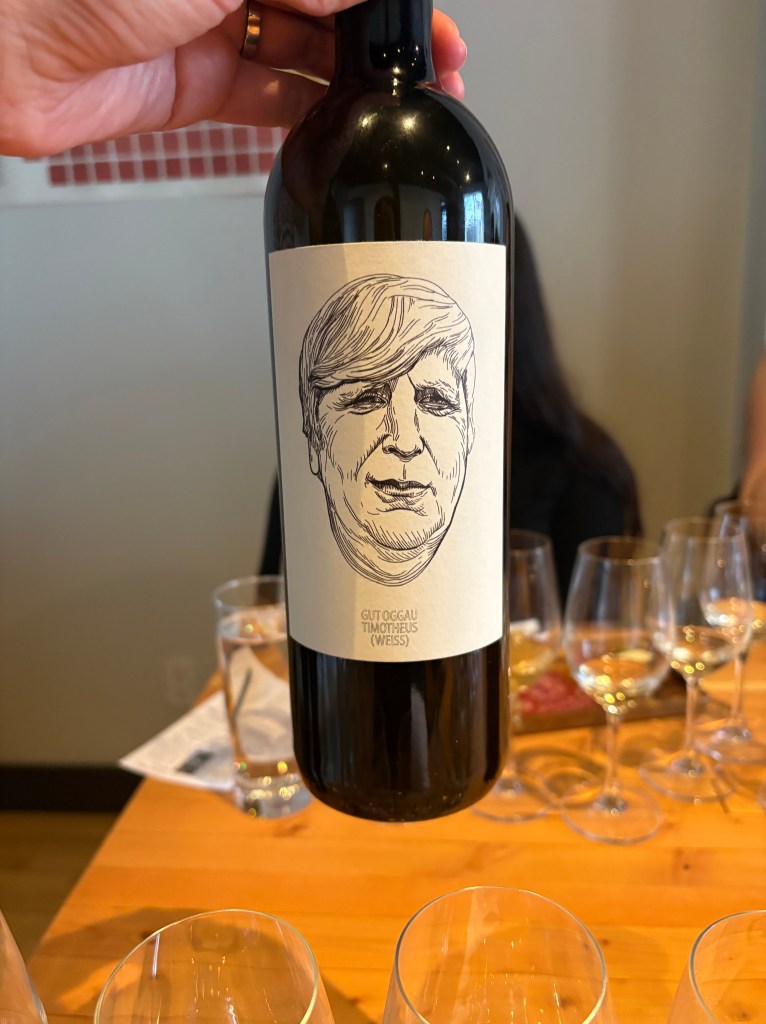
The fourth wine was a real goodie, Gut Oggau Timotheus ($80). I love Gut wines, but I have what you call a beer budget, so I just sat and enjoyed experiencing the Juicy Fruit-like flavour. Erik mentioned the winery has a cult status in New York and Paris, and is served at Noma, a three-Michelin-star restaurant in Copenhagen. There’s actually a whole page dedicated to Gut wines.
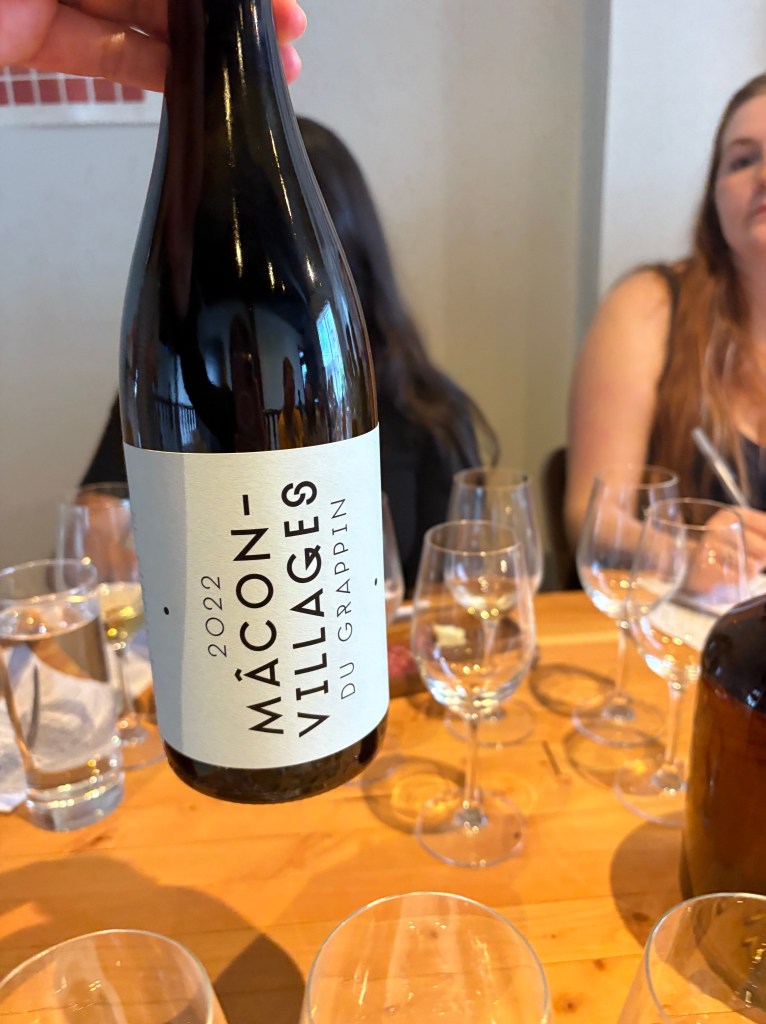
The fourth wine we tasted was Le Grappin Macon Villages ($50). The smell was lovely. Erik noted that this was a white burgundy, an excellent value for such a bright and fresh wine. I had trouble describing what I could taste.
Erik mentioned that the winery farms its grapes with great intensity. Someone at the table asked what that meant, and he explained that when you grow fewer grapes, it gets more attention. He said to think of growing one ton of grapes versus ten tons on the same plot of land. When there are more grapes, they compete for nutrients, which can dilute their concentration of sugar and alcohol.
My favourite bottle just so happened to be Marnes Blanches Savignin Les Molates ($62, discounted to $55). Domaine Des Marnes Blanches is the first winery I fell in love with from Juice Import’s portfolio. The trick I learned at home, however, is to pair the wine with cheese. For some reason, it tastes so much better.
Photo credit: Divine Offering
I smelled brown sugar. Erik mentioned this wine could be aged for 30 years. I couldn’t muffle my snicker in time. I’m not waiting three decades to drink a nice bottle of wine. Erik suggested pairing this wine with Comte cheese. He sniffed and sipped, tasting spicy, peppery, green tea and tropical fruit. Lululemon mentioned the Savignin les Molates reminded her of lasagna. Yes, I could see it. Divine Offering found it creamy, sweet, yet herbal and smooth. Lululemon, Divine Offering, and I bought a bottle.
Photo credit: Divine Offering
I asked if wines with minerality are less approachable to novice wine drinkers because it’s harder to describe what they taste. Erik disagreed, saying a novice drinker can’t tell the difference, as it takes a lot of practice. People aren’t naturally good at tasting notes in wine. He says that, in comparison, semi-knowledgeable drinkers are worse than novice drinkers, as they get in their heads a little knowledge and become resistant to trying certain wines. For example, those who claim they dislike sweet wines, such as Riesling, are missing out, as many are delicious and highly regarded by both wine experts and novices.
Photo credit: Divine Offering
Another guest asked about the best places to drink wine in Paris and New York. I tuned out because I didn’t find it relevant in my near future. I perked up when Erik mentioned that Class Clown in Calgary has an incredible natural wine selection at bargain prices, just a few dollars above retail price.
I mentioned the Ship and Anchor has an inexpensive wine list, with several bottles from Juice Imports. Erik confirmed, but noted that his business partner had drunk all of the Ship’s champagne because it was priced so cheaply. Erik recommended Missy This That for the best wine selection.
On August 14, Juice Imports and Salt and Brick are hosting an intimate dinner featuring a rare selection of Burgundy wines ($350). I was very tempted, but since I can’t eat much, I figured it would be wasted on me. However, if you are interested, you might still be able to get a ticket.
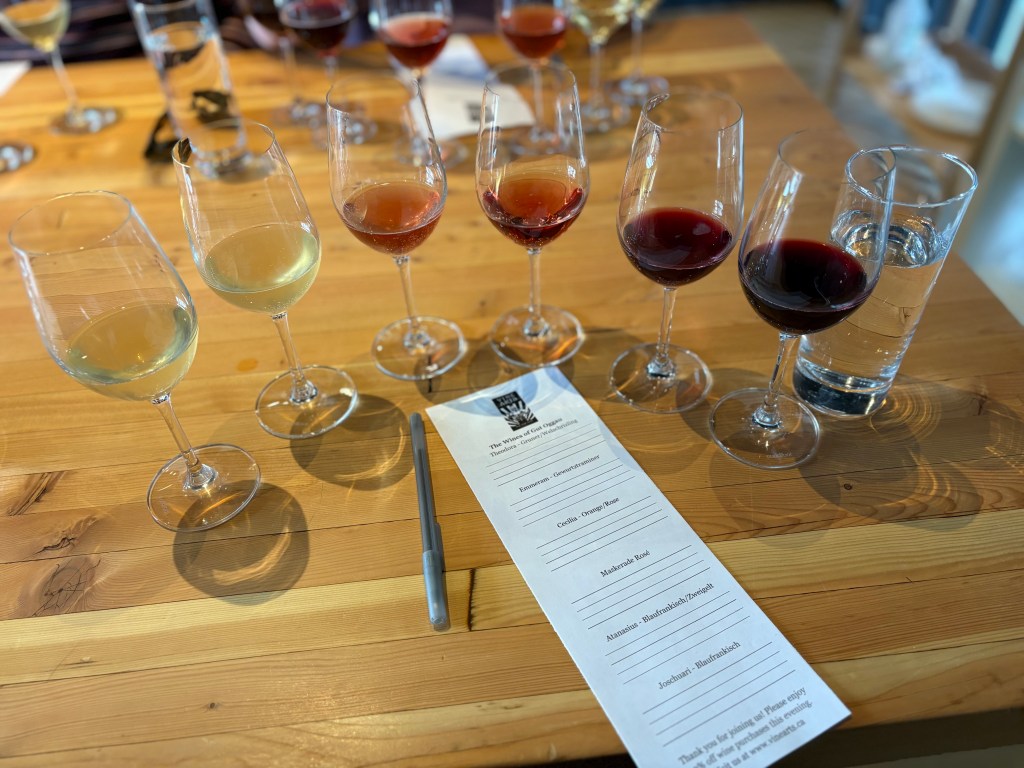
Last Sunday, my friend Lululemon took me to a Juice Imports tasting ($35) at Vine Arts. I was extra excited. The wines are from Gut Oggau, located in Austria, where Lululemon and I are visiting with Juice Imports in 2026 for a wine tour. Let’s listen to for this post “The Lonely Goatherd”.
Typically, it’s Erik who speaks at their tastings. However, this time around, his business partner, Mark Coulliard, led the class. I like the speed at which he speaks, which is fast enough that I don’t zone out and that he’s to the point. Mark is a skilled storyteller, weaving between his personal experiences at the winery while dropping juicy nuggets of information.
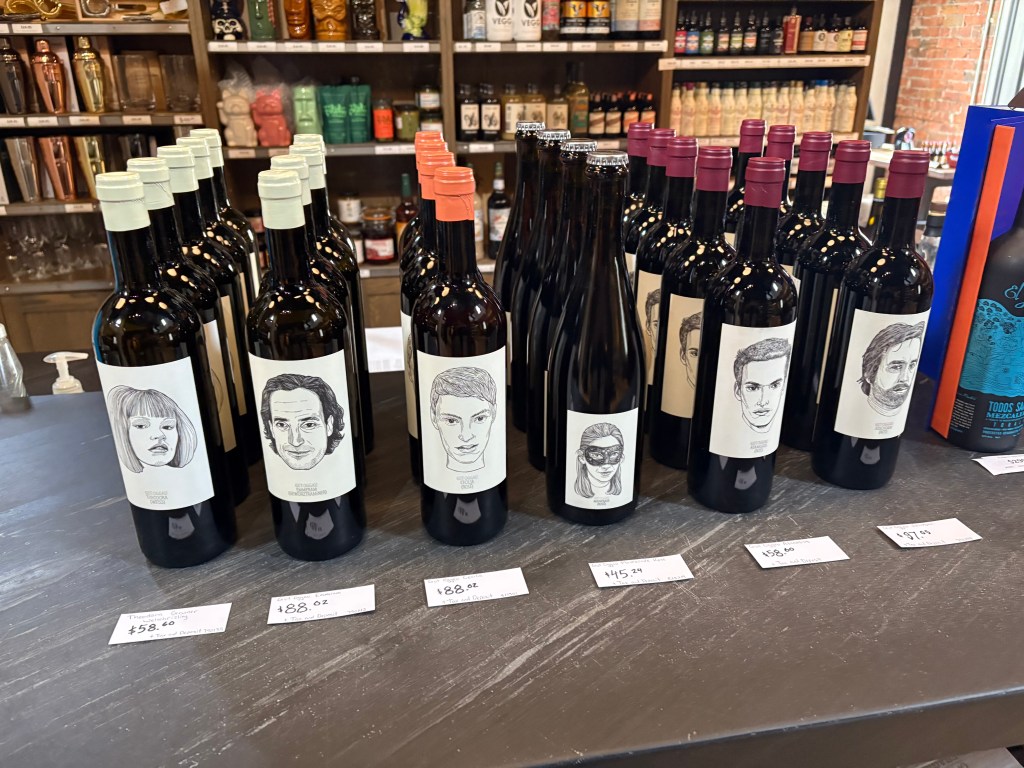
Juice Imports doesn’t make any money off these tastings, and to add to the incredible value, he and Erik offered Gut Oggau wines at a much lower price point. The reason? Though these high-quality obscure Austrian wines are priced accordingly, many people in Canada, unfamiliar with Gut Oggau, may be reluctant to spend the money. While wine bars in New York and Tokyo are willing to pay for these high-in-demand wines, the locals here haven’t caught on. So they wanted us to taste them at a lower price point. The Guu collection ranges from $60 and up; even by Mark’s standards, the line-up we were trying was an indulgence.
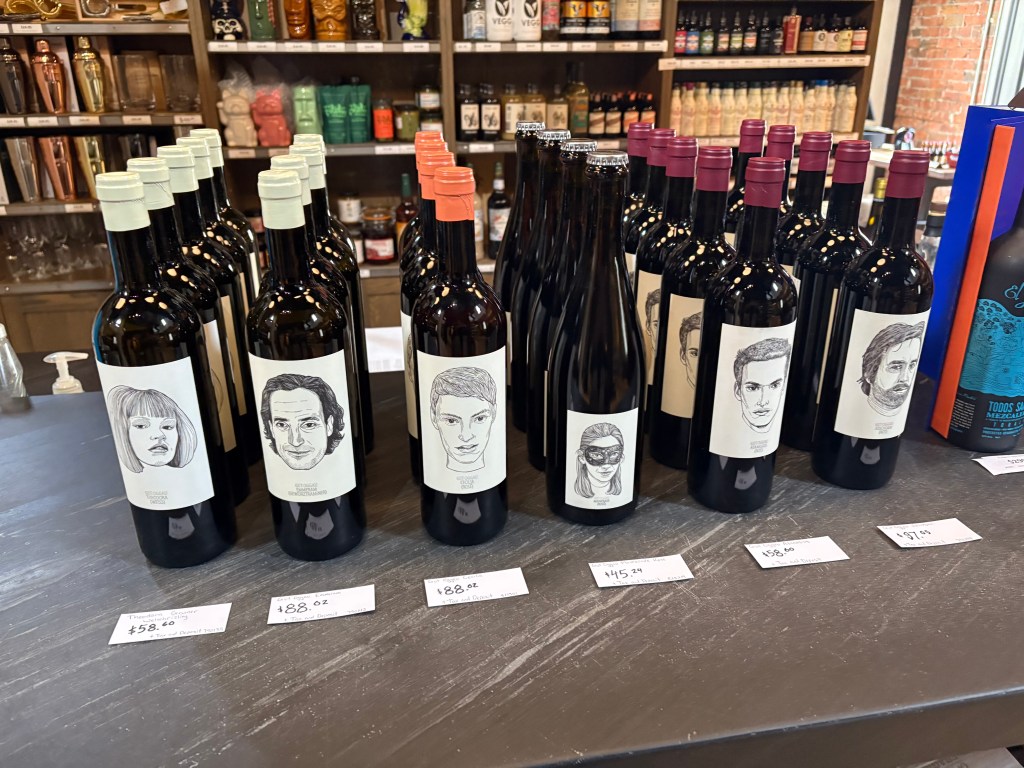
The label on each bottle features a person, and I initially assumed that each name and image represented a family member. However, I soon discovered that they were part of a fictional family. I felt a sense of disappointment, as I had grown fond of the idea of a large, eclectic family who boozed it up together.
Mark met the owners, Stephanie and Eduard Tscheppe, in 2016 when Erik signed them. Now, not even a decade later, the wines are world-renowned. Throughout our tasting, Mark would reminisce about their subsequent visit to their 17th-century farmhouse, eating at their sister’s Michelin restaurant and picking out any bottle they fancied in the cellar. I nearly fainted from excitement when he recounted how wine was poured from 12-litre bottles.
The first wine we sampled was the Theodora (Gruner/Welshrizling), Gut’s version of white. A mellow yellow, Mark described the wine as light and fresh. I thought it was nice and lemony. I learned that their wine is made in Austrian wood, which is more neutral than oak.
My favourite wine was the Emmeran Gewurtztraminer (discount $61). Lululemon and I loved the floral fragrance. Mark mentioned he likes a good Gewurztraminer, especially when it’s so aromatic, juicy, and bright. To him, the Emmeran tastes like spring. We learned this wine is produced from forty-year-old vines with a low grape yield. Lululemon got a bottle. I wanted to buy this bottle, but it’s beyond my 2025 budget, even with the big discount.
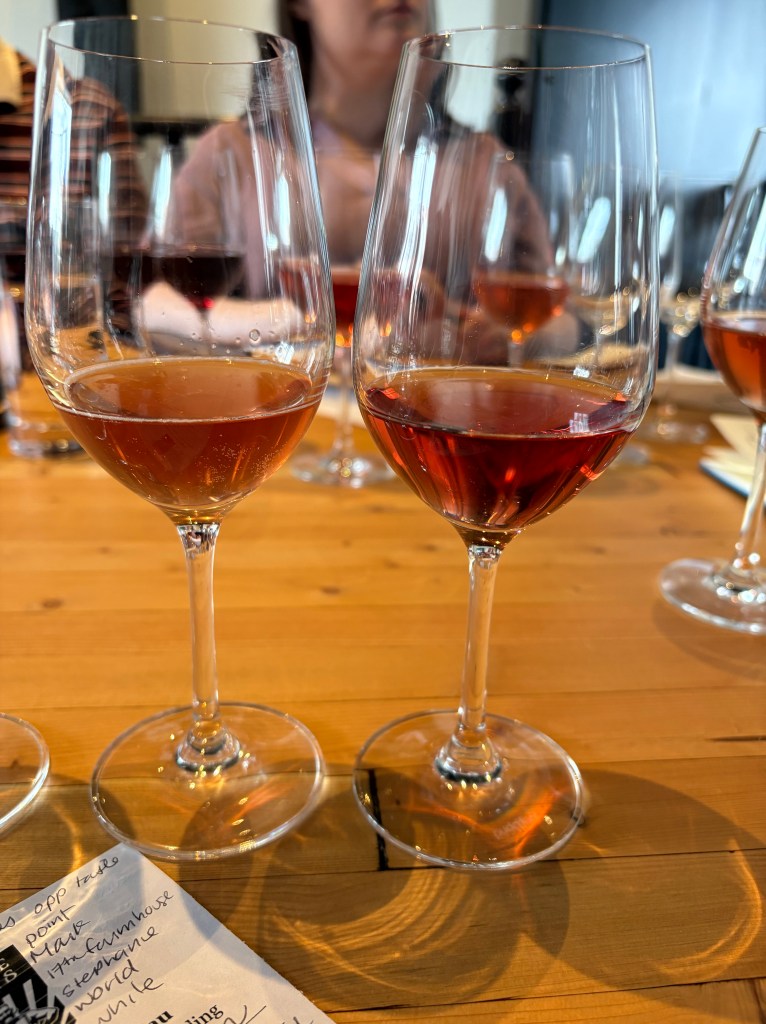
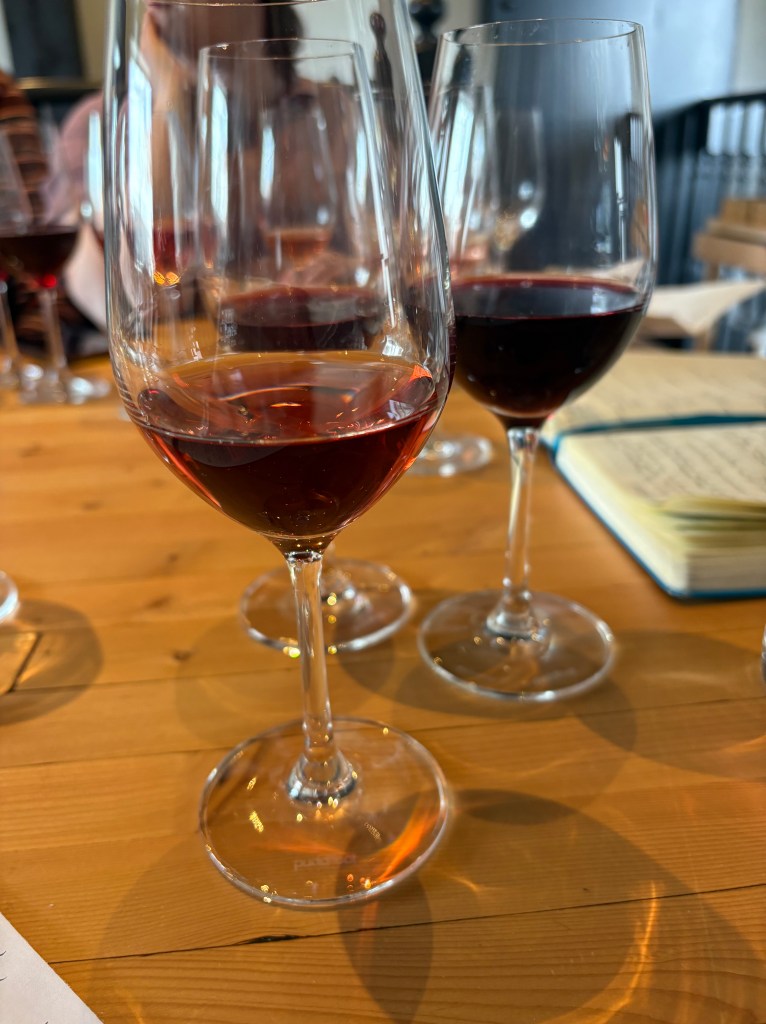
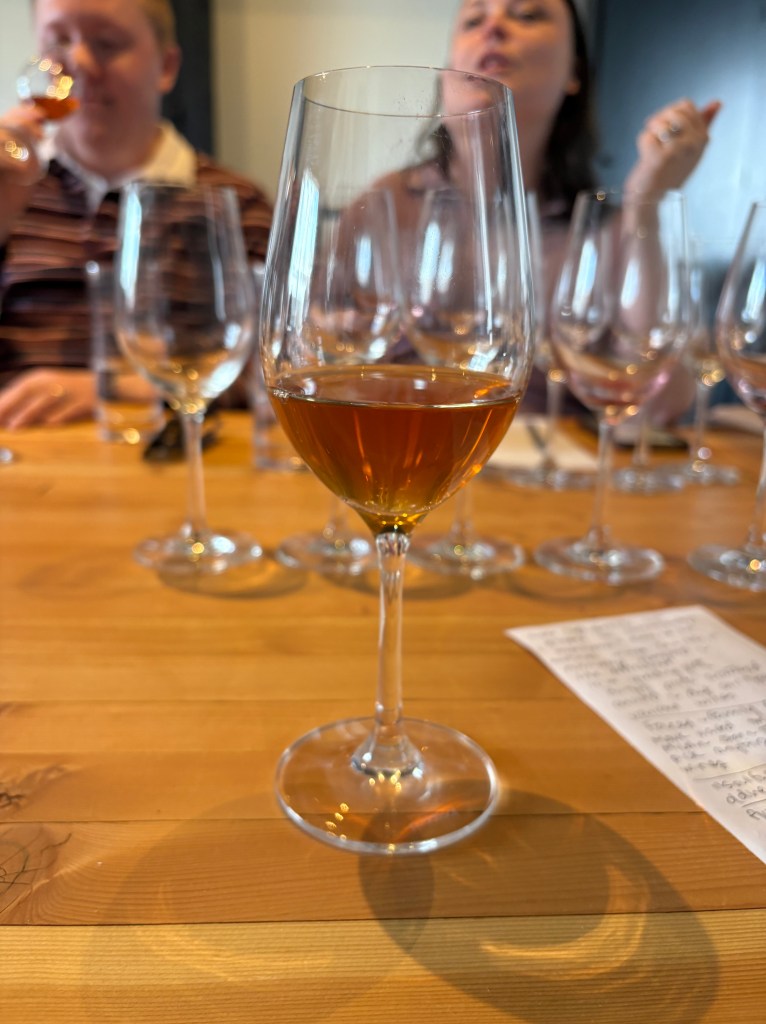
The next wine was Cecilia (discount $75), an orange rose wine. Mark noted this was a new wine, at least for him. As he sipped, he described the wine as unique, explaining it was very different from all the others. Mark informed us that Cecilia is made with a blend of unknown red and white grapes. An easy-to-drink wine, he described the flavour as rosy oranges. I found this one subtle, light and interesting. If I weren’t such a small potato, I would substitute water with Cecilia.
The fourth tasting was Masquerade Rose (discount $35). The rose smelled like port, with a dessert-like sweetness that reminded me of cherries. Mark characterized this wine as bright, easy, and approachable. I bought a bottle for myself and one for Lululemon, who treated me to this tasting. When asked how long it takes to hold onto these wines, Mark recommended five years.
The fifth wine was a winner, though apparently, transporting a living product across the ocean turned Athanasius Blaufrankisch/Zweigelt (discount $40) into a frothy, spritzy red wine. I liked the juicy, light flavour and the bright red hue. I bought two bottles, and Lululemon bought one. Mark explained that most wineries remove the C02, but natural wines make them more alive and fresh.
The sixth wine was Joschuari Blaufrankisch. I found this wine punchier and heavier than the previous ones. We learned the Gut land consists of low-yielding plots of 30-40 plants, all scattered around different soil types, making various wines. Mark stated these are soulful wines made from super high-quality grapes. For example, they cut out grapes to concentrate on the remaining ones.
Mark treated us to a special bottle, Edmund, made from unpruned vines. Mark described this as bright and fresh with teeth. I loved this wine. I found it unusual but in a good way. When asked what temperature red wine should be drunk, Mark suggested 13 degrees or popping the bottle in the fridge half an hour before consuming it.
The conversation about the price of wine going up in Alberta came up. Mark predicted that customers at restaurants would either face higher prices or have fewer options, while other establishments might start offering cheaper, more standardized wines. He rationalized that most customers have a budget, and convincing them to spend more is becoming increasingly difficult. I couldn’t agree more. With the rising costs of everything, I’ve found myself cutting back and dining out less.
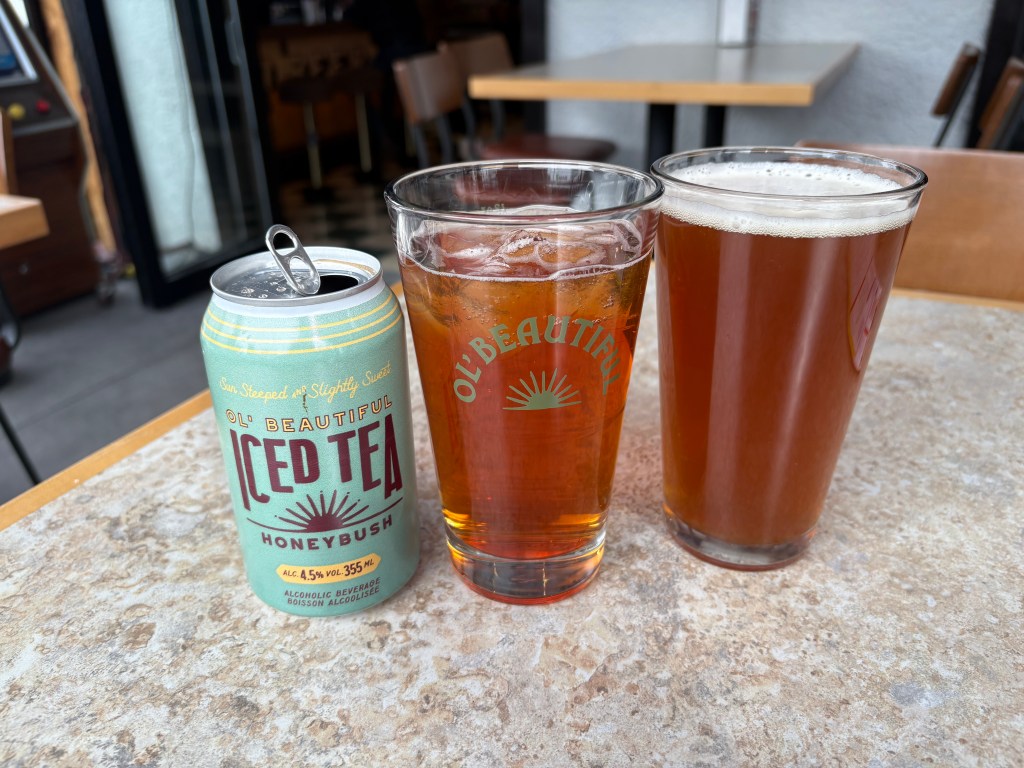
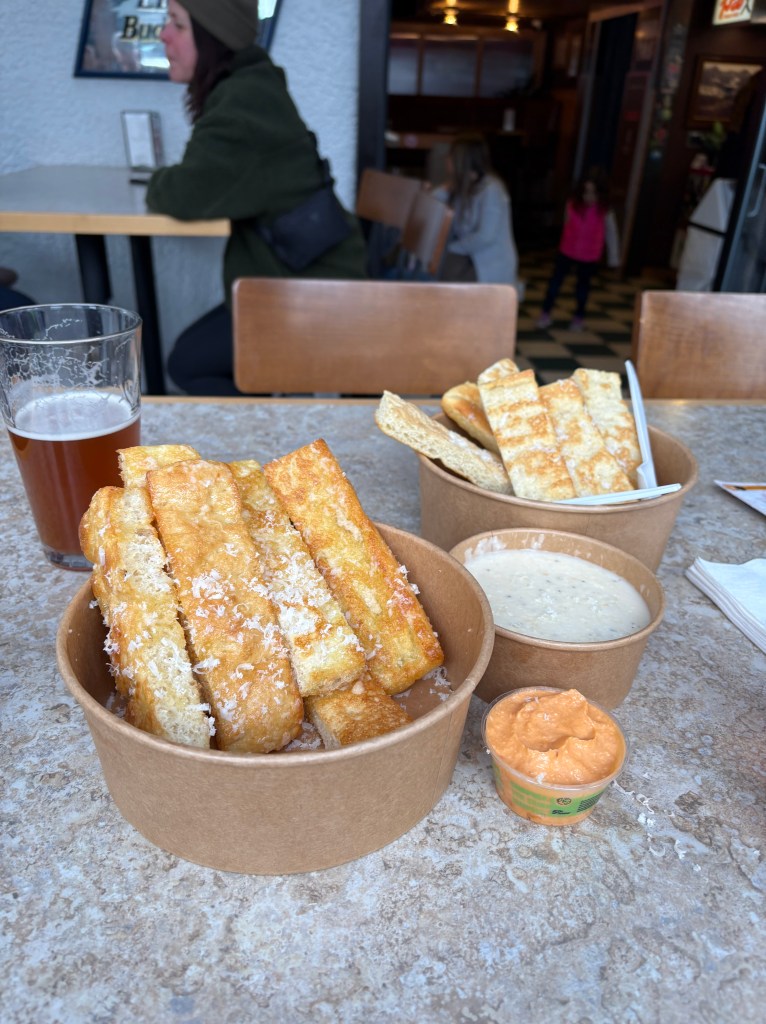
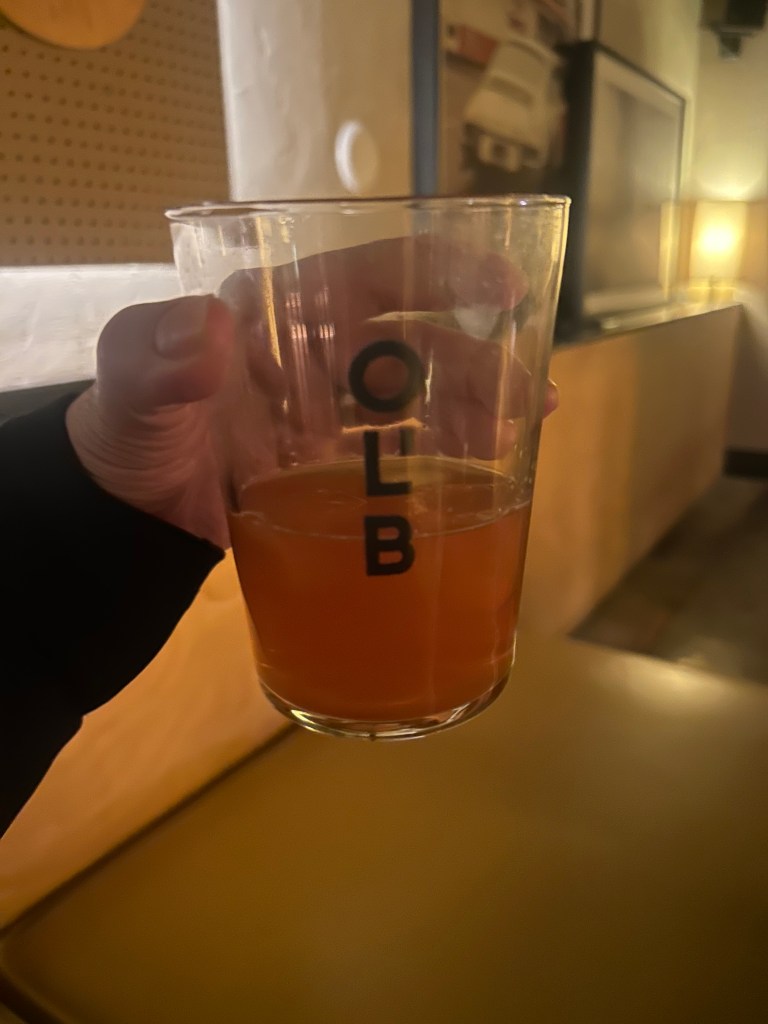
Regardless, this was the perfect way to spend a lazy Sunday afternoon. Afterward, Lululemon took me to Cold Beer and Pizza, a casual little joint across the street. She plied me with fresh bread, dips and my beloved Ol’ Beautiful hard ice tea as we plotted our wine getaway in 2026. Thank you, Lululemon and Mark, for a glorious afternoon.
Erik is back in town! I saw on Instagram he was hosting Rhone Ragers ($50) at Vine Arts. I immediately called my trusty wine pal, Lululemon, to find out if she was up for some natural wines. Let’s listen to “Voulez-Vou” by Abba for this post.
I was early, so I shopped and picked up some Ol’ Beautiful Hard Ice Tea ($18) and non-alcoholic mocktails from Wild Folk ($5.50). At 3:00 p.m., I noted that Lululemon hadn’t arrived yet, which is uncharacteristic of her. Usually, I text her the day of, but I knew she had back-to-back events, so I didn’t want to bug her. It turns out she forgot but managed to scoot down in time. I drank her welcome bubbles because I figured, why not?
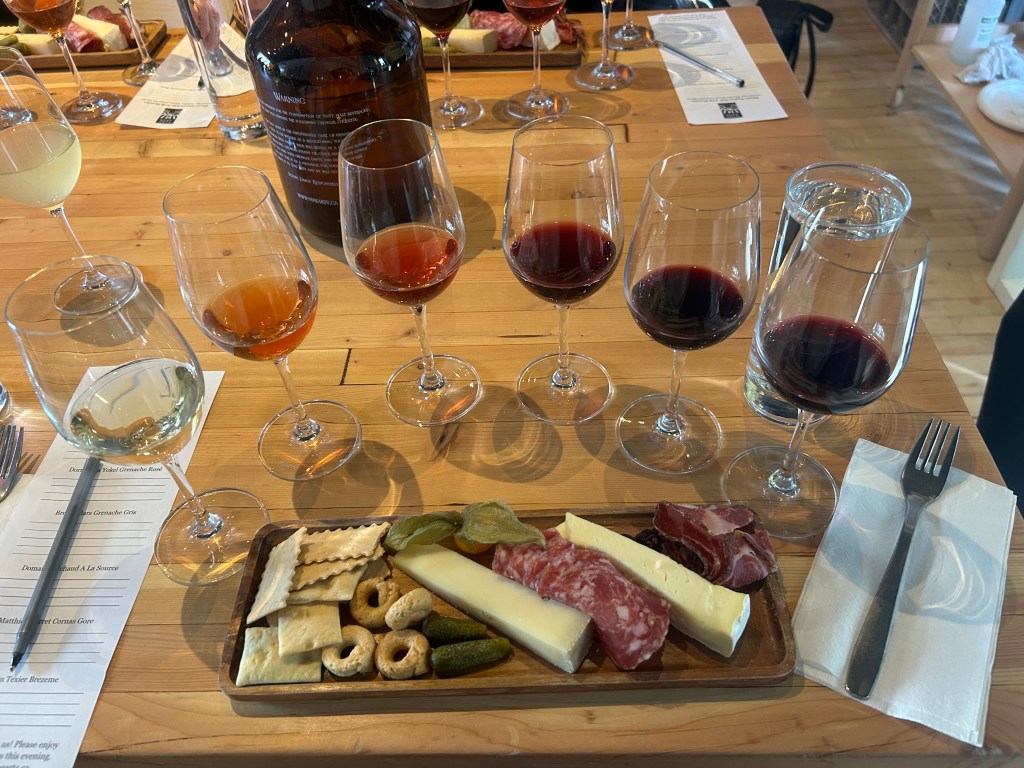
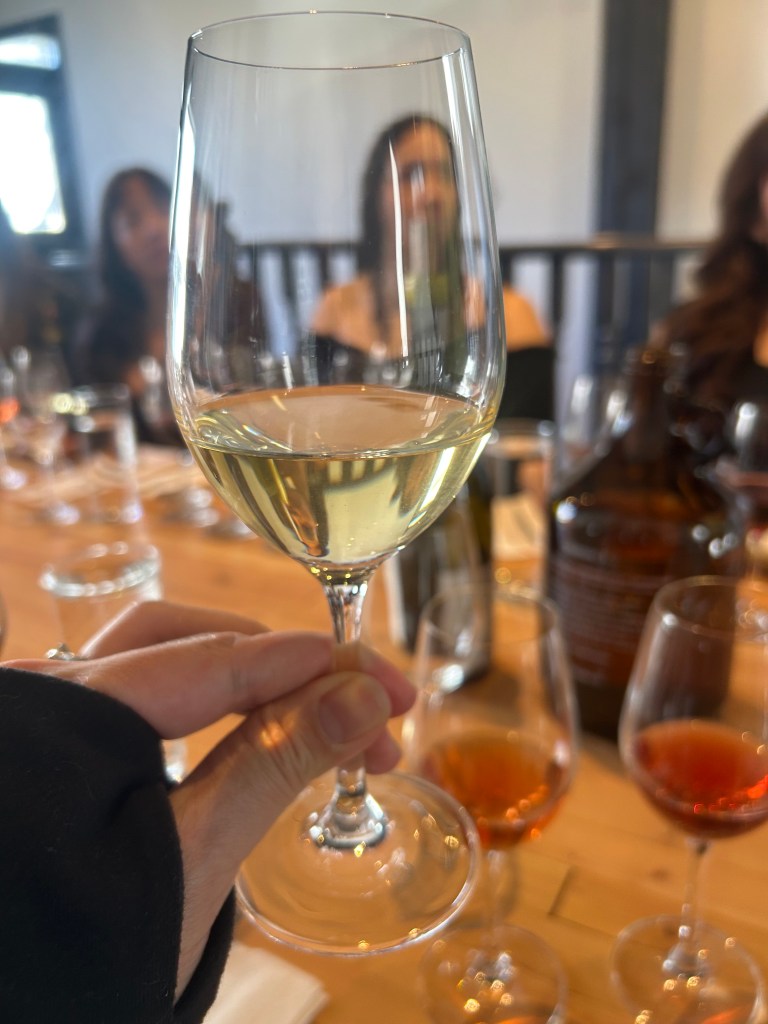
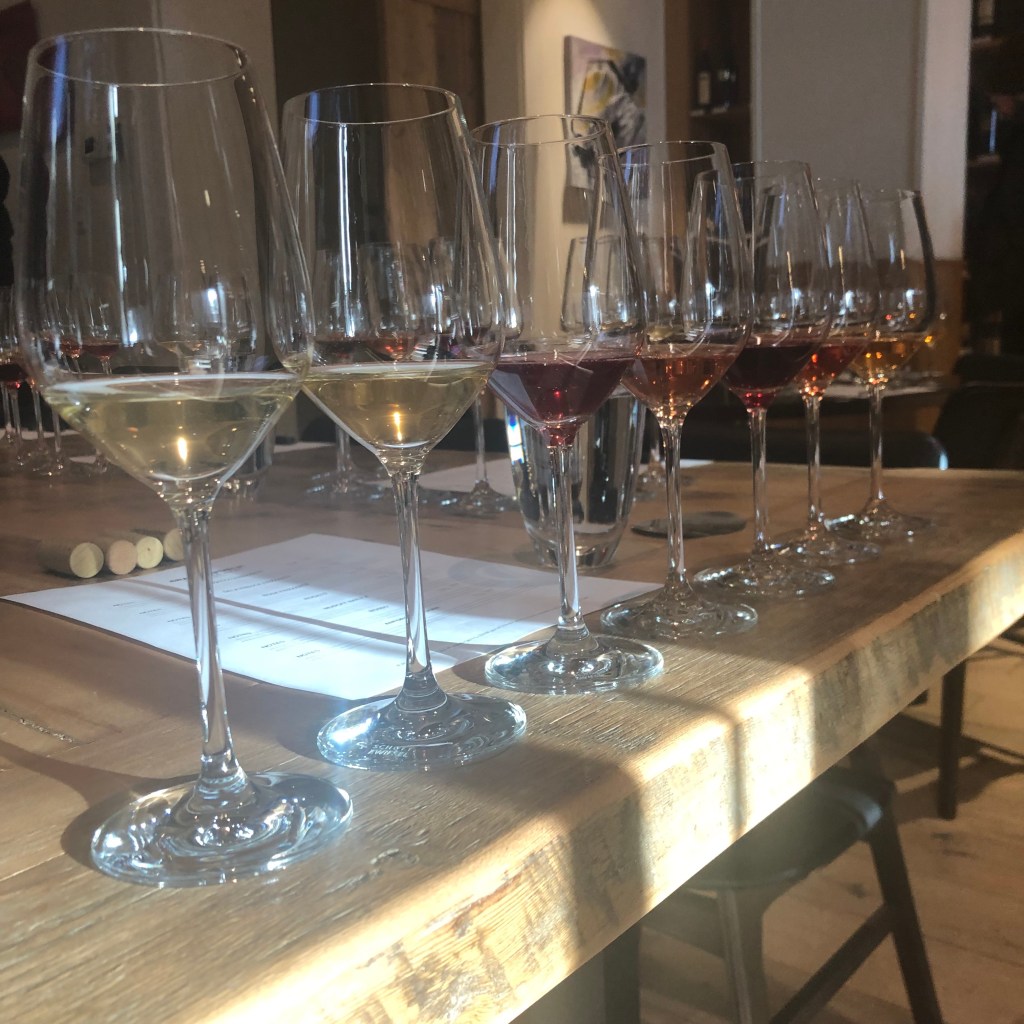
Erik knows how to set up a tasting. The pastel colours in each glass shone in the sunlight and lit up like liquid gems. I’m also noticing his wine gatherings always attract a young female demographic.
Erik chose his favourite region for this tasting, with rare examples to sip. He mentioned that Rhone Valley is the ancestral home of many of the world’s favourite grapes: Syrah, Grenache, and Viognier.
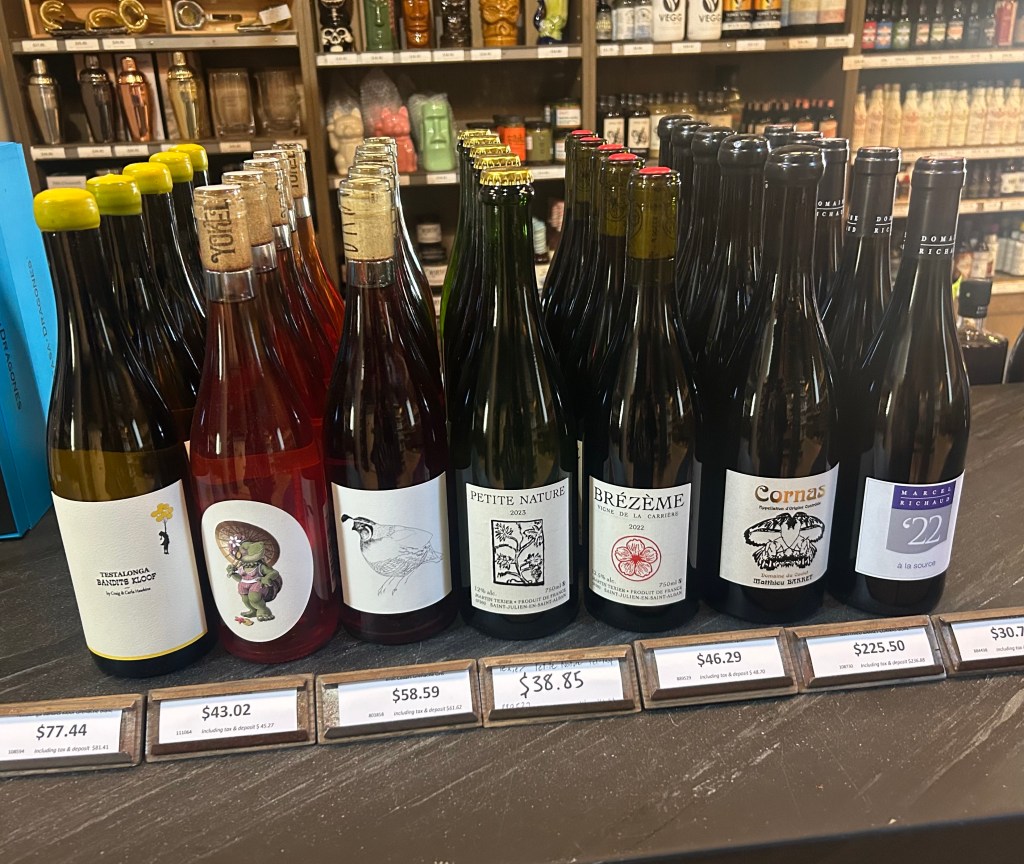
First up was a South African white wine, Testalonga Bandits Kloof Grenache Blanc. The fragrance was unusual, as I wasn’t familiar with it and couldn’t identify any particular scents.
Erik described the land, how scary baboons hung around the winery and how it took the owner ten years to produce his first vintage. Aged for two years, I found this wine really bright on the tongue. He took a sip and described the wine as tasting like a lemon meringue or a salty margarita. He thought this was a nice, contemplative wine to sip in a quiet space.
In contrast was the Dormilona Yokel Grenache Rosé. I liked how the wine wasn’t tart or sweet like other rosés. Erik mentioned that grapes grow in very hot temperatures, as high as the mid-40s. If you live by the winery, you can drop by with an empty one-litre and get it refilled. Lululemon is a huge fan of this woman-led winery, and she bought a bottle.
In contrast to the rosé, which everyone in the room agreed was very gulpable, we tried an orange wine, Broc Cellars Grenache Gris. This scent was nice, but again, I found it unfamiliar. The Grenache is grown from 110-year-old vines and aged sandstone jars. Erik mentioned this as one of the best vintages he tried, as it was a great season. Erik tasted blood orange, Aperol spritz, and rose hip tea.
We were looking at the labels on the bottle and Erik noted how much money goes into a label and how many other things can increase the cost of a bottle, such as the cork, weight, colour and gloss on a label.
I observed one man sitting at the back of the table. I’ll refer to him herein as the Winefather. When he spoke, it reminded me of a school principal speaking at an elementary school assembly. I was mesmerized as he punctuated Erik’s lecture with his own nuggets of knowledge. He exuded mystery with his European accent and authoritative tone, which sharply contrasted with Erik’s gentle, easygoing charm.
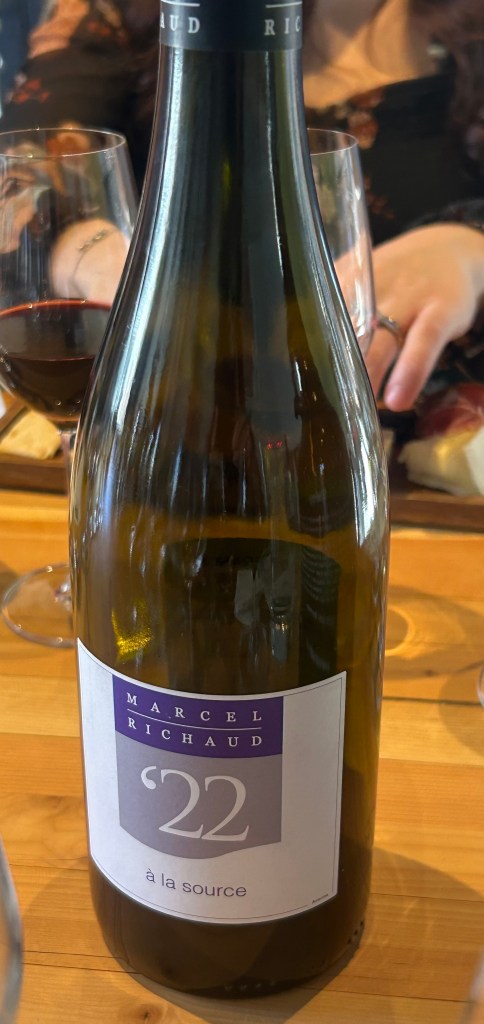
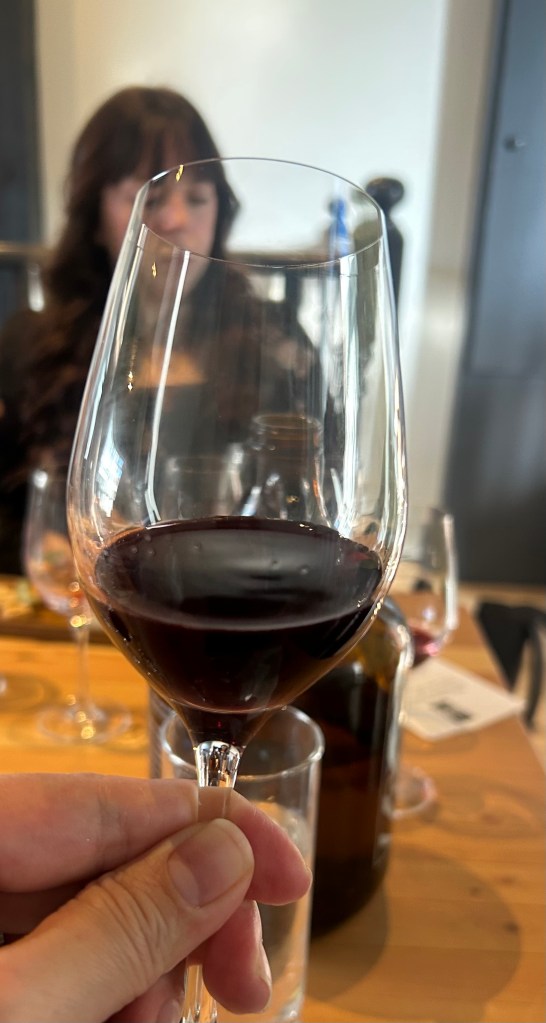
The next wine was from southern Rhone, Domaine Richaud A La Source (discount $27.64). I admired the pretty scent and the raspberry hue. The winemaker told Erik he knew he would be famous at a young age and decided to drop out of school at 14 to pursue his dream. I’m glad his confidence wasn’t misplaced. Both Lululemon and I bought a bottle.
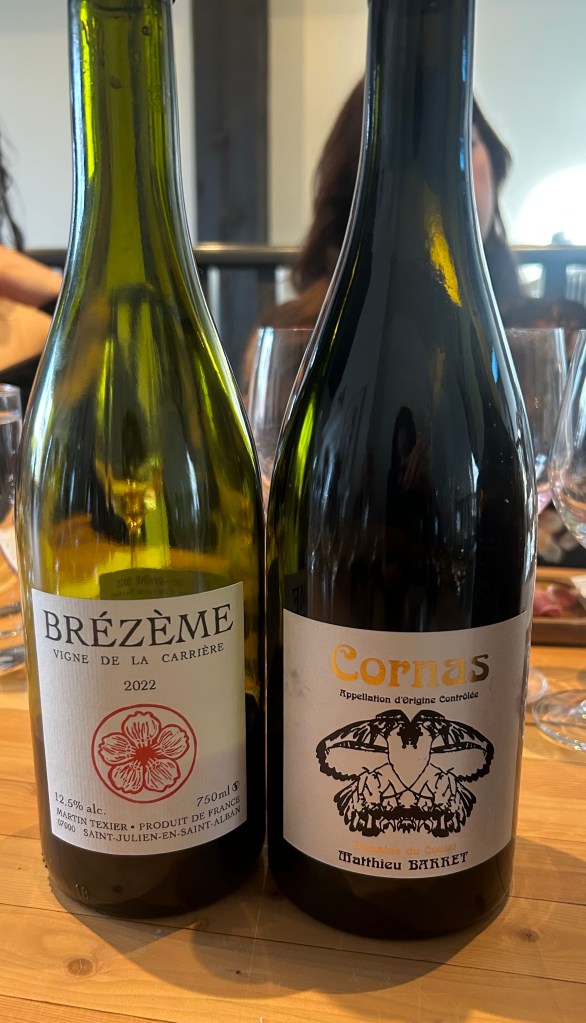
We tried the last two wines side by side. The first of the two was a super badass wine, Matthieu Barret Cornas Gore ($220). The scent was beautiful. Lululemon smelled olives. I found this wine tangy, like cherries. Erik described the wine as wild, bombastic, and dark-fruited. We learned this wine is fermented in glass.
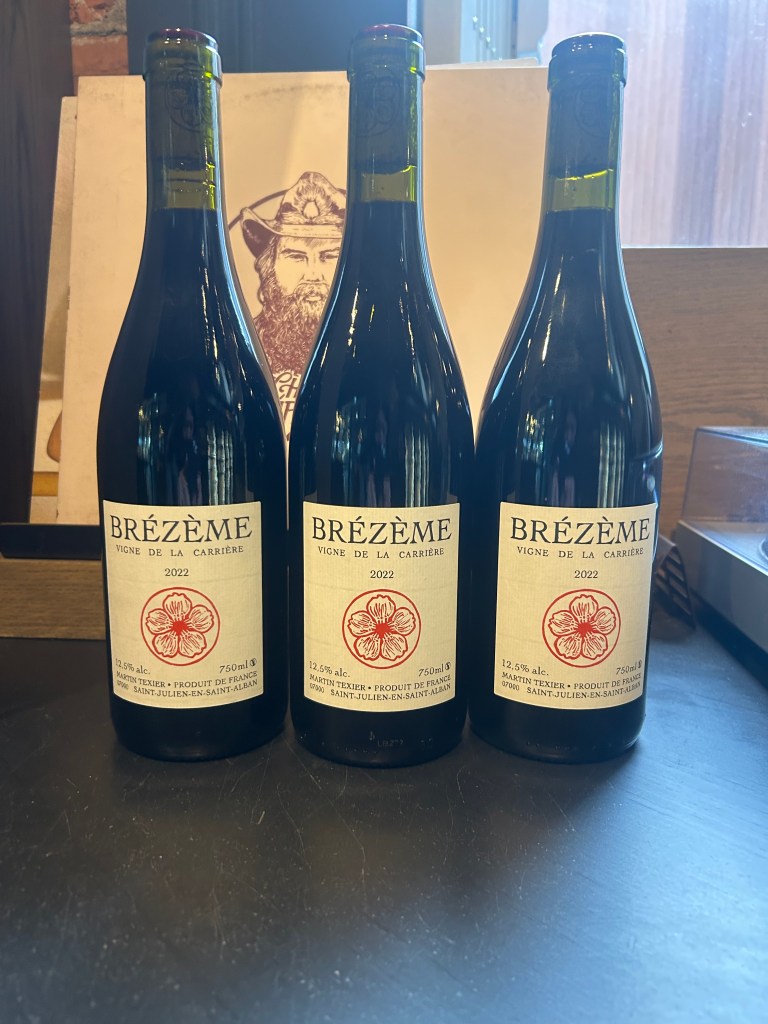
The other wine, Martin Texiere Brezeme (discount $41.61), was more to my liking. I appreciated the black tea notes and the herbal element. The Brezeme is made two kilometres away from the Cornas Gore. Erik informed us the wine is made from 100% Syrah grapes and, unlike the Cornas, was destemmed and aged in a neutral barrel. I bought two bottles.
Two wine tastings in a week! It’s been a wild ride. I’ve also blown my monthly budget but stocked up on some epic wine for future parties.
Lululemon asked Erik if he would organize and host a wine tour for us. He said he was up for it. Lululemon has a lot of friends, so I’m optimistic that I’ll be enjoying a Juice Imports tour in 2026-2027.
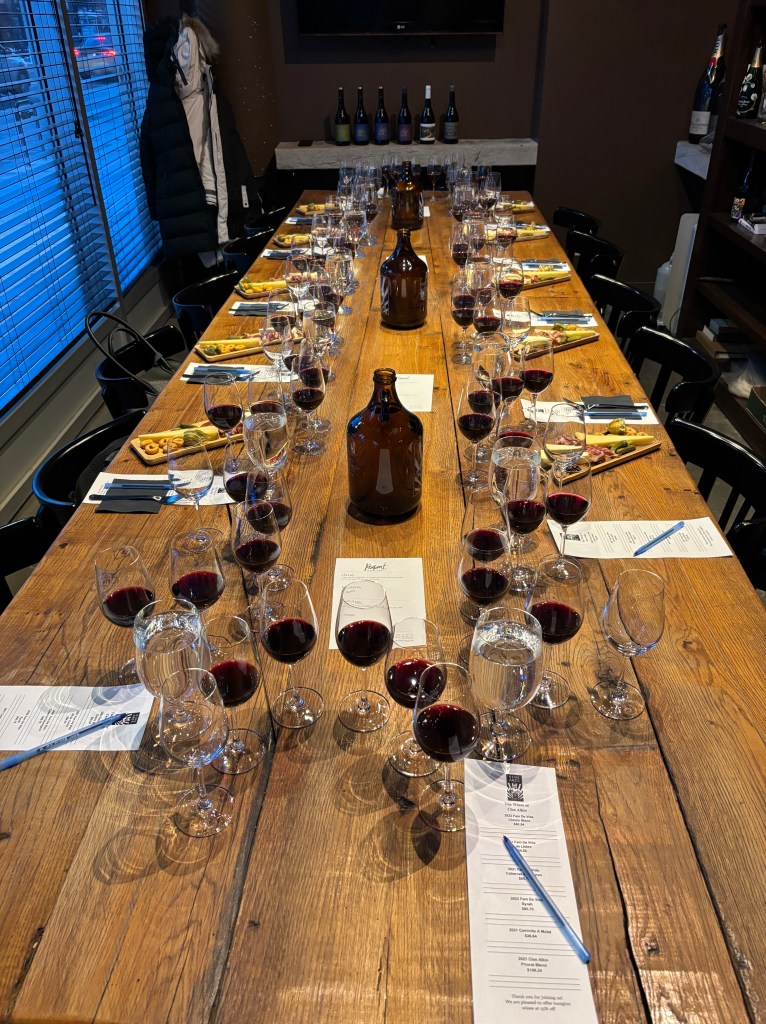
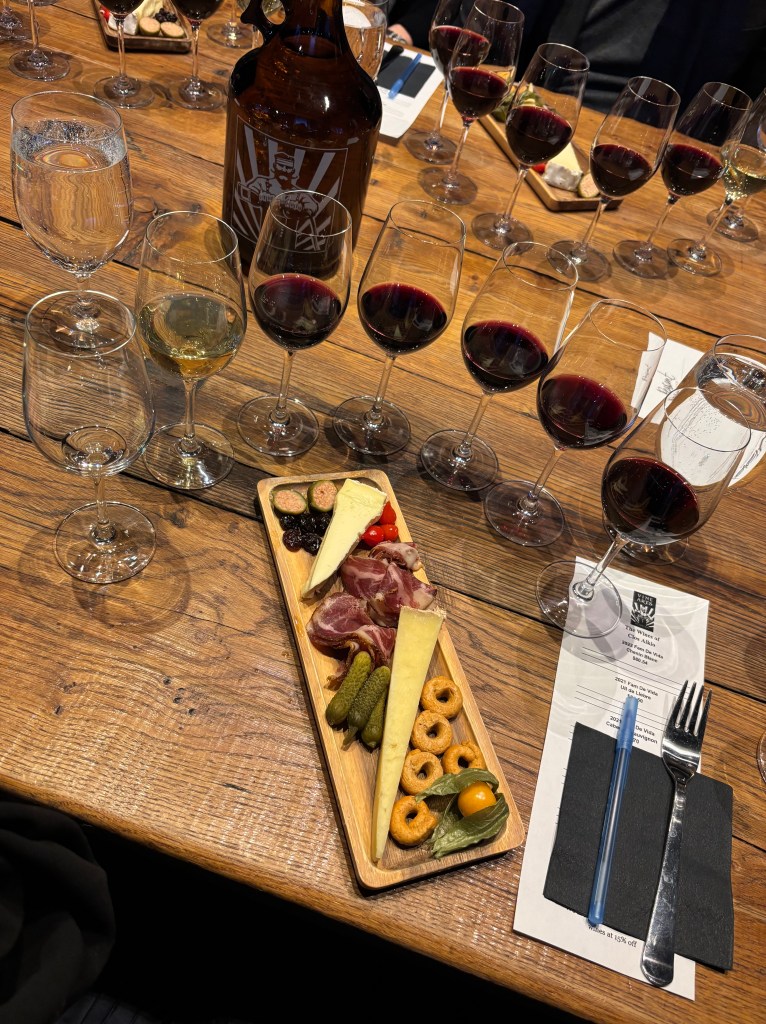
On Wednesday, Divine Offering and I went to a wine tasting at Vine Arts – Meet the Maker – Mikko Alkio of Clos Alkio. For this post, let’s listen toCaminito a Motel.
We checked out Sound Bar before the tasting. It’s a cozy, dimly lit space reminiscent of a chic basement. I was early and walked up to someone I thought was Divine Offering. After the woman told me she was not Divine Offering, I noticed she wasn’t even of the same ethnicity. This isn’t the first time I’ve made an error like this. Face blindness is a real thing.
Photo Credit: Divine Offering
Divine Offering texted me and asked me if I was inside. Yes, of course, I responded. Why would I wait outside in -25 weather? It turned out that someone had locked the door, and she couldn’t get in. When I went to open the door, another customer next to her yelled at me for locking him out. I responded indignantly that I didn’t lock him out. I was letting him in! He apologized.
I’m a big fan of the hard iced tea ($7) —it’s bubbly, full of rich black tea notes, and perfectly sweet without overpowering the tea flavour. Divine Offering tried a blood orange beer ($5), and for her second drink, she went for the non-alcoholic Bees Knees cocktail, which she loved. Divine Offering liked that the music was at just the right volume—not too loud. She also mentioned wanting to come back to try their snacks.
Photo Credit: Divine Offering
Right on time, we walked across the street to Vine Arts. Mikko, the winemaker, is from Finland. We learned that he’s familiar with Calgary. As a youth, he did a homestay in Calgary, where the hosts became like a second family.
Photo credit: Divine Offering
His passion for wine became a business when he and his family moved to Barcelona so his three kids could immerse themselves in the city’s tennis scene. As there were no iPhones at the time to distract him, he developed a deep appreciation for Spanish wines. Despite being a partner at a law firm in Finland, he also chose to create a side hustle as the proprietor of a world-class winery in Priorat, Spain.
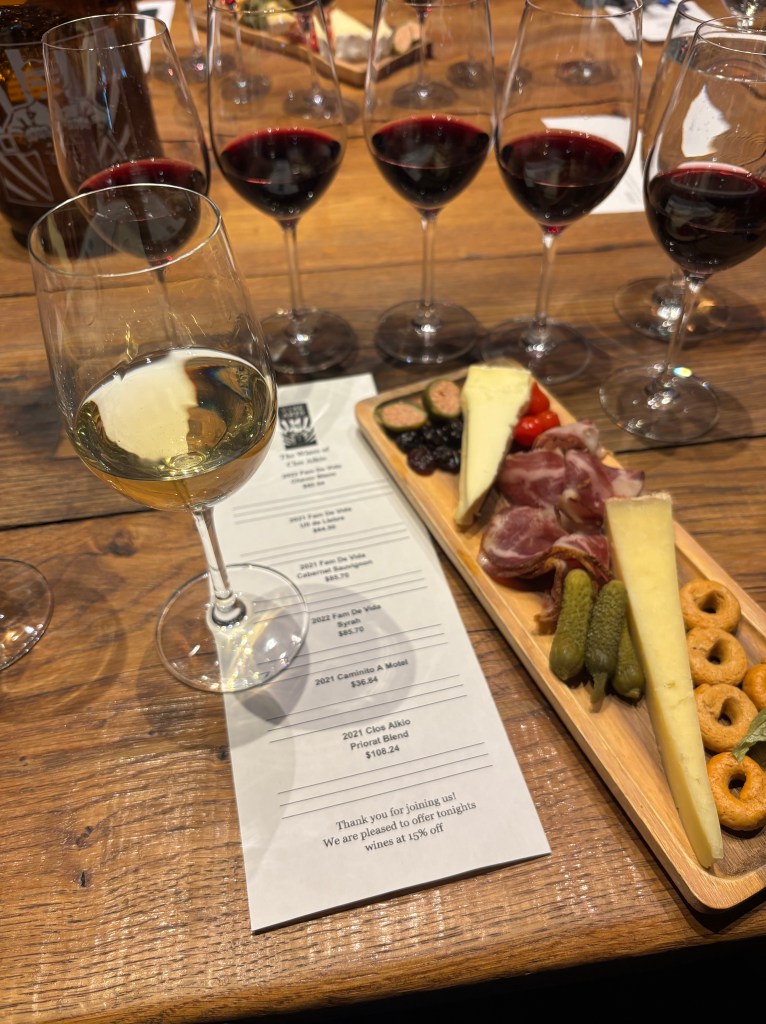
The first wine we tried in his line-up was Fam de Vida Chenin Blanc 2022 ($60.54). I found this wine fresh and clean, with a non-typical sweetness. Mikko noted that 14% of the wine was produced in high-quality inox tanks, with no oak aging, producing 900 bottles. Mikko said to wait eight to 10 years for the wine to mature. Divine Offering loved this wine so much that she purchased a bottle.
Photo credit: Divine Offering
The second wine was a 2021 Fam de Vida Ull de Liebre ($64.50). I marvelled at the pretty purple hue and its smooth flavour. Mikko mentioned he was pleased this wine was well-received at one of Spain’s biggest festivals, which showcased thousands of Spanish wines. He shared that, much like law, the devil’s in the details regarding winemaking. He’s all about precision. His grapes use significantly less water than other wineries and have about five times less sulphur than other winemakers.
Photo credit: Divine Offering
The third wine was my favourite – Fam de Vida Cabernet Sauvignon 2021 ($85.70).The fragrance was so lovely, reminding me of something very pretty and floral. It tasted clean and vibrant. I loved it so much that I stopped eating the cheese and charcuterie before me and sipped as slowly as possible. Mikko recommended aging this wine for ten years, but there’s no way I will wait a decade. I liked this one so much I bought two bottles. I asked Mikko what he would pair with this wine. He looked surprised as if the answer was so obvious, and apparently, it was to everyone except me. Cheese! Divine Offering also bought a bottle.
Photo credit: Divine Offering
Mikko clearly favoured the fourth tasting – Fam de Vida Syrah 2022 ($88.70). This wine is aged in French oak for 14 months. He recommends tasting the difference after ten hours and then again the next day. I’m an impatient drinker, so this bottle was a no-go for me to purchase.
Photo credit: Divine Offering
You can tell by listening to Mikko that he is obsessed with grapes, which is reflected in his wine quality. He’s all about letting his grapes speak for themselves, making wines that authentically reflect the land and the fruit.
The fifth wine was Caminito a Motel 2021 ($36.85). The wine is named after a song his son recommended, Caminito a Motel. Mikko would often listen to this song while searching for property.
Carminito a Motel is a blend of 35% Garnatxa, 35% Cabernet Sauvignon, and 30% Carinyena, with a 15% alcohol content. Aged in French oak for eight months, Mikko recommended opening this wine in five, 10 and 15 years. I bought three bottles for friends of mine who like to age their wines.
The last wine of the evening was Clos Alkio 2021 ($108.24), a top blend Mikko is so proud of he put his name on it. Plucked from aged vines, the grapes blend 30% Garnatxa Negra, 30% Carinyena, 20% Syrah, and 20% Cabernet Sauvignon.
Divine Offering and I had a blast. The wine importer who set up the event was a great host, ensuring we had everything to be comfortable. Thank you, Mikko, for braving the cold Canadian prairie and sharing your wines. Hitting the Sauce gives this wine tasting two phat thumbs up.
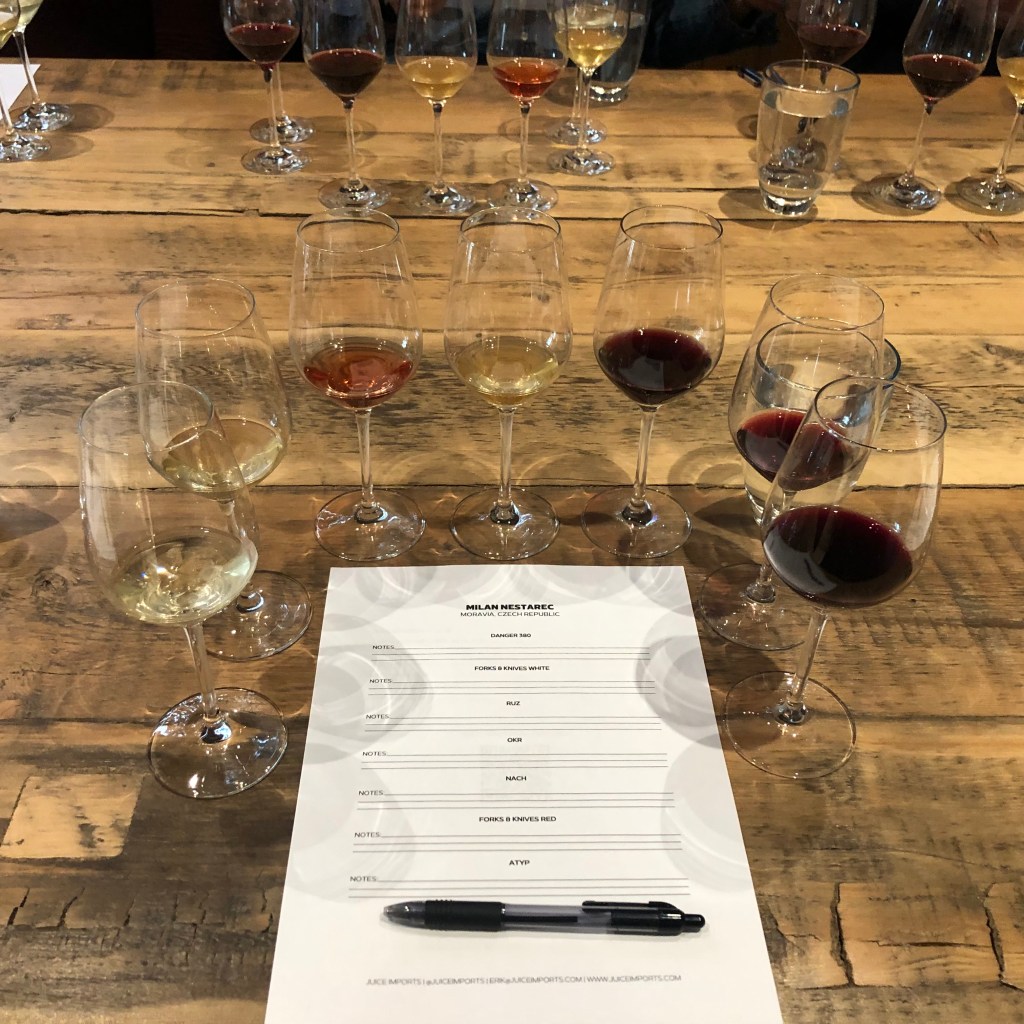
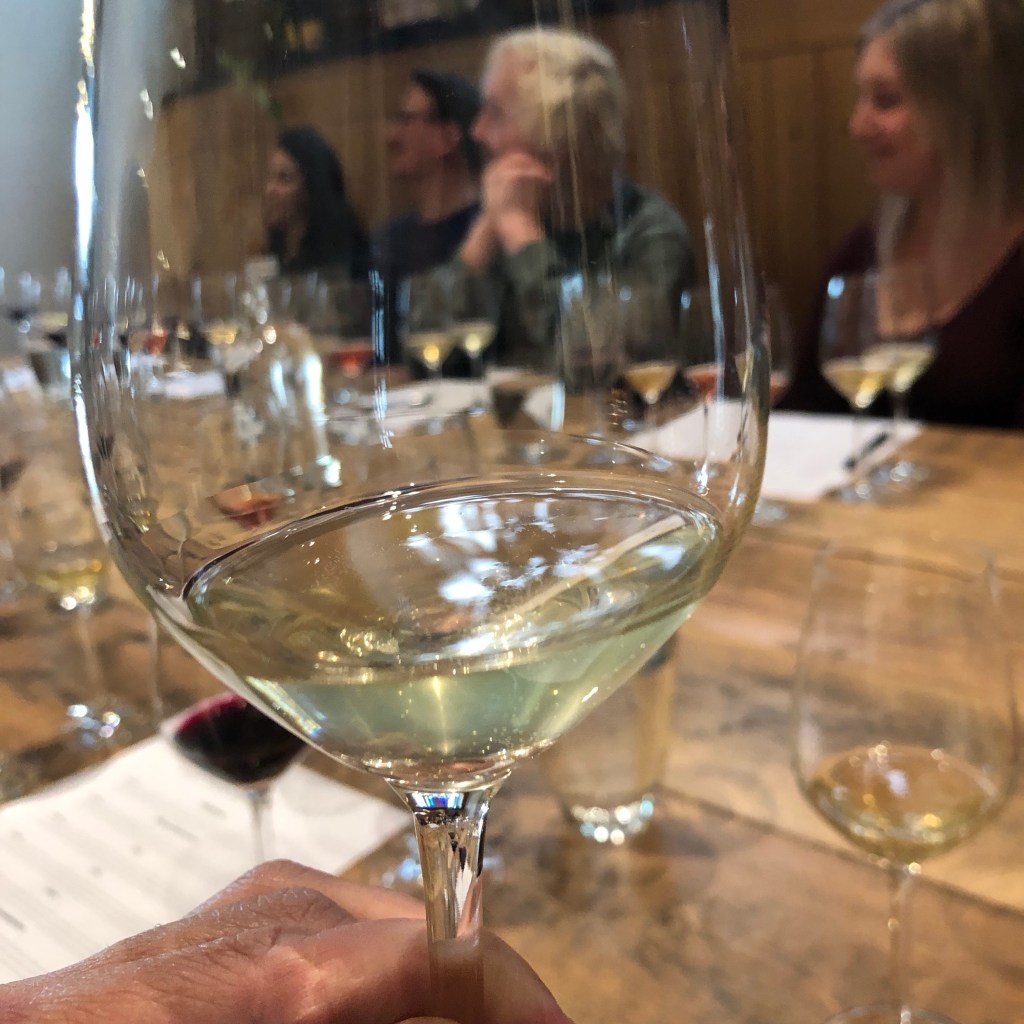
Bex.oxo is becoming a regular at Juice Import’s events! We recently attended the Milan Nestarec wine tasting ($25) at Bricks Wine Co, another sold-out event. For this post, let’s listen to “Fly Me to the Moon” by The Macarons Project.
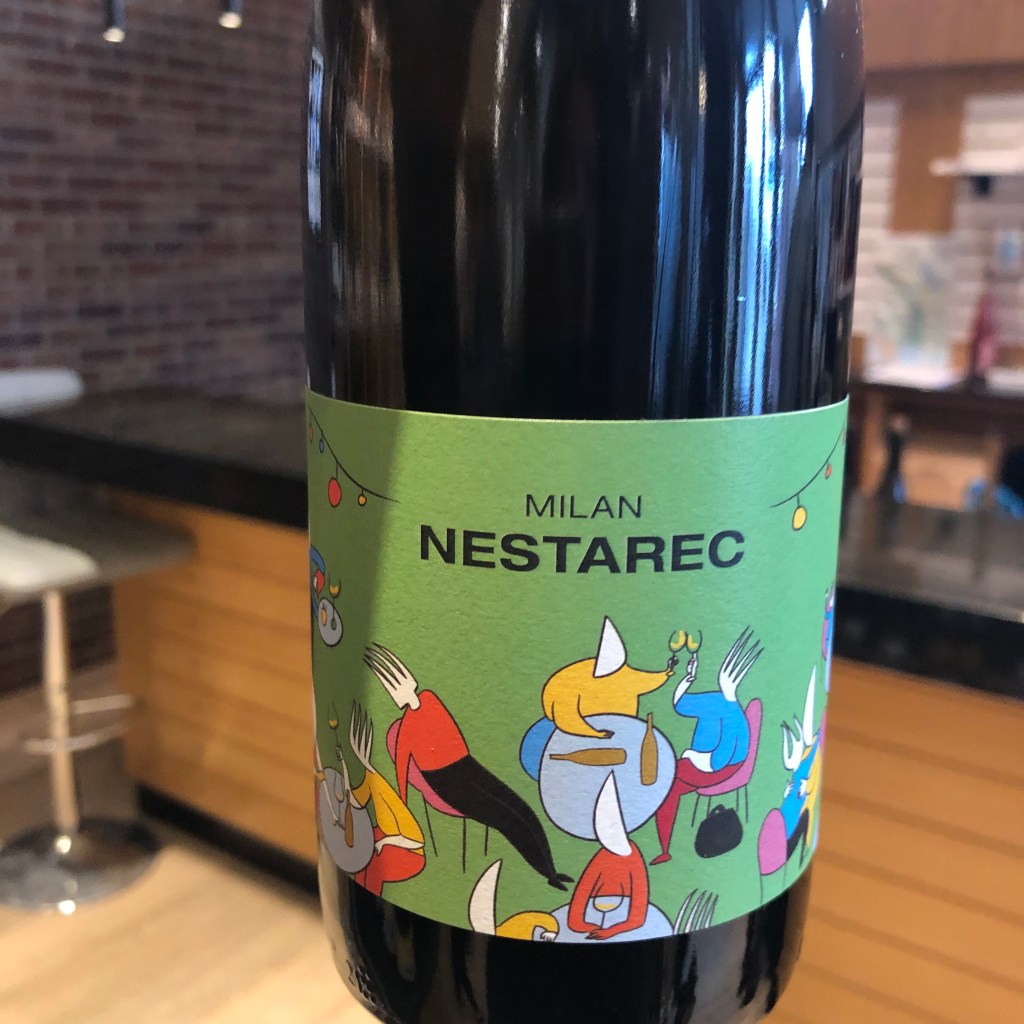
I noticed that our fervent host, Juicee Import co-owner Erik Mercier, has a formula for each class. He likes to begin by delving into the background of each winemaker’s ethos, the sustainability of their farms, and winemaking philosophy. In the case of Milan Nestarec, a winemaker in the Czech Republic, he also spun an intriguing history lesson.
Milan Nestarec hails from Moravia, the Czech Republic’s most southern wine region. In the post-communism era in Moravia, the government restricted winemakers to only selling wine and grapes in bulk to the state-run cooperative winery. As one can only expect when the focus is on quantity, there was no incentive to produce top-quality wines. Instead, chemical farming became the norm, and thousands of years of the country’s winemaking tradition and history were almost lost.
That’s where 30-year-old Milan comes into play. When he was growing up, wine was something to consume after dinner rather than with the meal because the quality of wine was so poor. Milan didn’t want the wine culture to die, so he began producing some of the most compelling wines in the Czech Republic. He’s succeeded. Internationally, he has reached fame in New York, London, and Tokyo. Erik noted that sommeliers regularly battle for his limited-production wines.
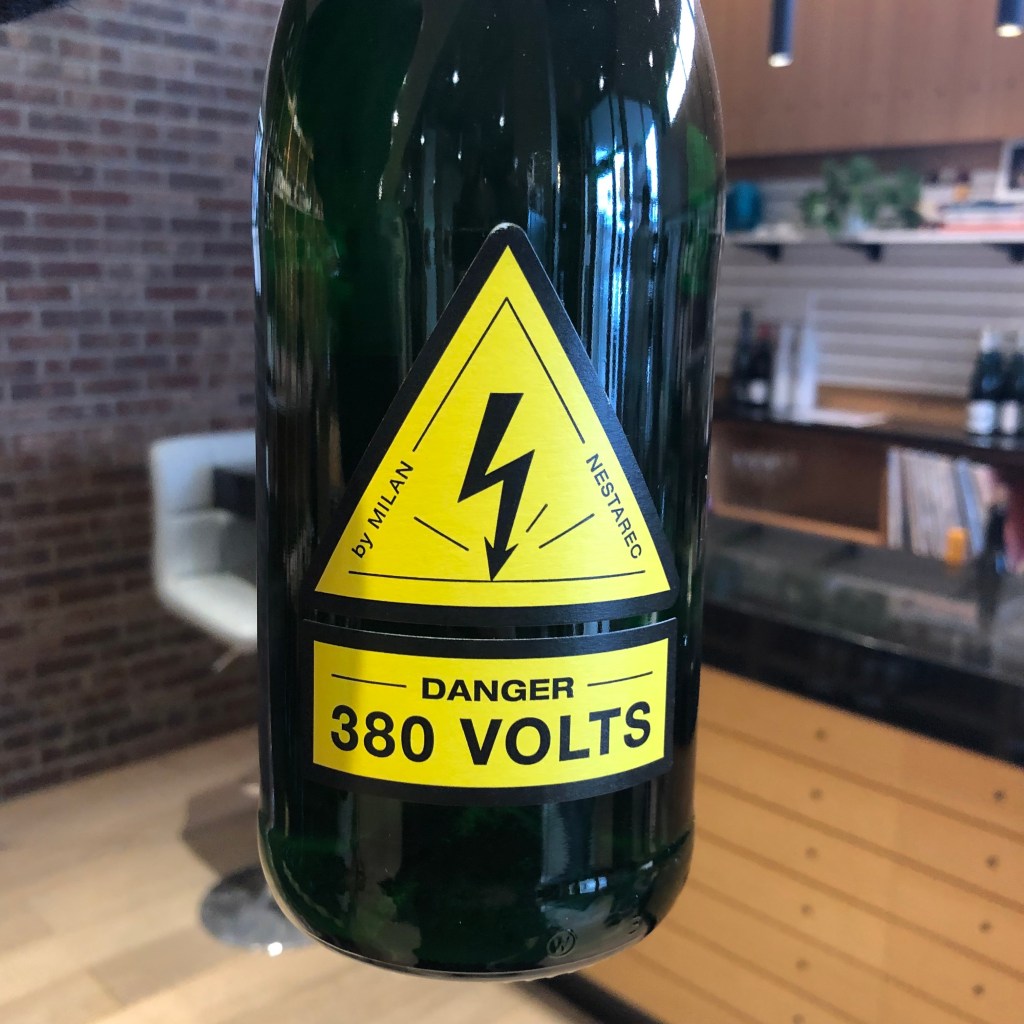
I’m always amazed at natural wines’ vivid colours, which shine through the glass like liquid gemstones. Our first tasting was Danger 380 ($47.75), a sparkling wine. Erik retold the story of when Milan first made sparkling wine, a total of 5,000 bottles. Unfortunately, too much sugar resulted in each bottle exploding in his basement. The experience delayed his second trial for five years. Now, his sparkling wine is the sought-after in his line-up. I found Danger 380 light and refreshing, reminiscent of grapefruit, but also with a unique flavour. Aptly named, this wine is dangerous. Bex.oxo called this the perfect jubilation bubbly. I agreed and bought two bottles for the upcoming celebrations.
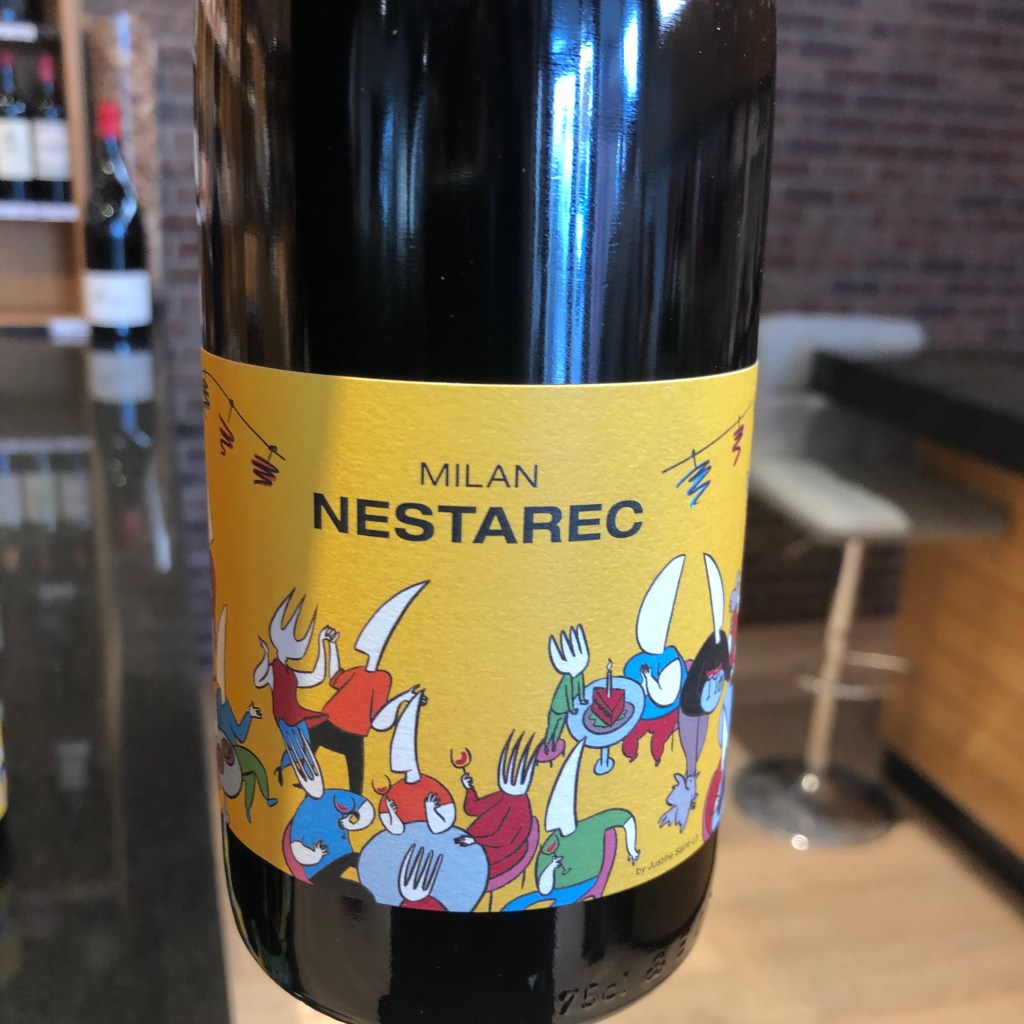
The second tasting, 2020 Forks and Knives White ($44.95) offered a ton of flavour. I found this wine pleasant, with a tang that tickled the back of my throat. Milan uses only the aromatic grape varieties in the Forks and Knives White: Grüner Veltliner, Welschriesling, and Neuburger. Erik commented on the wine’s beautiful acidity and earthy, broth-like quality.
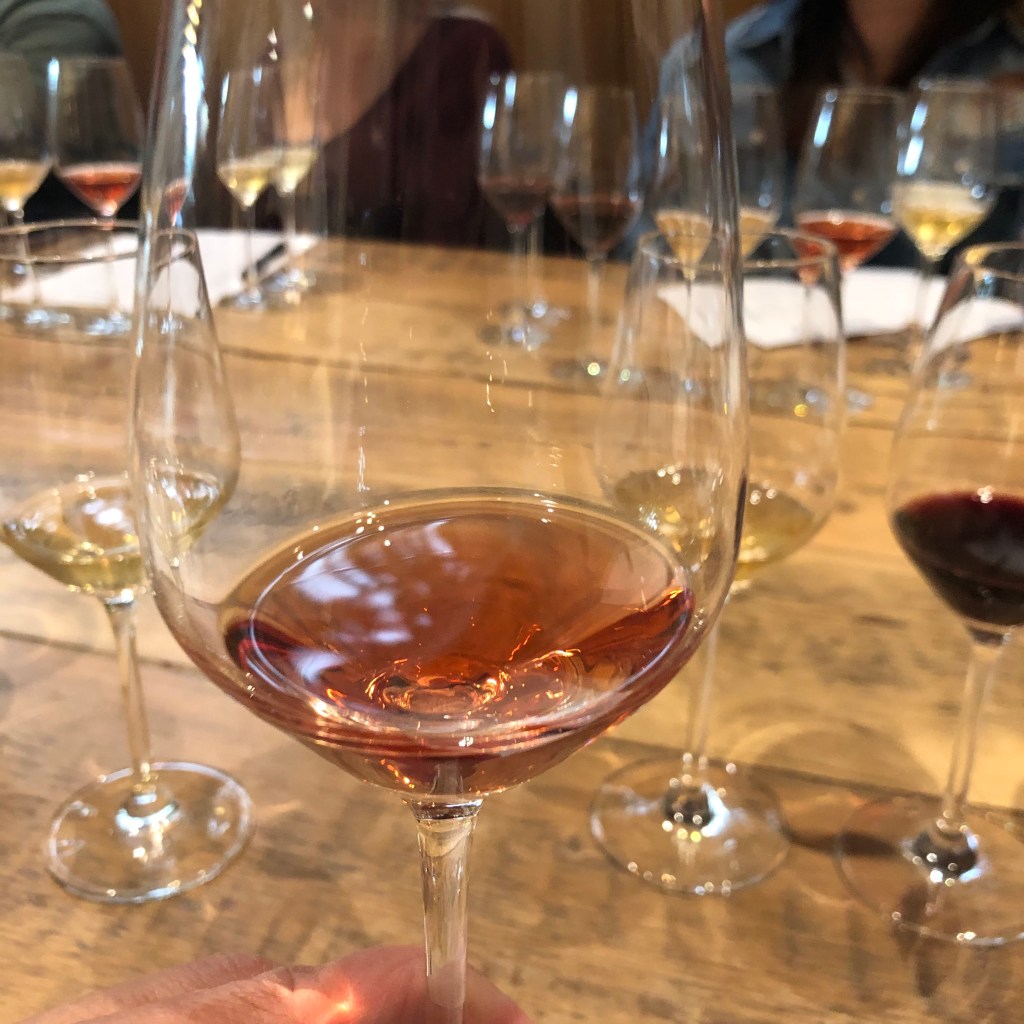
Bex.oxo and I enjoyed the aromatic notes in the rosé – 2021 Ruz ($36.95). The colour was similar to strawberry juice. This wine, and the following two bottles, contain a litre, making it a mini-magnum. I knew my friends Kournikova and Fougui would love this wine, so I bought two bottles. I asked Erik what food would pair with the Ruz. A Juice Imports regular, Coke, piped up and said it would pair with Tuesday. Everyone laughed but me, as I have a friend named Tuesday, and for a second, I thought he knew her too. Erik recommended pairing salmon poke or watermelon and feta salad.
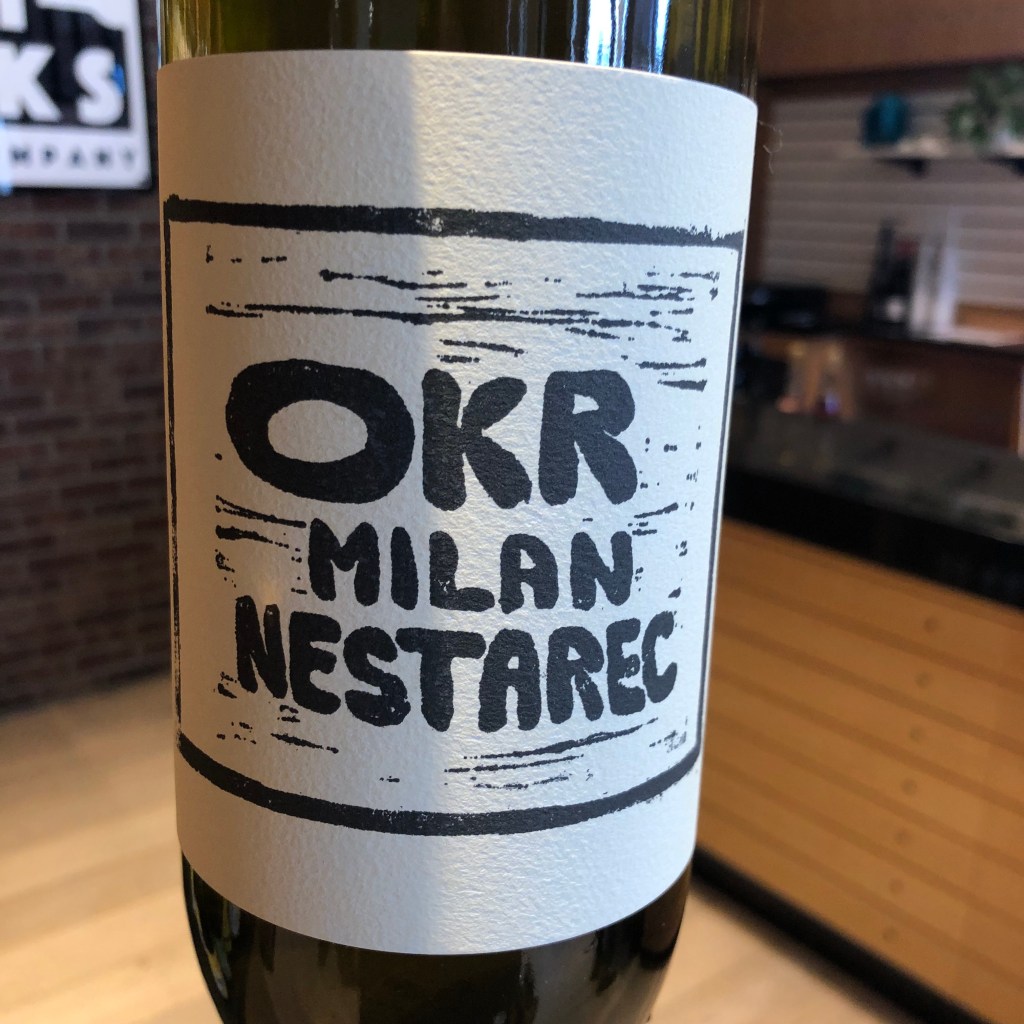
The flavour of the 2021 Okr ($40.95) stood out. And what an interesting fragrance! I smelled lycee. Bex.oxo didn’t take to this wine, so she gave me her glass to finish. Erik described this wine as wild, with savoury notes like curry leaves. I bought a bottle for Sunflower as she’s into orange wines and funky flavours.
We tried a red wine next, a 2021 Nach ($36.95). Erik informed us that Nach is the Czech word for “purple,” representing this youthful wine’s colour. Erik described Nach as bright, juicy and fresh. Milan wanted to create something low-key and easy to drink to share with his neighbours. I could taste pepper. Bex.oxo gave me her glass to drink, so I double-fisted my tasting again.
Bex.oxo and I enjoyed the 2020 Forks and Knives Red ($45.95). Erik exclaimed there is tons of structure in the wine. When he sipped, he envisioned jazz music and tall white candles burning. I wanted to buy a bottle, but at this point, I had already surpassed my budget, so I had to tap out.
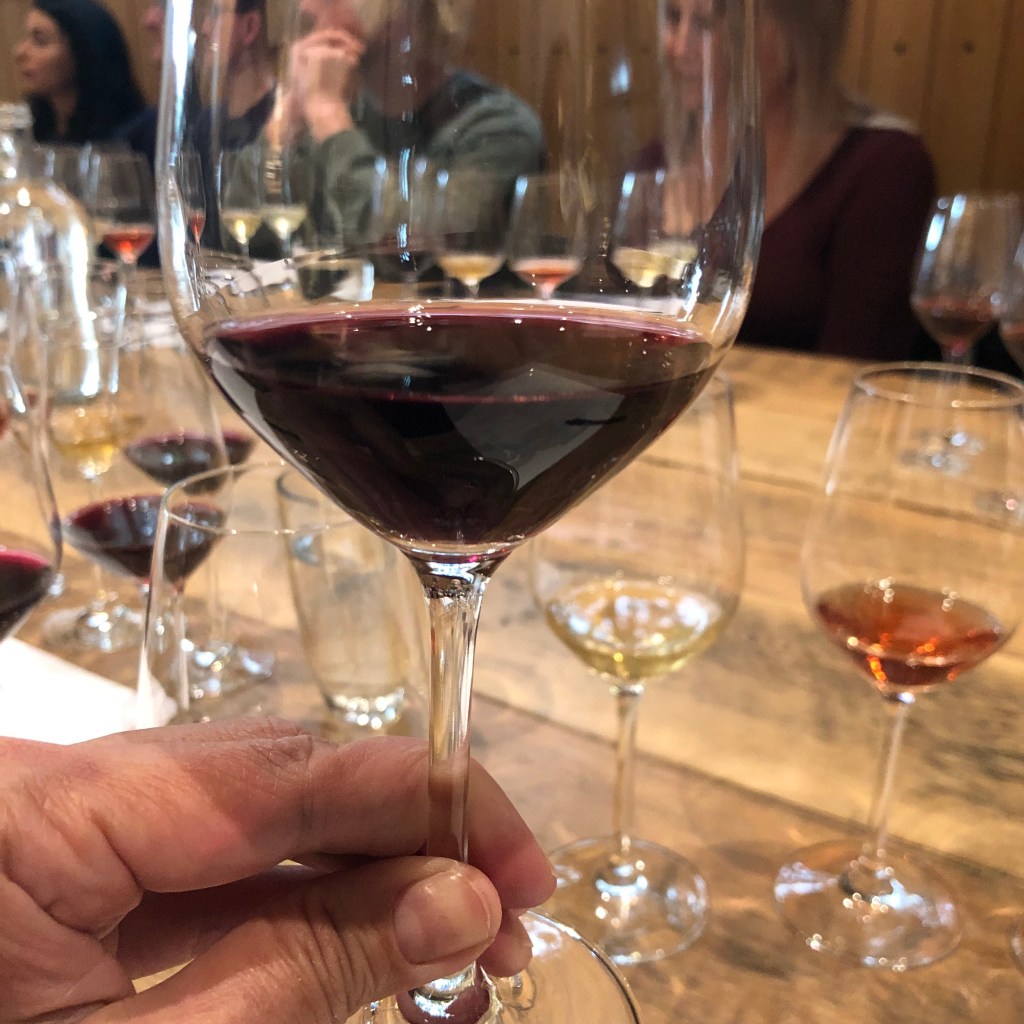
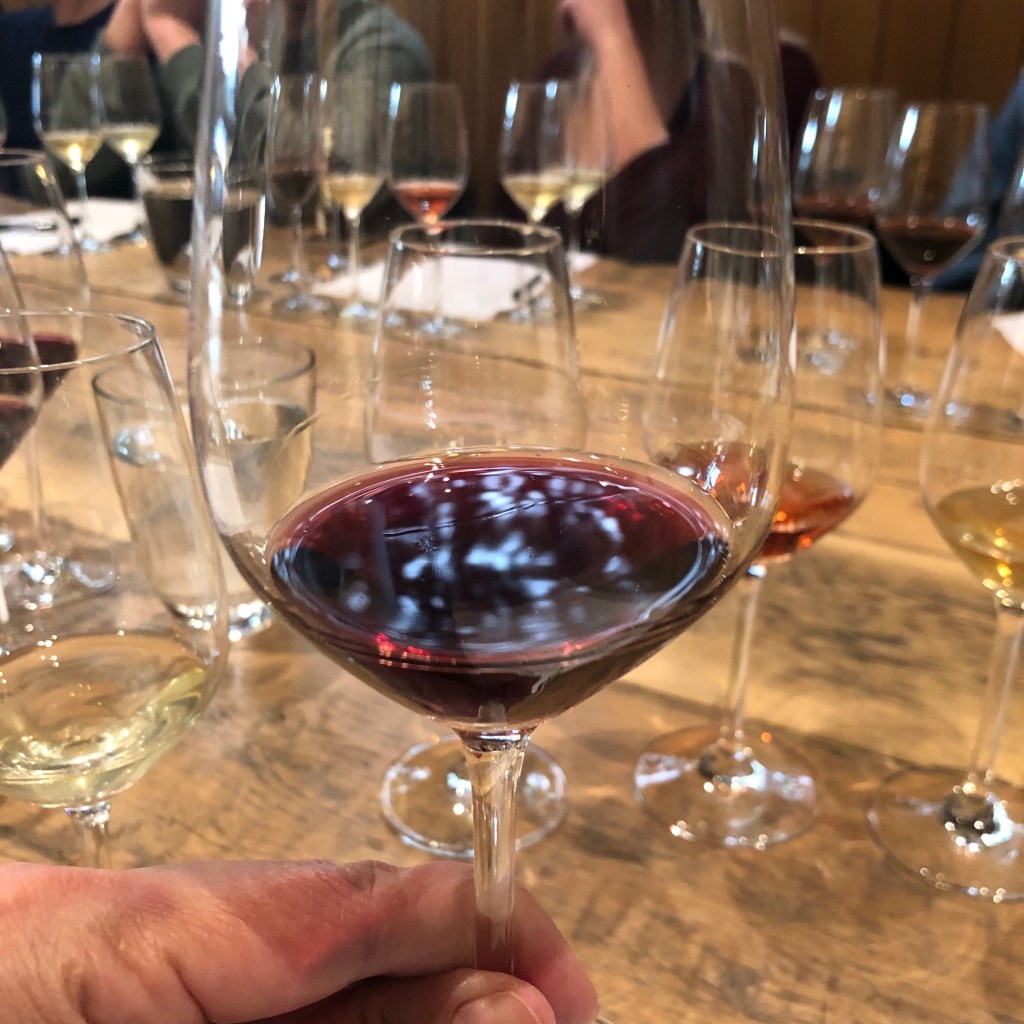
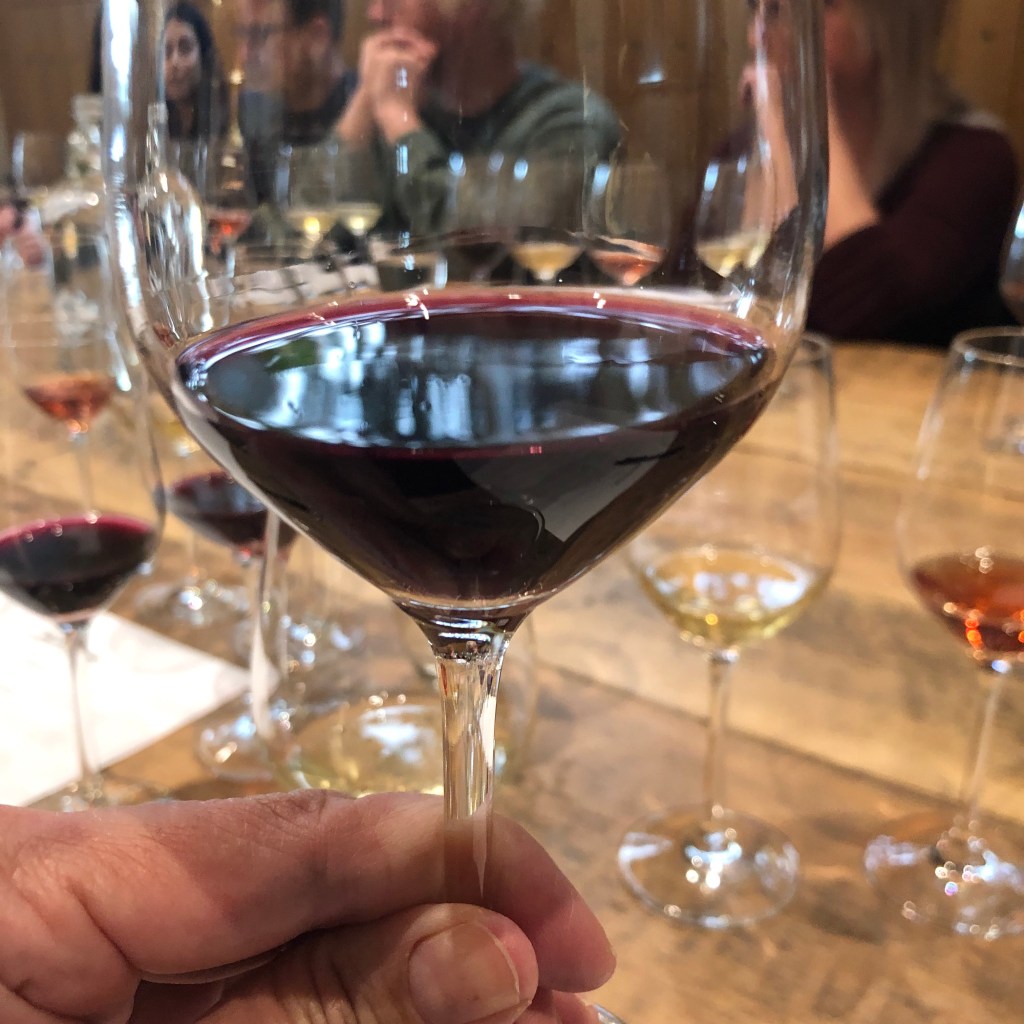
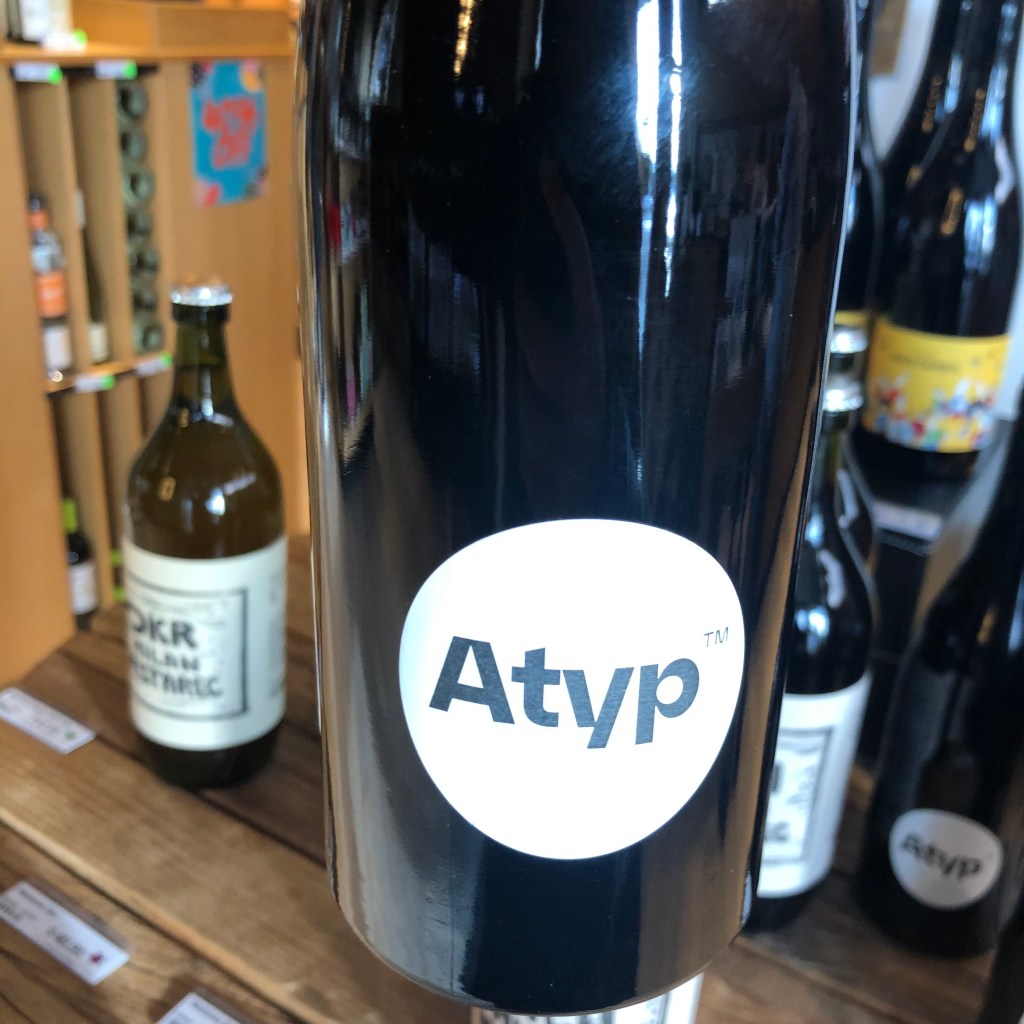
The last bottle, ATYP #1 ($51.95), is made from a blend of all Milan’s varieties: red and white co-fermentation of Blaufränkisch, Portugieser, Sankt Laurent, Muscat, Grüner Veltliner, as well as others. ATYP #1 is a hard-to-find wine, as only 166 cases were produced.
The fragrance was so pretty, Bex.oxo whispered she wanted to make a candle out of the scent and burn it all night. I thought this was a wild, silky wine. When I asked Erik to describe the flavour and aroma, he laughed and said it smelled like grapes or jam. He could taste dark fruit, such as Saskatoon berries, but with a light body.
Something terrible happened to me after the tasting. The next day when I sipped on a glass of wine, I almost spat it out. Compared to what I tasted the day before, my usual house wine tasted like vinegar. Financially, I miss the days when I could enjoy a glass of Apothic.
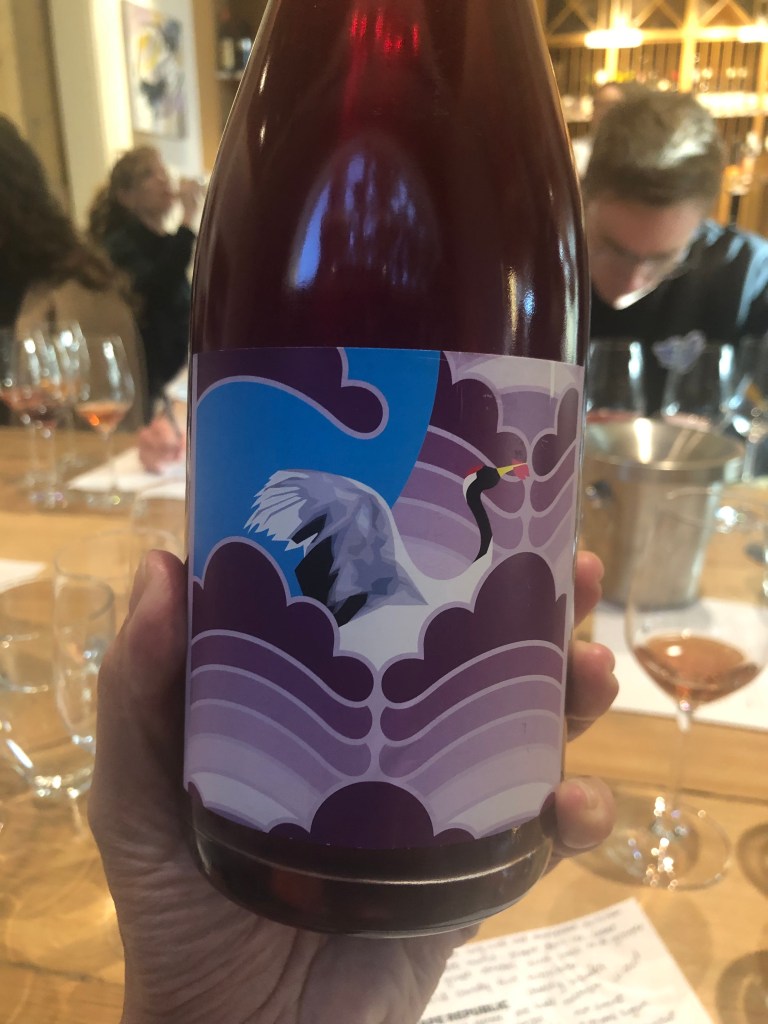
I took Bex.oxo to Juice Import’s Sunday tasting at Bricks Wine Co. Co-owners Erik and Mark were showcasing Grape Republic wines from Yamagata, Japan. For this post, let’s listen to “Carol Brown” by Flight of the Conchords.
Juice Import’s wine tastings are increasing in popularity. Each time I attend an event, the group grows in size. The Grape Republic event was not only sold-out, it was also oversold. Staff had to create another table for guests, who cheerfully announced they were at the kids’ table.
Grape Republic’s wines are from wild fermented grapes that are raised naturally. Erik informed us it is challenging to grow grapes in Japan due to the humid climate. The grapes that do grow well are a hybrid, the result of crossing European and North American varieties, which are hyper-resistant to drought, mildew, and rot.
Erik stated he is drawn the weird and wonderful flavour profile of each the wines due to the uniqueness of the grapes. He noted that there is less research and development put into these varieties over pinot noir. The most funded wines are the ones that command a high cost in the market.
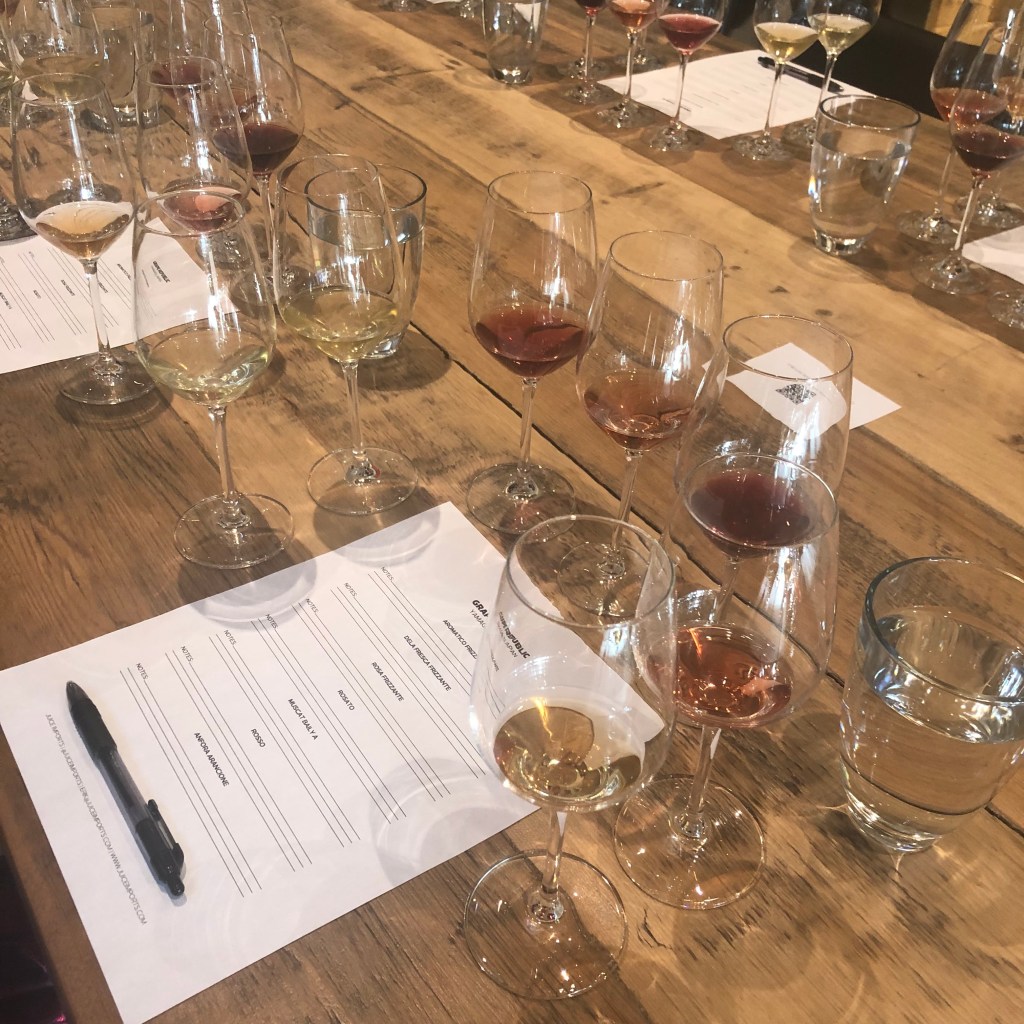
The first tasting was Aromatico Frizzante ($45), a blend of Delaware, Niagara, and Neo Muscat grapes. This was Bex.oxo favourite wine – she enjoyed the gentle carbonation and the refreshing grape-like flavour. Another person piped up and said the wine tasted like grape Hi-Chew. Erik described this wine as wild, tropical and floral.
I learned something from Erik that I’m eager to share with my mother. Wine is nutritious. Historically, wine was made so one could survive the cold winter months. As Calgary is a bitterly frosty climate, she should see the value in my new passion.
The second tasting was Dela Fresca Frizzante ($47), made from Delaware grapes. Though it smelled sweet, there are zero grams of sugar, as the wines are naturally carbonated. The wine-making process Grape Republic employs causes the yeast to eat the sugar, which turns into CO2.
Bex.oxo thought this wine was more acidic than the first sparkling wine. One of the things Erik loves about these wines is that many flavours remind him of the vintage candy he ate as a kid, like a sour patch cherry blaster or Hubba Bubba. He also mentioned all the wines from Grape Republic are food-friendly wines.
My favourite tasting was Rosa Frizzante ($47), co-fermented with Steuben, Merlot, Muscat Bailey, Niagara, Delaware, and Neo Muscat grapes. Bex.oxo smelled grapefruit. The flavour reminded me of Ribena, but with a fresher, brighter, more vibrant flavour. Out of the sparkling wines, this one was the most carbonated. I bought a bottle to share with Sunflower.
The Rosato ($45) is a blend of Steuben, Delaware, Niagara, Rosario and Bianco grapes. The smell of this wine reminded me of powered candy – Fun Dip. Unlike most rosés, this wine is a blend of white and red wine. Erik said it tasted like a creamsicle.
The Muscat Baily A ($51) is made from a hybrid grape called Muscat Bailey A, developed in 1927 in Japan by Zenbei Kawakami. What a gorgeous ruby hue! I enjoyed this wine immensely – it was intriguing, floral and bright on my tongue. Erik thought this wine smelled like Hot Lips candy or cinnamon hearts.
The Rosso ($47) is co-fermented with Steuben and Niagara grapes. Of all the wines, this had the most potent fragrance. The Rosso is a showstopper.
Anifora Arancione ($47) is a classic Italian orange wine made from Delaware grapes, aged in clay vessels that are buried in the ground. We learned that orange wine is fermented with the skin on, which preserves the grape’s flavour, texture and colour qualities. Orange wine isn’t new, and it existed before white wine. It was only 150 years ago that white wine was produced in colder climates, such as Burgundy and Germany, and then later became popular in the 1950s.
Bex.oxo thought it was neat that we were trying such rare wines because of Erik’s international connections. She also liked that she could taste each wine before plonking big money for a bottle. I agree. When I splurge for a nicer than usual bottle, I want to know it will be worth it. I’m looking forward to Juice Import’s 2023 events, because the collection I’ve accumulated in 2022 will be gone by New Year’s Eve.
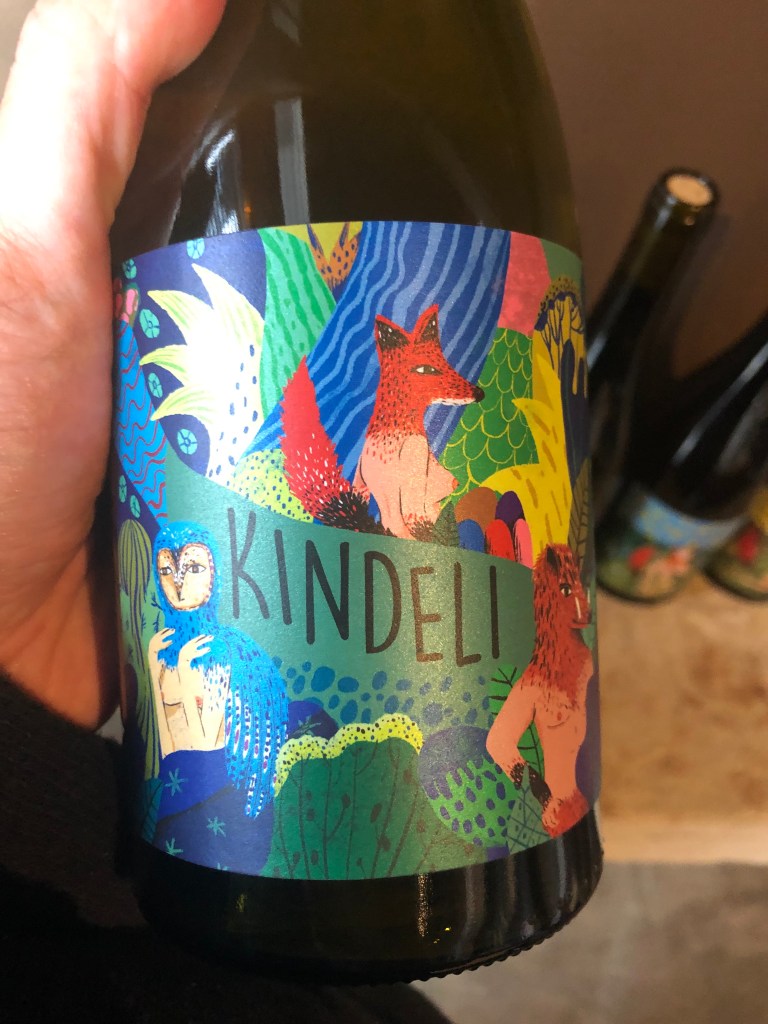
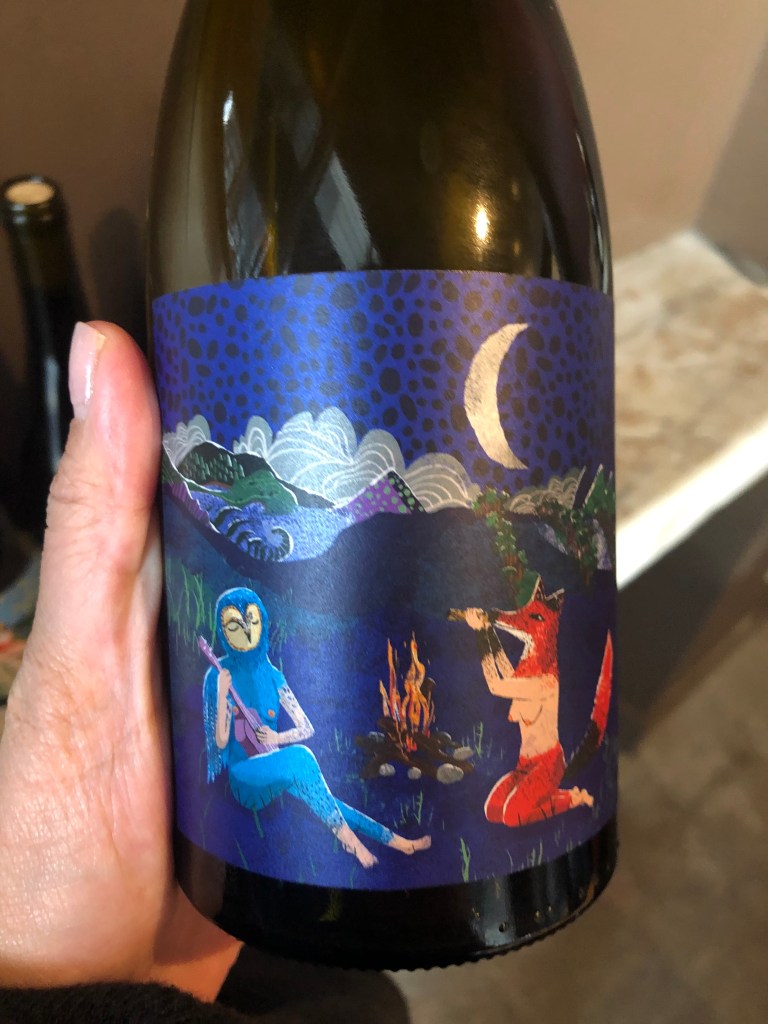
On Sunday, Kournikova joined me for a wine tasting ($29) at Vine Arts. Hosted by the co-owner of Juice Imports, Erik Mercier showcased Kindeli wines from Nelson, New Zealand. Let’s listen to “Hurt Feelings” by Flight of the Conchords for this post.
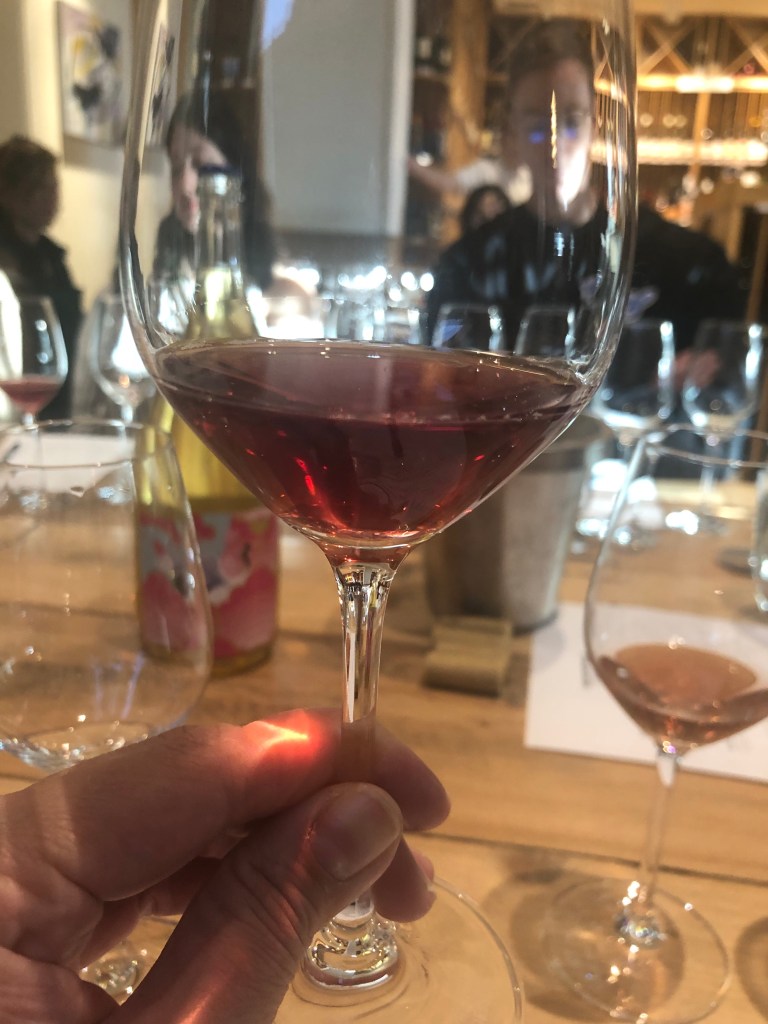
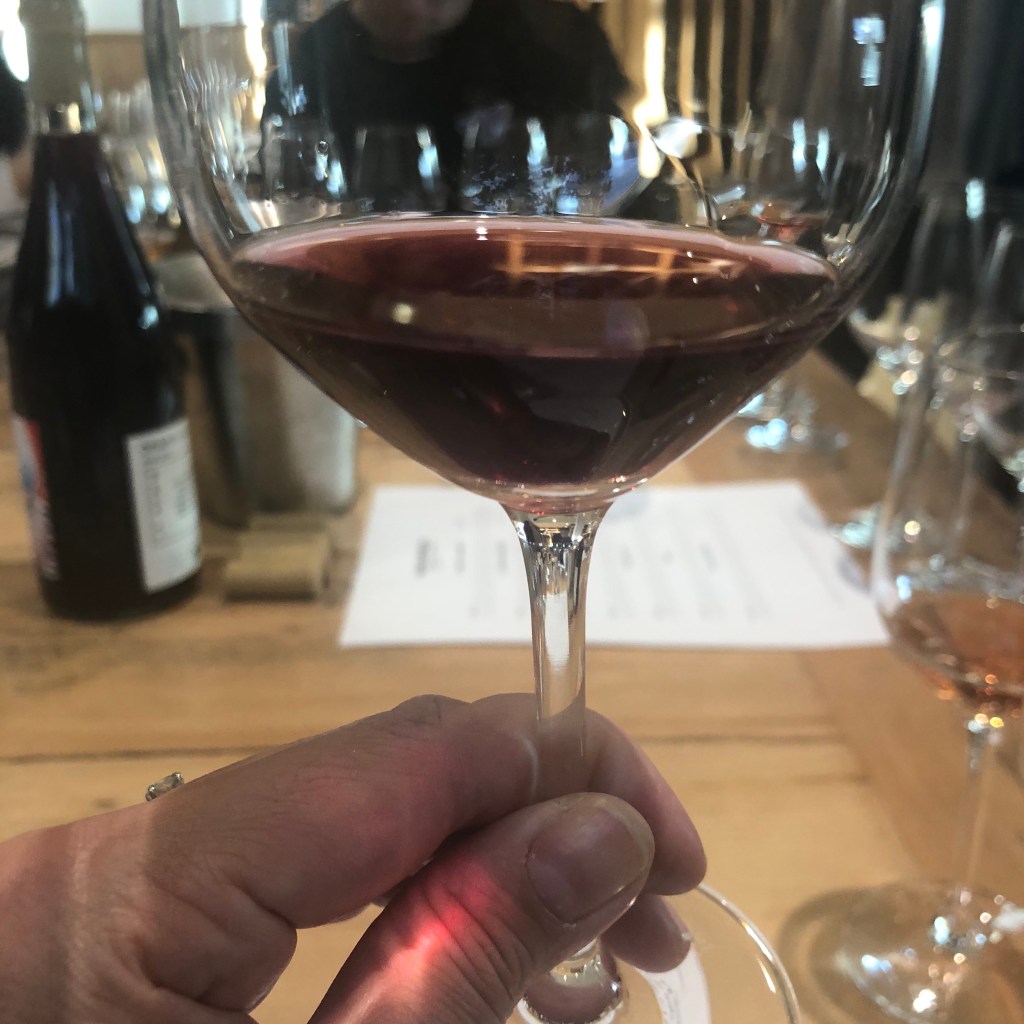
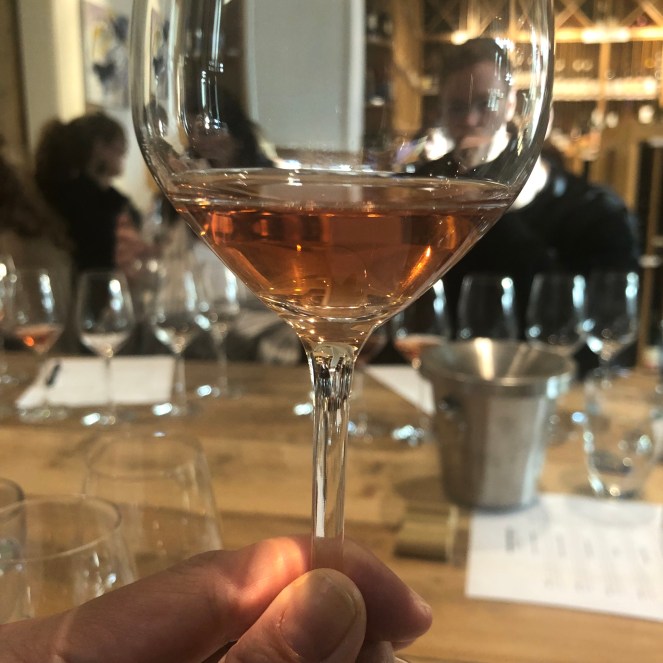
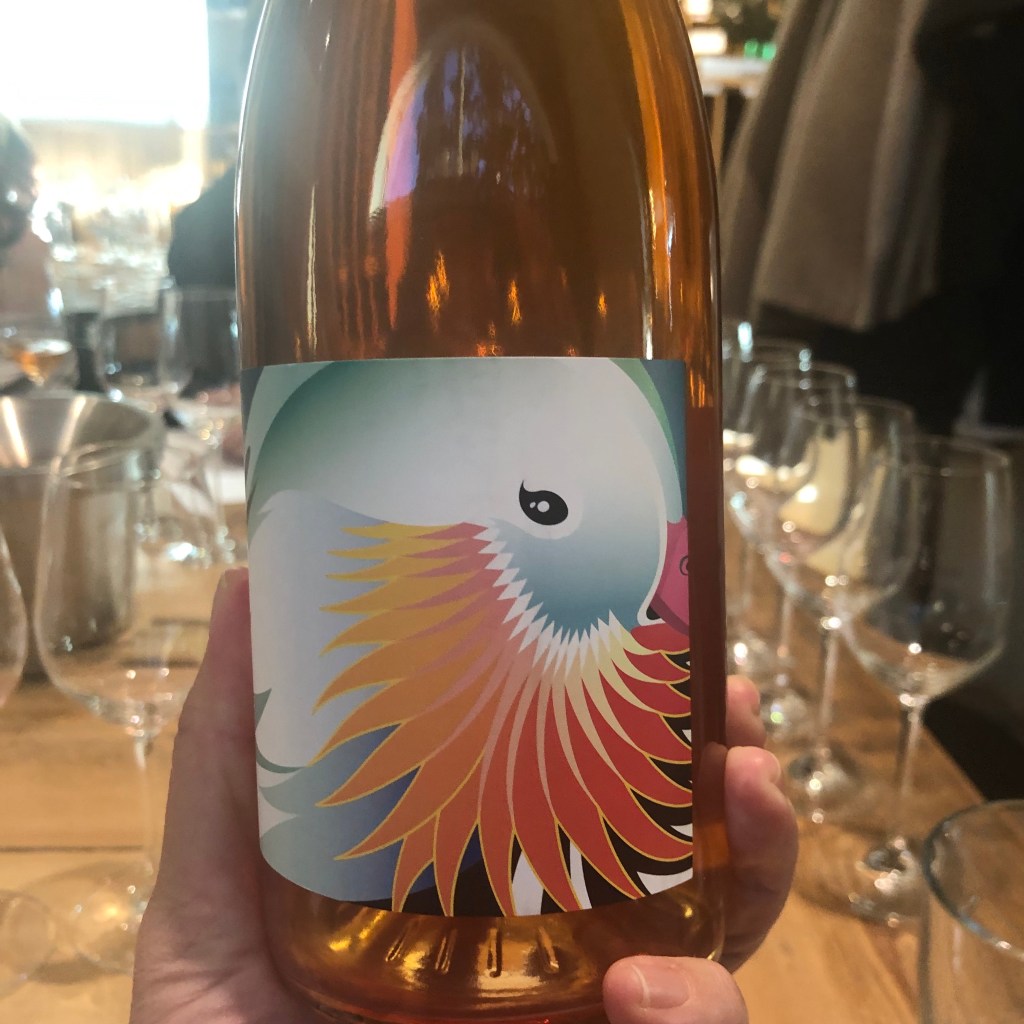
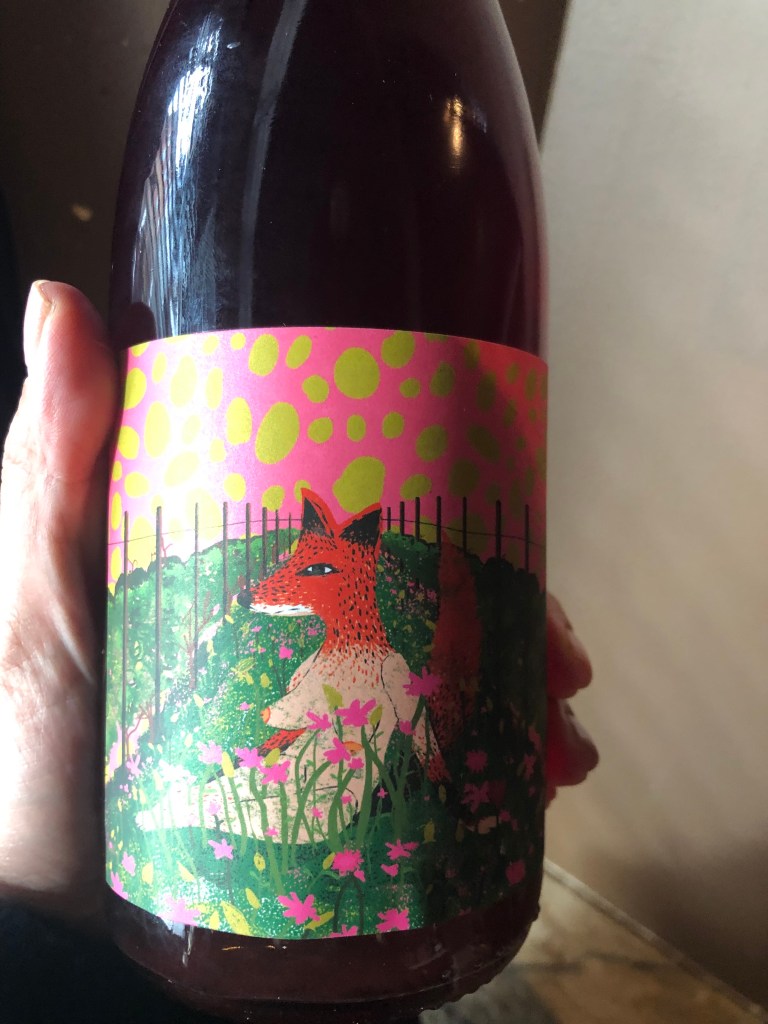
Our welcome drink was Kindeli Primavera, a rosé with a dark, raspberry-like hue and a light sparkle of carbonation. Erik informed us that this wine is made from several grapes: Riesling, Pinot Gris, Riesling, Viognier, Gewurztraminer, and Pinot Noir. He noted this rosé drinks more like red wine. Kournikova liked this one so much that she bought a bottle.
Our first official tasting was Blanco ($39.37). I was surprised when I took the first sniff, as I’d never smelled a wine like this before. Kournikova thought the wine smelled grassy. Erik described this wine as “rocking” and said it smelled like the Sauvignon grapes in Kindeli’s vineyard. He mentioned the wild fermentation process Kindeli employs results in a wider range of flavours.
Kournikova enjoyed the Luna Nueva ($44.91). This wine consists of a blend of Pinot Gris, Viognier, Chardonnay, and Sauvignon Blanc. Erik said this wine had a crazy texture, describing it as round, soft and bright.
When I asked him to define “texture” to me, he compared the difference between skim and whole milk. Erik told me to think about the words “fatty” and “saturation” and what that sensation would feel like in my mouth. For example, he stated Viognier is an oiler and heavier white wine.
My favourite wine was Verano ($44.91). Erik described this dry, fresh wine as savoury, with notes of dried apples and Oolong tea. I knew right away my girlfriends would love this bottle. I bought one bottle for my friend Sunflower, who has a penchant for orange wines.
Erik recommended pairing this wine with something funky and sweet, like a Japanese curry. He stated that Verano represents a complete picture of Kindeli’s farm, as every variety is blended into this bottle: Sauvignon Blanc, Riesling, Gewürztraminer, Chardonnay, Pinot Gris, Pinot Noir, and Syrah.
The Otono ($44.90) is made from Gewurztraminer grapes, fermented on skins for five days in an amphora (Greek vase). After the pressing, Riesling and Pinot Gris juice is added to the “spent skins”. Erik noted this wine is bottled unfined, unfiltered, and without sulphur.
Erik loved the smell of Ivierno ($44.83). He stated one of the many reasons he likes natural wines is the different breadth of flavours it produces. This wine contains about 90% Pinot Noir and 10% Pinot Gris.
Kournikova thought Tinto ($44.83) smelled peppery. Erik described the flavour as dark fruit juicy with a violet floral. Of the red wines, this was my favourite. With each sip, I noticed a new tasting note.
The last wine we tried was Luna Lena ($44.90). Erik described Luna Lena as sweet, with dark fruit characteristics. I asked him why my initial reaction to his wines changed with each sip. At first, I was unsure if I even liked the wine. However, with each quaff, I started to appreciate different flavours I didn’t pick up at first. I told him this experience is the opposite when I drink terrible wine at a pub, as even though I keep drinking it, it never tastes better, no matter how hard I wish it to be.
Erik believes it’s because we initially don’t like unfamiliar flavours that we can’t describe. It is our body’s way of warning us about poison. But after we try something new, such as wild fermented wines, we get used to the unique flavours and begin to taste other things.
I’m looking forward to Erik’s upcoming events in November and December. I already booked up each class he’s teaching. These wine seminars are so cheap that I can afford to splurge on fancier bottles for my forthcoming Christmas parties. Hitting the Sauce gives Erik’s evident passion for natural wines two phat thumbs up.
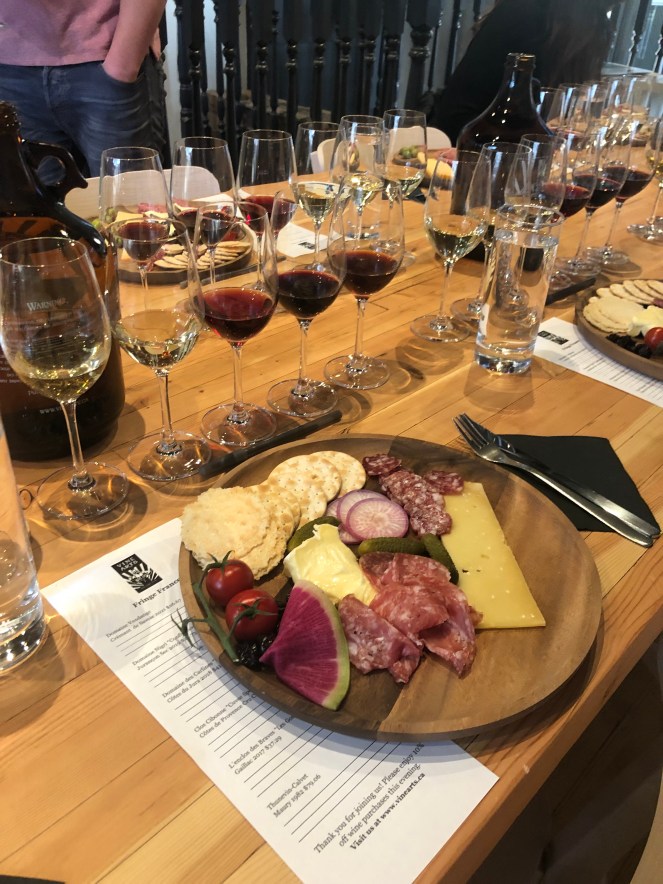
On Friday evening, L, Bottlenick, and I went to the Fringe France wine tasting ($50) at Vine Arts on 17th Ave. Klaire McCallum, our host for the evening, selected wines from France’s lesser-known regions from wineries that produce only a small number of wines each year. Choosing this class was a no-brainer for me, as I have an infinite love for French wines. For this post, let’s listen to “A Bicyclette” by Yves Montand.
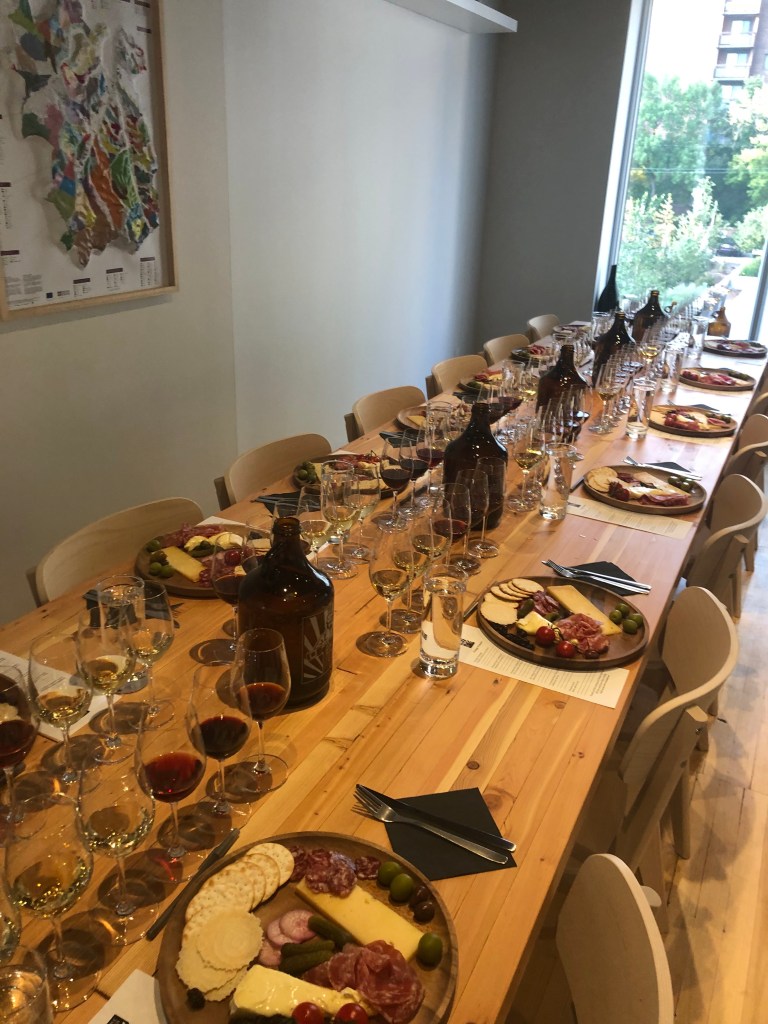
Vine Art’s tasting room is brand-new, located on the store’s second floor. We sipped a glass of sparkling wine and introduced ourselves to the guests closest to us.
Everyone was given a gorgeous cheese and charcuterie plate from Peasant Cheese. The brie was ripe and creamy. The gouda was even better, hard yet smooth, with a bit of texture. The charcuterie was so tasty that I chewed slowly to extract the most flavour from each bite.
The first wine we tried was the Domaine Vendange Cremant de Savoie 2021 ($26.67). We learned the location of the winery borders Switzerland and Italy, and the region produces one percent of France’s wine production. Bottlenick commented the wine was toasty. There was a breadiness to it that reminded me of champagne. Klaire recommended pairing this bubbly with alpine cuisines, such as a tartiflette. I bought a bottle of this wine and planned to bring it out while hosting a raclette dinner party.
The second wine was Domaine Nigri “Confluence” Jurancon Sec 2019 ($29.73). This winery is located in the southwest of France, close to Spain. Klaire described this wine as intense, with notes of passionfruit. L said it tasted tropical, while Bottlenick thought it was soft, interesting, and unique. Klaire advised pairing this wine with something rich, like foie gras or duck.
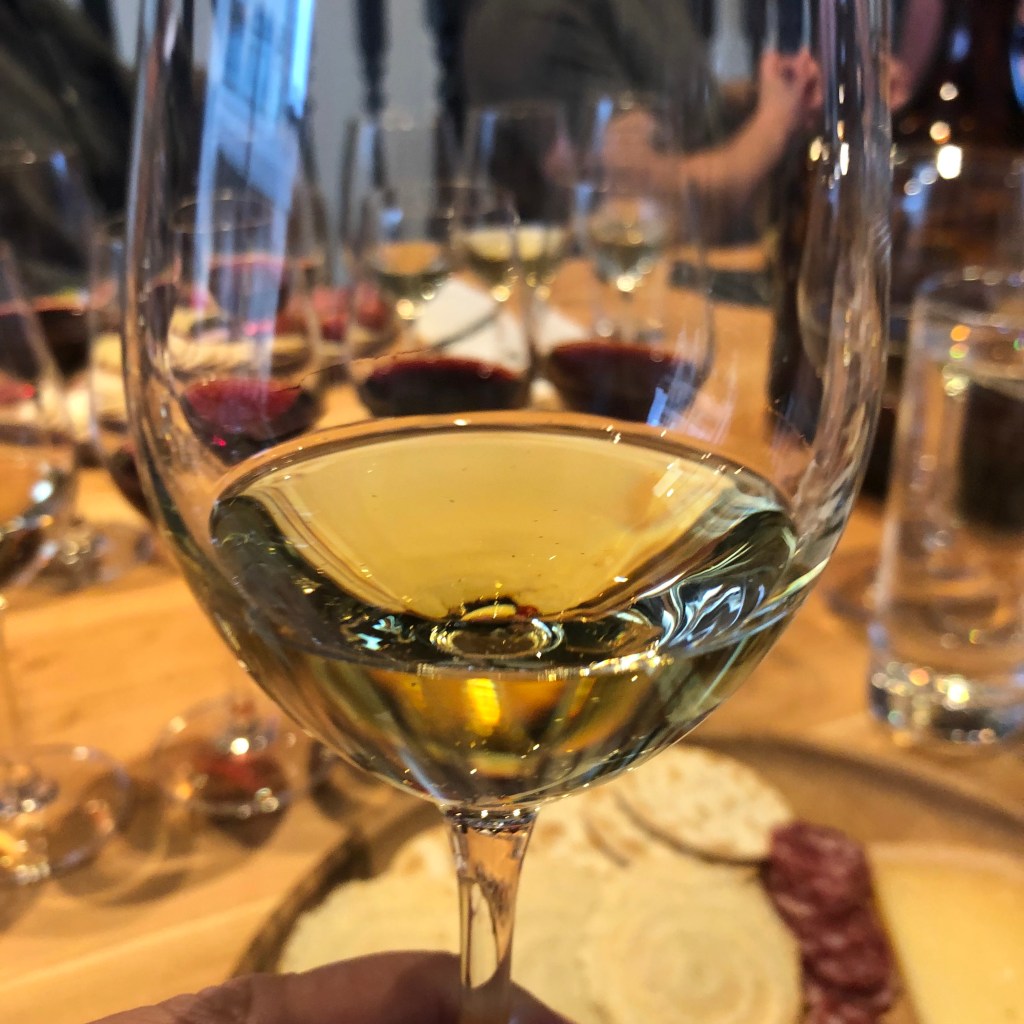
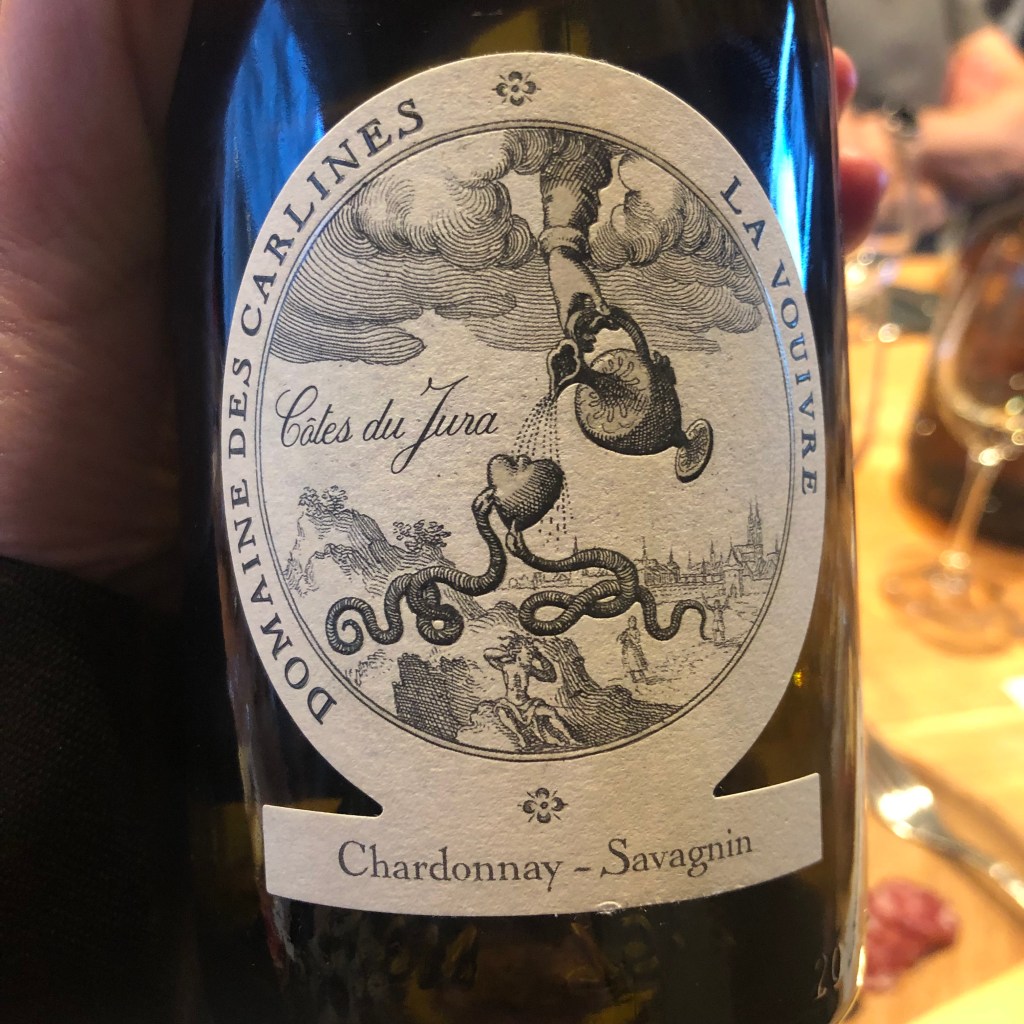
I enjoyed the third wine – Domaine des Carlines La Vouivre Cotes du Jura 2018 ($41.19). Klaire noted Jura is famous for its yellow wines and known for its dry and sweet white wine. Bottlenick and L were fans of this wine as well. Bottlenick thought it was oily, while L said it was slightly sweet. I thought it tasted good.
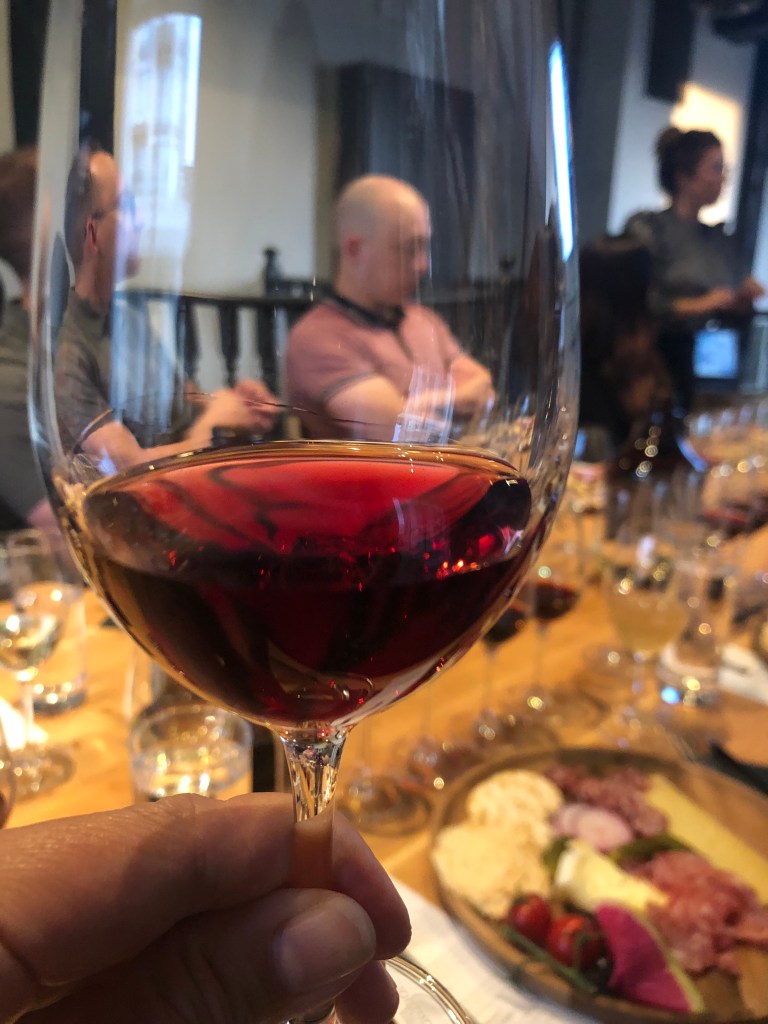
The fourth wine hailed from Cotes de Provence – Clos Cibonne “Cuvee Speciale Tibouren” 2021 ($58.30). Although the region is famous for its rosé wine, we tried a red wine with a see-through ruby hue. Klaire described this wine as herbal, with rosemary, thyme and lavender notes. L thought the wine tasted peppery.
There were two very interesting points Klaire shared with us about alcohol content and acidity. First, she pointed out the rosé’s alcohol content was 14%. She explained that the higher the alcohol, the more texture and feeling a wine has. Second, she mentioned that wine with high acidity makes the mouth water, while wines with lower acidity create more of a mouth-coating sensation. Klaire stated acidity in wine is desirable when paired with certain dishes, as it helps to cut into the fattiness.
The winning wine for me was the fifth tasting – L’enclos des Braves “Les Gourmands” Gaillac 2017 ($37.29). Klaire suggested pairing this wine with charred food, a stew, chili, or soup. I loved this wine so much that I bought a bottle. I’ll break this wine out the next time I burn a dish for a party.
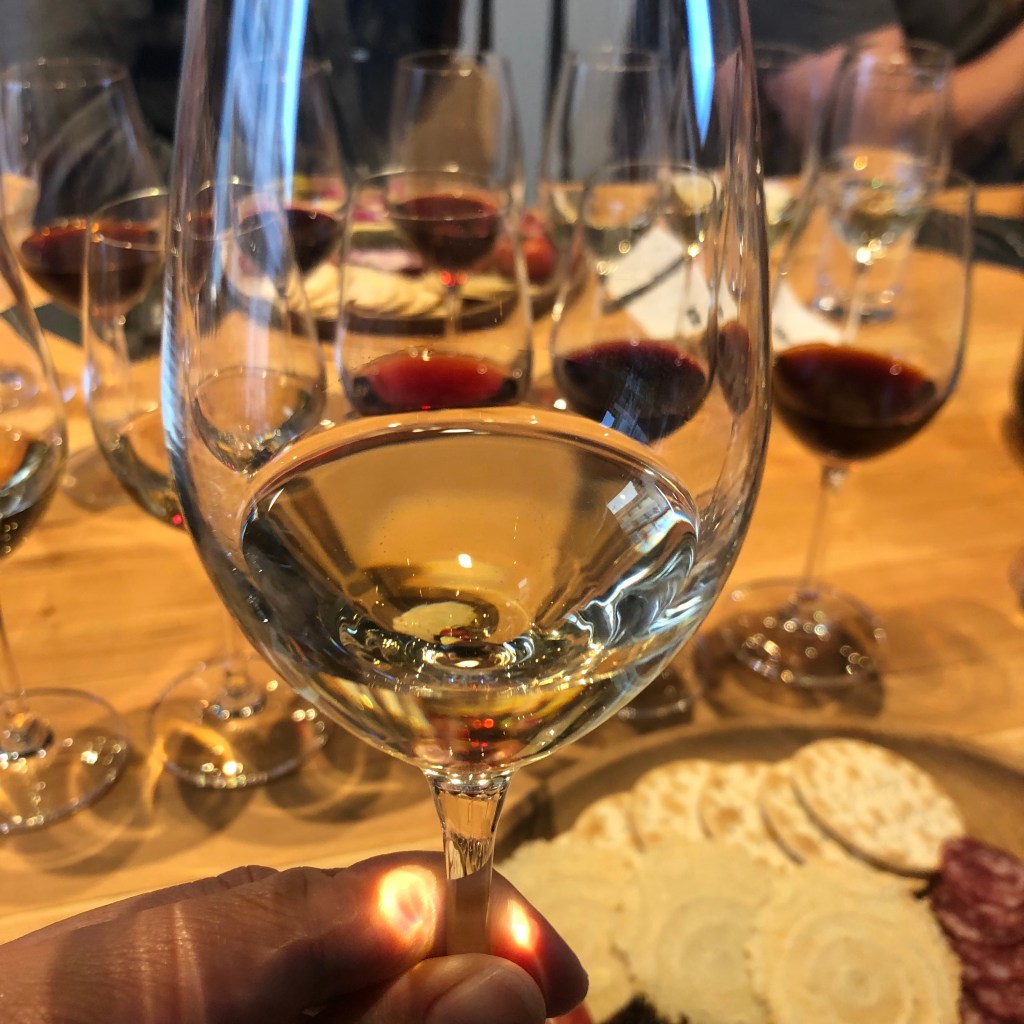
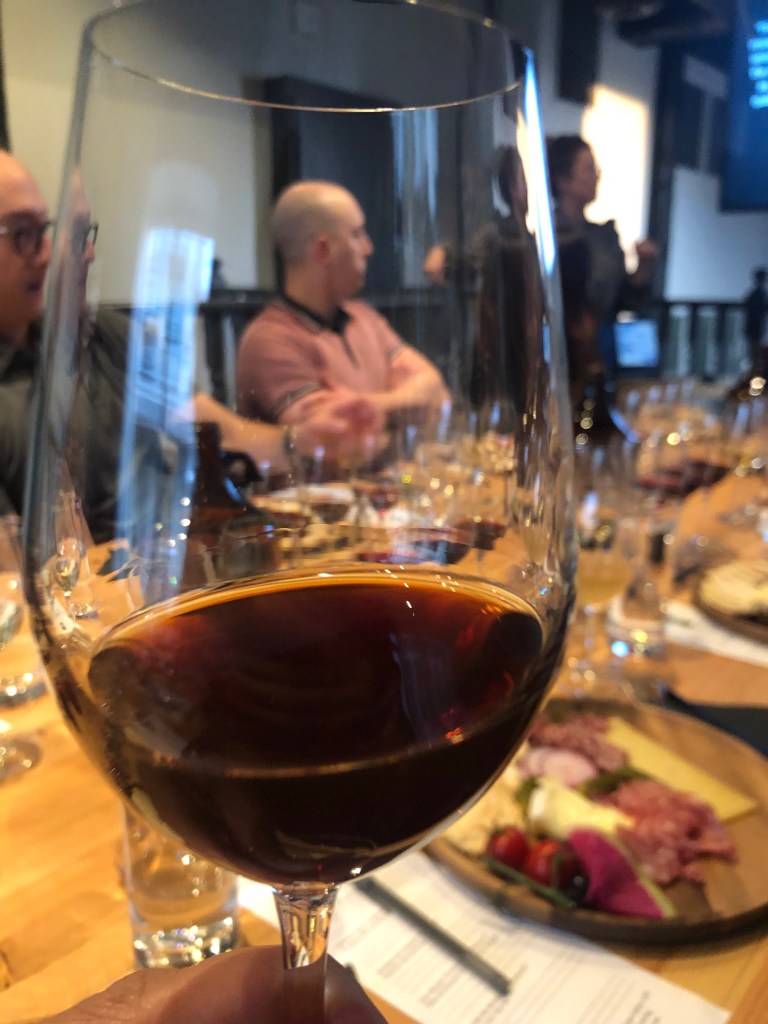
Our last tasting was Thunevin-Calvet Maury 1982 ($79.06). L joked that the wine was almost as old as me. I thought this wine wasn’t as sweet as it smelled and tasted a little like a raisin. This is one of the best ports / dessert wines I’ve tried. We learned this wine is produced on mountain landscapes in a dry, hot, rugged climate. The shrubbery the grapes grow on has deep roots. Due to the poor soil, the stress on the grapes produces the best wine.
By this point in the night, everyone was comfortable, and I heard shouts of “walnut” and “bitter almond” thrown around. When asked what makes a wine worth aging, Klaire listed three things – it must have complexity, tannin structure, and acidity.
Klaire detailed how old this wine was and how this type of wine was made 400 years before the port was made through the mutage mechanism. I piped up and said I didn’t think 40 years was very old at all. The person across from me reminded me we were talking about wines, not people.
These wines were not easy drinking, patio-crushing bottles I usually consume with my girlfriends. However, Klaire noted that she picked unique wines that paired exceptionally well with food. She wanted us to try wines with attitude, not face-ripping weird wines. She succeeded – as I thoroughly enjoyed her selection.














 Hitting the Sauce